

Persian-Americans invite everyone to Berkeley for Nowruz
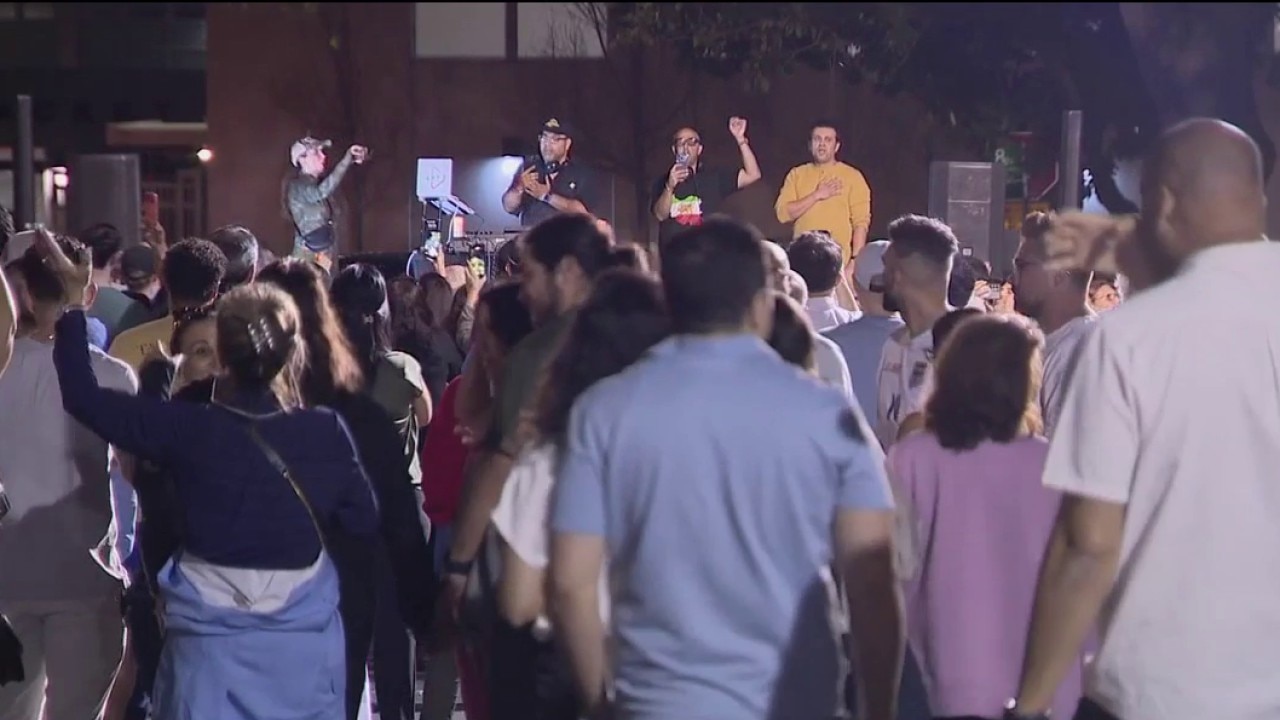
Berkeley celebrates Persian New Year
Community members in Berkeley gathered on Tuesday night to celebrate the Persian New Year, also known as Nowruz.
BERKELEY, Calif. - The Persian New Year, a celebration tied to the spring equinox, begins worldwide on Friday, and for decades, Berkeley's Persian community has held a sort of pre-party that's inextricably tied to the diverse college town.
It is always a party, but the war in Iran is giving many people here hope for freedom in their homeland brought on by the U.S. and Israel.
On Tuesday, hundreds gathered on the 2000 block of Durant Avenue for Berkeley's 22nd annual Nowruz celebration, which symbolizes the passage from darkness to light.
"When we jump over the bonfire, we say, 'I give all my sorrow and pain to you,'" said Persian-American Shabnam Mirbadin.
"As in other New Year traditions, you are renewing your commitment to community and whatever may have burdened you in the past year — as the fire celebrates, you're burning that away," said Jacob Cohen, a producer with Trinary Events.
Organizers say the event has endured because it is open to all, with ample security and an emphasis on mutual respect.
"This is opening the door to the community, to the neighborhood and celebrating being together," said Persian-American Bijan Sartipi.
This year's gathering was also held in remembrance of lives lost and in affirmation of resilience. Persians are an ancient ethnic group of West Asia who share the Farsi language and a culture rooted in art, literature and architecture.
"This town and this place is one of those places where this ancient tradition, of course, supersedes any political moment," Cohen said.
The celebration carried an undercurrent of political feeling. Many attendees expressed hope that the ongoing U.S. and Israeli military conflict with Iran could bring change to the country's leadership. Polling shows that a large majority of Persian-American immigrants oppose the clerical government that has governed Iran for 47 years.
"It was a total mistake. Even those people that promoted this change at the time, most of them regret it now," said an attendee named Mozhdan.
Some said they see American military power as leverage that unarmed citizens cannot provide for themselves.
"People are bare-handed. The regime is a terrorist regime. So people cannot be in battle with bare hands. They just die," a woman named Mona said.
"We have our leadership that we have been waiting for. He is the son of the Shah," said Arya Jahan, another Persian-American attendee.
One elderly Persian-American who said he lived under both the Shah and the clerical regime expressed a different view — that he wants neither, but a Persian leader who is truly for the people.