

Thousands of Kaiser nurses, therapists walk off job in one-day strike
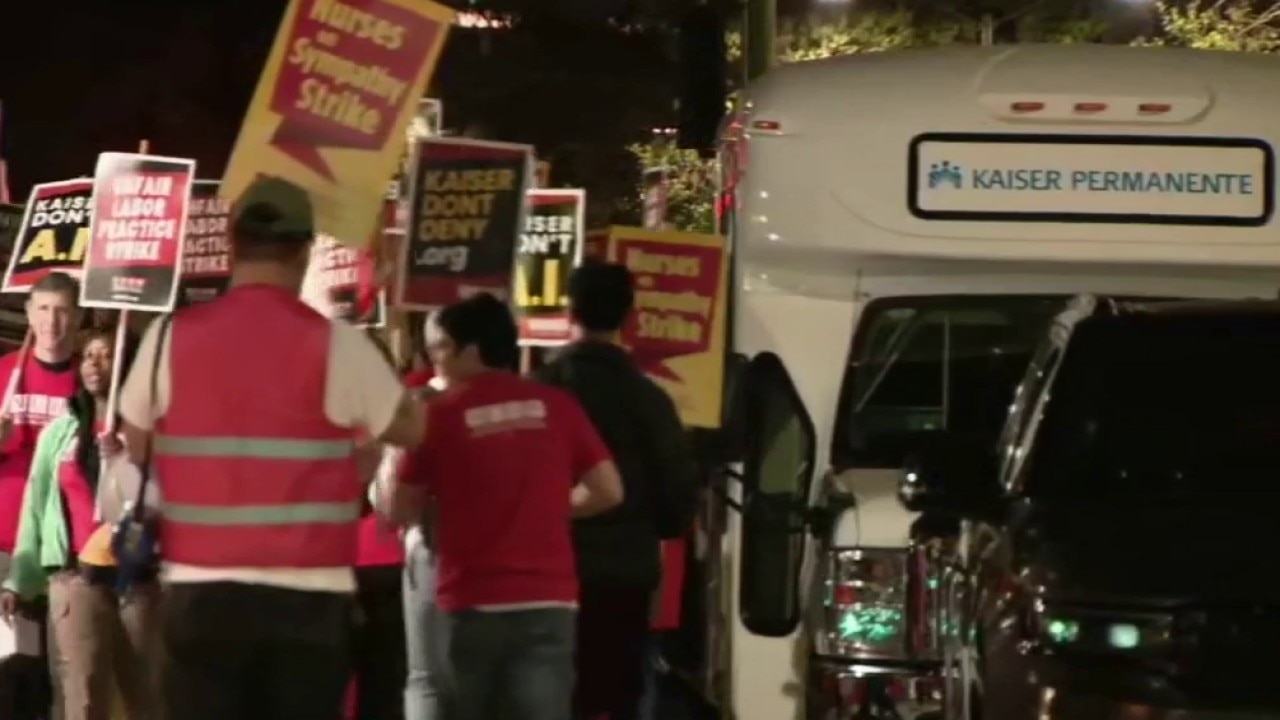
Thousands of Kaiser nurses, therapists walk off job in one-day strike | KTVU
Thousands of Kaiser nurses, therapists walk off job in one-day strike
OAKLAND, Calif. - Thousands of Kaiser Permanente nurses and mental health therapists announced they will walk off the job Wednesday in a one-day strike at Kaiser facilities across Northern California, with mental health workers raising alarms about new technology they say is replacing licensed clinicians.
What we know:
The strike was called by the National Union of Health Care Workers, which represents approximately 2,400 mental health therapists across Northern California. About 23,000 Kaiser nurses joined the picket lines in a sympathy strike. The work stoppage runs from 6 a.m. to 6 p.m.
Picket lines formed outside Kaiser facilities in Oakland, across the Bay Area and in Sacramento.
What they're saying:
The union says the dispute is not about pay. Instead, workers are concerned about changes to how Kaiser screens patients who call in seeking help for mental health or substance abuse problems.
According to an unfair labor practices complaint filed by the National Union of Health Care Workers, Kaiser previously used licensed clinical social workers or therapists — professionals holding a Ph.D. or master's degree — to screen patients by phone and direct them to care. The union says those positions are now filled by workers required to have only a high school diploma.
The union also raised concerns about a Kaiser app that allows patients to complete initial screening themselves, without speaking to a clinician.
"This would be a 15-minute call with a licensed therapist that they've replaced with some yes or no questions," said Kaiser therapist Jess Metzinger.
Metzinger demonstrated the app, which asks four questions about anxiety and depression symptoms. She said patients should speak with a licensed therapist to determine whether they need a mental health appointment, rather than relying on the app's brief screening.
The union said mental health therapists at Kaiser in Southern California have contract language limiting the use of artificial intelligence, and Northern California therapists are seeking the same protections.
"It says that AI would only be used to help therapists with things like documentation and other background tasks, and it would not be used to do any of the work of therapists or replace therapists. Kaiser has repeatedly said they don't want to put that in ours, that they want flexibility," said Metzinger.
The other side:
Kaiser accused the union of pushing a "false narrative" about technology replacing jobs. In a statement, the health system said AI does not replace human assessment or make care decisions, adding that its goal is to reach an agreement that "honors our clinicians and allows space for the potential of technology that can support them… Many AI tools have the potential to help our clinicians spend more time focused on serving our members and patients."
Kaiser said it has doubled its mental health workforce oer the past 10 years and has never conducted a reduction in force of mental health clinicians in Northern California.
Kaiser said contingency plans are in place to keep hospitals staffed, though some appointments may need to be rescheduled.