

California approves $590M loan for BART, Muni, Caltrain, AC Transit
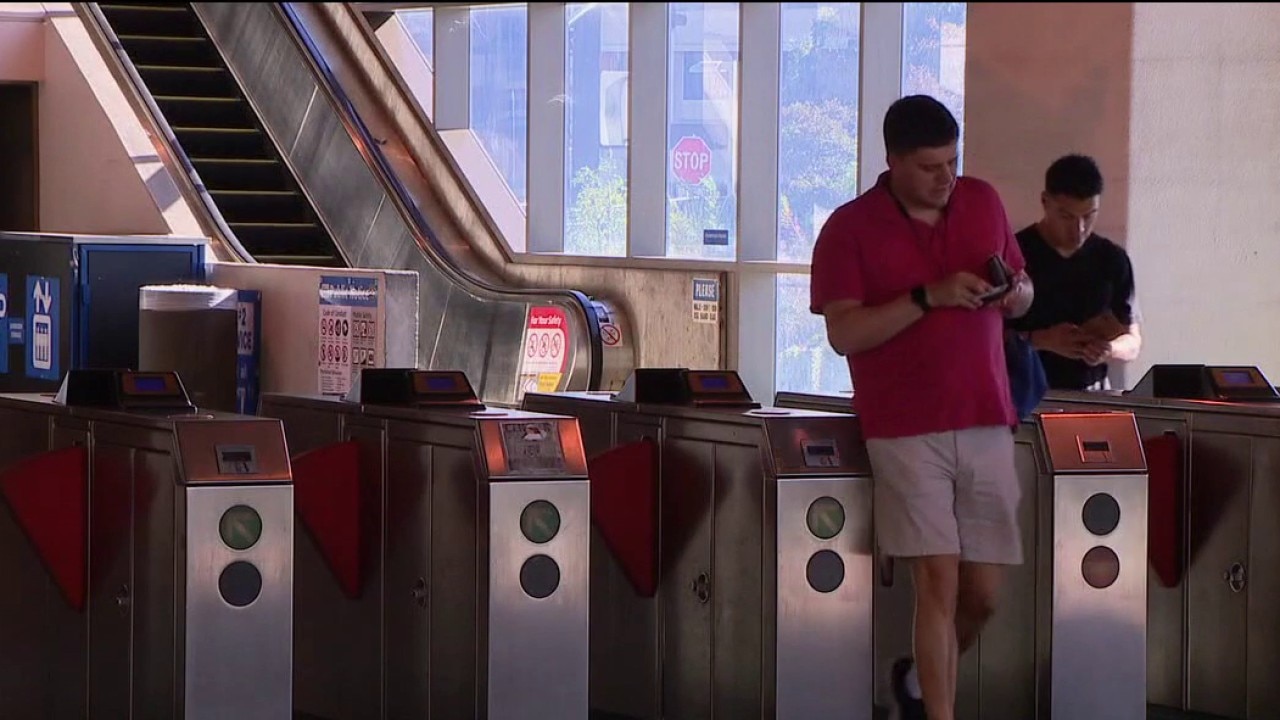
Newsom announces $590M for BART, Muni, Caltrain, AC Transit
Gov. Gavin Newsom announced a $590 million state loan to help stabilize BART, Muni, Caltrain and AC Transit as they face major budget deficits tied to post-pandemic ridership declines.
OAKLAND, Calif. - Several Bay Area public transit agencies are facing massive budget deficits fueled by a post-pandemic ridership slump. Now, California is stepping in with a $590 million loan to help stabilize services.
Gov. Gavin Newsom announced Thursday that under the newly signed AB-SB 117, the California State Transportation Agency can loan $590 million to the Metropolitan Transportation Commission. The funds are earmarked to help BART, Muni, Caltrain and AC Transit maintain reliable service as the region works toward a long-term funding solution — possibly through a regional sales tax measure expected to appear on the 2026 ballot.
"California is stepping up to support Bay Area transit—this agreement will help protect transit service for more than three million monthly riders," Newsom said. "The benefits of a strong transit system are clear: growing ridership, cleaner air, and less congested roads."
The Metropolitan Transportation Commission will disburse the funds to the four agencies.
Declining ridership fueling financial issues
Currently, BART is facing a $376 million deficit for a number of reasons, but mostly due to declining ridership.
"Transit here in the Bay Area and other major metro areas around the country are suffering from long COVID," said John Goodwin, spokesperson for California's Metropolitan Transportation Committee.
Agencies like BART, Muni and Caltrain will have 12 years to repay the loan mwon't be oney. Transportation experts say this nine-figure shot in the arm is a godsend.
"It gives them the stability to provide the services that are so critical for people to get around the Bay Area. So without this infusion, there was this impending disaster," said Joshua Schank, a mass transit expert with UCLA.
But BART, notably, says they will not be taking state loan money if a ballot measure increasing sales tax to raise yearly revenue for BART doesn't get approved in November.
BART said in a statement in part: "These loan funds will be used if a November transit funding ballot measure is successful or another reliable source of funding is provided to BART...If it fails, we would not use the loan money because we wouldn’t be able to pay it back."
If that measure doesn't pass, BART plans to close at least 10 stations and slash service starting in early 2027.
"We actually have already cut service. Service now is not where it was before the pandemic. We're running shorter trains, There's fewer trains running," said Alicia Trost of BART.
The bottom line? Agencies need to figure out a better way to get people to take the train.
"We need to increase ridership, and so a lot of work has been done over the past couple of years to improver cleanliness, improve safety on BART and other major transit systems," said State Sen. Jesse Arreguin of Berkeley.
Featured

BART plans massive cutbacks in 2027 if voters reject sales tax
Bay Area residents got a look Thursday at the massive cuts that could be coming to BART next year, if voters don't approve a tax increase to bail out the transit agency. The proposal includes the closure of between 10 and 15 lower-ridership train stations, as well as major service cutbacks.
Long-term funding hinges on SB 63
Dig deeper:
If approved by voters, the Connect Bay Area Act, also known as SB 63, would provide new operating funding beginning in July 2027.
BART has been pinning its long-term recovery on a proposed 14-year sales tax measure projected to generate $980 million. Sixty percent of that would go toward BART, Caltrain, Muni and AC Transit.
The proposal calls for a half-cent sales tax in Alameda, Contra Costa, San Mateo and Santa Clara counties. San Francisco’s portion would be 1 cent.
Supporters say SB 63 would prevent major service cuts and layoffs across the region’s transit systems.
Potential cuts if measure fails
Local perspective:
In the meantime, the $590 million loan is expected to help the agencies stay afloat.
"Transit is essential for the Bay Area’s future, and we must protect it and do everything in our power to avert devastating service cuts," said state Sen. Scott Wiener. "This loan will avert a traffic catastrophe and save millions of Bay Area transit riders from losing their ride to work, family, and school."
BART has been transparent about its financial crisis and has warned that if SB 63 fails — and voters do not approve a tax measure in November — the agency would consider drastic cuts.
Proposed reductions include closing up to 15 stations, ending service at 9 p.m., reducing train frequency to every 30 minutes and laying off 1,200 workers.
The Source: This story was written based on information from Gov. Gavin Newsom along with previous reporting.