

No Kings Day draws estimated 9M protesters nationwide
No Kings Day draws estimated 9M protesters nationwide
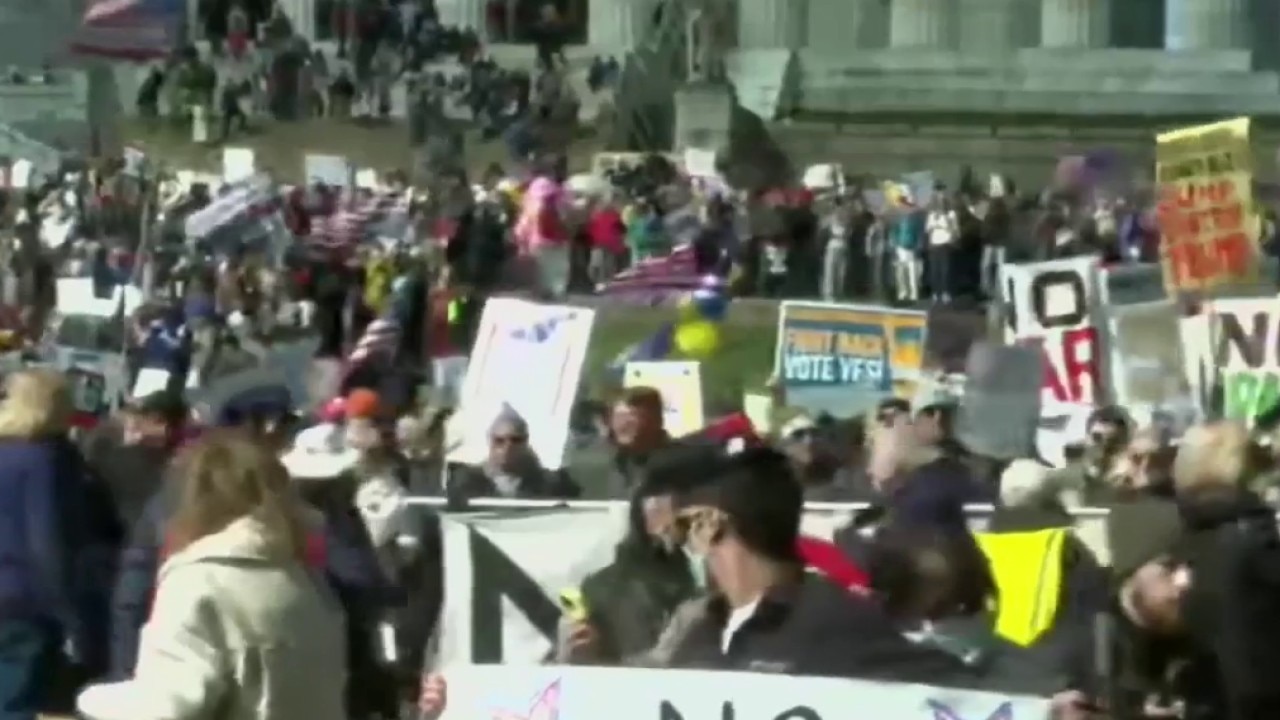
Organizers are calling this weekend's No Kings Day demonstrations the largest single-day protest in U.S. history, with an estimated nine million people taking part in events across the country, including tens of thousands who flooded the streets of San Francisco, Oakland, San Jose and other Bay Area cities.Nolan Higdon, a political history professor at UC Santa Cruz, said the turnout reflects where the country's energy is right now.
Oakland, Calif. - Organizers are calling this weekend's No Kings Day demonstrations the largest single-day protest in U.S. history, with an estimated nine million people taking part in events across the country, including tens of thousands who flooded the streets of San Francisco, Oakland, San Jose and other Bay Area cities.
The demonstrations marked the third nationwide No Kings protest since President Trump began his second term. Protesters said they were rallying against the administration's immigration policies, the rollback of regulations and the war in Iran.
The protests come as Trump's approval rating sits at record lows — just 36% of Americans approve of his performance this month, according to a recent Reuters/Ipsos poll. People in more than a dozen countries outside the U.S. also took part.
Nolan Higdon, a political history professor at UC Santa Cruz, said the turnout reflects where the country's energy is right now.
"It really seems like the energy of the country is in opposition to Trump's agenda, at least at this moment," Higdon said, contrasting the massive turnout with the low attendance at the conservative CPAC conference.
But Higdon cautioned that the movement's energy has not yet translated into support for Democrats specifically.
"Democrats are really going to have to wrestle with" harnessing that opposition, he said. "Eventually, at some point, they're going to actually decide what policy agenda they're for and whether or not that resonates with the public."
Higdon drew comparisons between the No Kings movement and the Tea Party protests of the 2010s during the Obama administration — a movement that was initially dismissed but ultimately helped Republicans make sweeping gains in the midterm elections.
"Democrats are hoping for something like that in 2026 — take back a lot of seats in the House, maybe some significant seats in the U.S. Senate," he said.
Meanwhile, the government shutdown — now the longest in U.S. history — showed no signs of a quick resolution this weekend after the House rejected a compromise Senate bill to fund the Department of Homeland Security. President Trump separately ordered TSA agents to begin receiving pay this week, but Higdon questioned whether that move would survive legal scrutiny.
"I'm wondering if this is going to play out in the courts as well, about whether or not Trump is allowed to pay these folks," he said.
Higdon said the shutdown has put Republicans in a difficult political position.
"The public is really starting to blame them for the shutdown and I think this is working really poorly, especially for House members in the Republican Party," he said.
With Congress heading into a two-week recess, Higdon said a resolution is unlikely to come soon — and spring break travelers should prepare for disruptions at airports.
"Even if Trump is able to allocate those funds, it's going to take some time to get people back into these positions," he said, noting that approximately 12% of TSA workers had called in sick and hundreds had left their jobs. "I think it's going to be a difficult spring break for a lot of travelers, unfortunately."