

Pope Leo warns of AI dangers; UC Berkeley Law adopts strict new policy
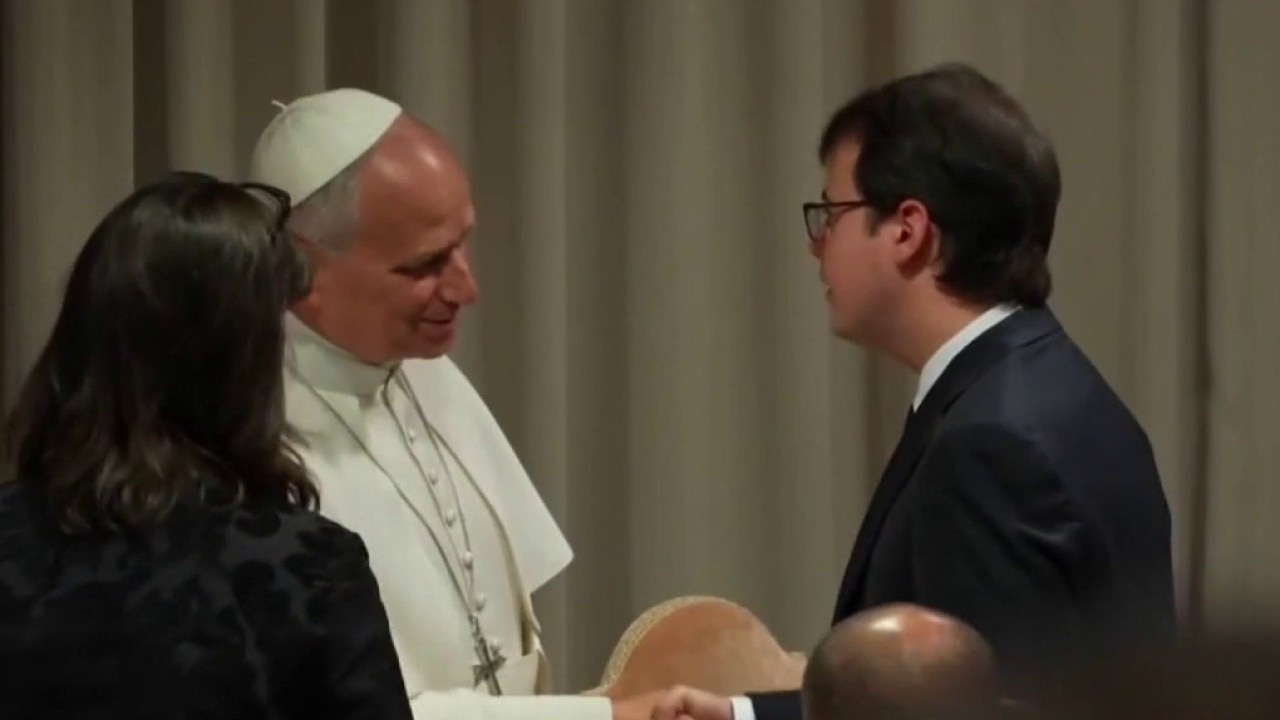
Pope Leo warns of AI dangers as UC Berkeley Law adopts strict new policy
Pope Leo XIV called for stronger oversight of artificial intelligence at the Vatican, where Anthropic co-founder Christopher Olah was among attendees. UC Berkeley Law recently introduced strict limits on AI use in coursework.
BERKELEY, Calif. - In his first major letter to the world, Pope Leo XIV warned of the dangers of artificial intelligence, saying he considers AI to be one of the biggest challenges facing humanity today. He stressed the importance of preserving human dignity.
What they're saying:
"Artificial intelligence needs to be disarmed. The word is strong, I know, but deliberately chosen because this moment needs words capable of attracting attention," Pope Leo said.
The pope warned AI systems could reinforce discrimination and inequality through biased algorithms and unchecked technological power.
"I hear very troubling accounts of algorithms that can block access to healthcare, employment, and security on the basis of data tainted by prejudice and injustice," he said.
Pope Leo called on AI developers and governments to prioritize ethics and the common good over profits as the technology rapidly expands across industries and daily life.
Among those attending the event at the Vatican was Christopher Olah, co-founder of San Francisco-based artificial intelligence company Anthropic, who welcomed the pope’s concern and criticism.
Olah said outside voices and critics are essential as AI companies continue developing increasingly powerful systems.
"We need informed critics who will tell the labs when we are failing. We need moral voices that the incentives cannot bend. Today is just the beginning, the start of a long collaboration between those of us who are building this, and those who can see what we, from the inside, cannot," Olah said.
UC Berkeley Law tightens rules on AI use
Local perspective:
The debate over AI ethics and responsibility is also unfolding in higher education, including in the Bay Area.
UC Berkeley Law School recently adopted a strict new policy limiting how students can use artificial intelligence in coursework beginning in Summer 2026.
Under the policy, students will be prohibited from using AI to brainstorm, outline, draft, revise, translate or edit work submitted for credit. AI use will also be banned during exams.
The policy states that "thinking remains the sine qua non of good lawyering" and says the restrictions are intended to help students develop critical thinking, legal reasoning and writing skills without overreliance on AI systems.
Ahmed Banafa, a San Jose State University engineering professor and technology expert, said the pope’s involvement reflects how AI is becoming a broader societal issue beyond the tech industry.
"This is the first time you find, you know, a major religious institution is involved with a technological issue. That actually proves that AI is no longer just technology, it's actually some kind of economic force, social change," Banafa said.
Banafa said colleges and universities are struggling to keep pace with the rapid growth of AI tools.
"The adoption from the higher education is trying to catch up with the speed of the of the artificial intelligence, and it's a very difficult task," he said. "As professors, I have to change the whole system I'm doing about giving exams or giving assignments, keeping in mind that the students are going to go and use AI."
Tech analyst Ian Sherr of Time Worthy Research said educators and companies are still trying to understand the long-term effects AI may have on human thinking and creativity.
"The challenge is that we're in this squishy period where we don't know the best places to apply it, and it's very possible that there is cognitive impairment, or whatever you want to call it, from using AI too much, and that responsible use is something we all have to talk about," Sherr said.
The Source: Pope Leo, Christopher Olah, co-founder of Anthropic, Ahmed Banafa, a San Jose State University engineering professor and technology expert, Tech analyst Ian Sherr