

San Rafael authorities connect suspect to 1966 cold case
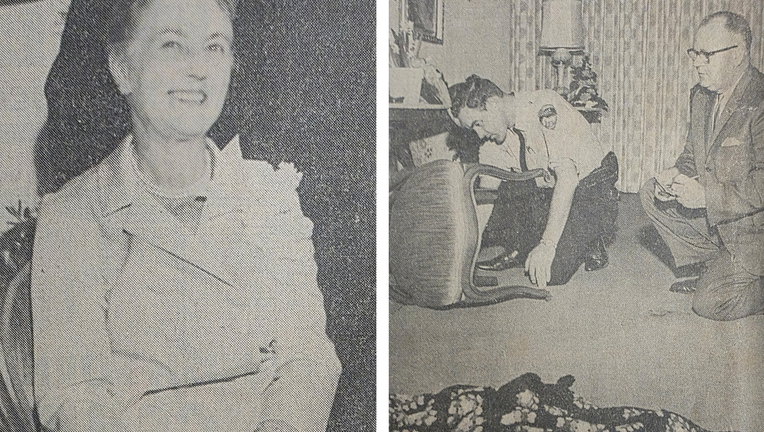
Marjorie Rudolph, the wife of a prominent banker, was murdered on February 1, 1966 while she was alone in the home she shared with her husband in San Rafael. (Courtesy of the San Rafael Police Department)
SAN RAFAEL, Calif. - San Rafael authorities on Tuesday announced they positively identified and connected a suspect to the 1966 murder of 60-year-old Marjorie Rudolph.
60-year-old evidence
The backstory:
The San Rafael Police Department said DNA evidence collected from cigarettes found at the crime scene 60 years ago placed Laurel James Switzer "at the scene of the homicide."
Police said Switzer personally knew Rudolph and her husband, and there was "some sort of dispute" between Switzer and the Rudolph family that could have led to the killing.
However, Switzer committed suicide a little over a week after Rudolph was killed.
"Investigators believe he is the likely suspect because his DNA was identified on a cigarette recovered at the 1966 crime scene; however, because he took his own life eight days after the homicide, the exact circumstances of his involvement and his true motivation for being there may never be known," San Rafael police said.
The backstory:
Rudolph, the wife of a prominent banker, was murdered on February 1, 1966 while she was alone in the home she shared with her husband in San Rafael.
Investigators at the time found the cigarettes at the crime scene and believed they belonged to the suspect. Additionally, Switzer was actually identified as a possible suspect in the 1966 investigation.
However, the SRPD noted that forensic science at the time was limited, and DNA testing did not yet exist.
"As a result, investigators were unable to conclusively confirm Switzer's DNA on the cigarettes and thus at the crime scene," police said.
Investigation carries on
Dig deeper:
Two retired SRPD investigators working cold cases partnered with the Sacramento County District Attorney’s Office to submit forensic evidence from the case to Othram Labs – a forensic laboratory based in Texas.
Scientists at Othram successfully extracted DNA from the evidence and developed a comprehensive DNA profile.
"Investigators contacted surviving relatives of Switzer and, with their consent, obtained DNA reference samples," the SRPD said. "Those samples were compared to the DNA profile developed from the cigarette evidence recovered at the crime scene. The comparison produced a positive match, confirming that familial DNA from James Switzer was present on the cigarettes and placing him at the scene of the crime."
The Source: San Rafael Police Department