

Lurie signs legislation to expand drug-free supportive housing
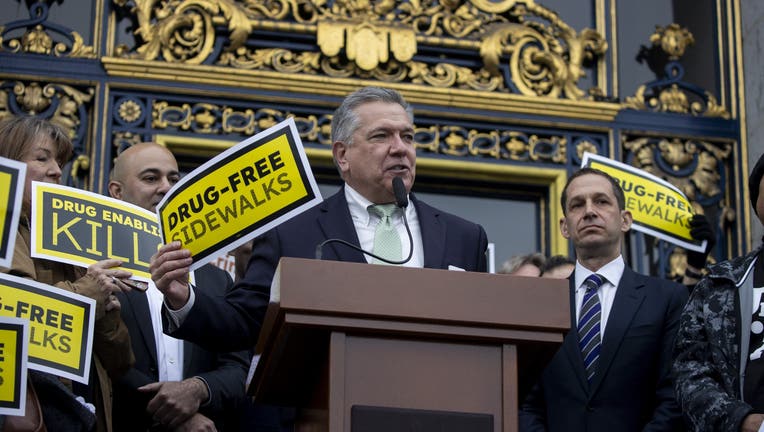
San Francisco District 6 Supervisor Matt Dorsey speaks during a rally in support of Mayor Daniel Lurie's Fentanyl State of Emergency Ordinance ahead of a hearing at the Board of Supervisors' Budget and Finance Committee in San Francisco, Wednesday, J
SAN FRANCISCO - San Francisco Mayor Daniel Lurie on Wednesday signed legislation to create more drug-free permanent supportive housing options in the city.
The legislation was authored by District 6 Supervisor Matt Dorsey with the goal of creating more sober sites for people seeking housing where drug use is banned, while also addressing the rate of overdoses at affordable housing sites.
By the numbers:
According to the Department of Public Health, in a presentation earlier this year, San Francisco had, between January and June of this year, 262 overdose deaths, a 27% drop from the same period in 2025.
A department update published in 2025 shows that just over a quarter of those deaths occur in permanent supportive housing.
"Drug-free permanent supportive housing options are critically important to the success of many people exiting homelessness — not simply for those in recovery or seeking recovery from addiction, but also for families with children, seniors, or anyone else who simply wants to live in a residential community free of the negative consequences that often accompany rampant drug use," Dorsey said in a press release.
Dig deeper:
The new legislation expands the number of sober-living options at affordable-housing sites for people exiting homelessness, and includes a policy that allows for residents who continue to use drugs to be evicted.
"This ordinance affirms the right of supportive housing residents themselves to choose a drug-free residential community if that’s what they want — and finally moves us past the arrogant harm-reduction dogma that has too long insisted that the rights of active drug users must take precedence over the rights of everyone else," Dorsey said in a press release.
San Francisco at the start of the year had more than 15,000 permanent supportive housing units, most of which are in dedicated buildings with long-term affordable housing and onsite services.
The law allows room for recovering residents to relapse, but creates a mechanism by which facility operators can "terminate a resident’s tenancy when a participant’s behavior substantially disrupts or impacts the welfare of the community in which the resident resides or is otherwise in violation of their lease."
What we know:
The legislation also states that if a tenant is using drugs but is otherwise complying with all the terms of their lease, the facility operator must receive confirmation from the Department of Homelessness and Supportive Housing that the resident has been offered alternative housing or shelter, so that they are not evicted into homelessness.
The new housing options include individualized service plans, relapse-prevention and intervention planning, case management, peer support, and onsite recovery programming.
The model is informed by national recovery-housing guidance and emphasizes community, housing stability, and helping residents build relationships, employment, education, health and financial independence.
"Our administration is transforming how the city confronts the homelessness and behavioral health crisis," Lurie said in a press release. "We are not just getting people off the streets; we are helping them achieve long-term stability and recovery by standing up the right kind of housing and connecting them to the services they need. Thanks to Supervisor Dorsey’s leadership, our city is expanding and accelerating these critical efforts to keep San Francisco safe and deliver better outcomes for our city’s most vulnerable residents."
The Source: San Francisco Mayor's Office, San Francisco Department of Homelessness and Supportive Housing, San Francisco Department of Public Health.