

Milwaukee County Judge Dugan trial: Live updates Monday, Dec. 15

Judge Dugan trial: Opening statements, first testimony
FOX6's Christina Van Zelst and Jason Calvi provided coverage on day one of the trial of Milwaukee County Judge Hannah Dugan. The day included opening statements and the first testimony in the case.
MILWAUKEE - Testimony began in the trial of Milwaukee County Judge Hannah Dugan, who federal prosecutors accuse of helping an undocumented man evade capture at the courthouse earlier this year, after opening statements concluded Monday morning, Dec. 15.
Live updates from Monday, Dec. 15
IN A HURRY? HERE'S A DAY 1 RECAP
Find detailed coverage from Day 1, including bonus coverage with insight from legal experts, below.
FBI Special Agent Jeffrey Baker takes the stand
4:53 p.m.:
Defense Attorney Nicole Masnica informed U.S. District Judge Lynn Adelman that they anticipated an hour of cross-examination and asked for a break. Adelman dismissed the jury for the day and informed them to be back at 9 a.m. Tuesday.
4:39 p.m.:
Baker testified that, after talking to Dugan, he was directed to go to another area of the sixth floor that he later learned was Chief Judge Carl Ashley's office. He testified that Dugan did not ask to see a warrant and did not say he needed to talk to the chief judge and show identification.
The special agent said he left the area of the chief judge's office when he was made aware that Eduardo Flores-Ruiz had left the courtroom. He proceeded to identify Flores-Ruiz, his attorney and agents seen in the video while they were in the public hallway.
Baker testified that he learned Flores-Ruiz and his attorney had gotten on an elevator with another special agent, who was communicating via cellphone with other agents about where Flores-Ruiz was. He said he ended up outside the courthouse, where agents tried to make contact with Flores-Ruiz.
Surveillance video from outside the courthouse showed people running. Baker testified that Flores-Ruiz ran, and he ran after him but had to stop because his handcuffs dropped to the ground. Other agents continued to run after Flores-Ruiz, and he was taken into custody.
Baker testified the arrest of Eduardo Flores-Ruiz did not go as planned.
4:26 p.m.:
Baker identified himself and another agent on surveillance video arriving at the Milwaukee County Courthouse just after 8 a.m. on April 18, the day Flores-Ruiz appeared in Dugan's courtroom and was later arrested. He testified that he checked in with the bailiff and told him why he was there.
Baker further testified that he planned to arrest Flores-Ruiz after the hearing. He pointed out additional federal agents involved in the arrest operation as they appeared on surveillance video. He said agents were located in different areas of the sixth floor, where the courtroom is located, so they could alert each other when Flores-Ruiz arrived.
Flores-Ruiz, with his attorney, were seen on video arriving on the sixth floor at 8:42 a.m. that morning. At 8:43 a.m., Dugan and Judge Kristela Cervera were seen talking to agents in the hallway.
Baker testified that he moved toward the judge after he saw, from down the hall, the arrest team moving to new locations after they spoke to Dugan. He said Dugan asked him if he was there for the hearing, and then asked if he was with "them" – he answered that he was. He described her demeanor as "angry at that point."
4:16 p.m.:
Prosecutors called FBI Special Agent Jeffrey Baker to testify. U.S. Attorney Richard Frohling questioned Baker. He said he was assigned to enforcement removal operations in February 2025.
Baker testified that he received training on how to conduct a safe arrest, and agents plan for the safety of all parties involved – agents, the people being arrested and the public. He was involved in the planned arrest of Eduardo Flores-Ruiz but was not the lead officer for the operation.
Baker said he had conducted a courthouse arrest before and that courthouse arrests are considered safe because they can prepare for a specific time and people coming are screened for weapons and contraband. He was in plainclothes and presented his credentials to the sheriff's deputies working security, who allowed him to enter with his service weapon.
Anthony Nimtz, I.C.E. supervisory detention and deportation officer, testifies
4:12 p.m.:
On re-direct, the prosecution asked Nimtz more questions. He testified that Eduardo Flores-Ruiz was not a victim testifying in a criminal case and was not seeking a protective order when he appeared in Dugan's courtroom.
Nimtz testified that the location where agents planned to arrest Flores-Ruiz had no effect on his probable cause determination when authorizing the administrative warrant – and that it would not be a good idea to make a warrantless arrest in the Milwaukee County Courthouse.
4:10 p.m.:
Defense Attorney Nicole Masnica continued to cross-examine Nimtz, who was previously an enforcement officer, about what an administrative warrant authorized enforcement officers to do. He also responded to questions about safety and security in and around courthouses.
Nimtz testified that enforcement operations have some restrictions, and, for example, agents are not authorized to make a courthouse arrest of someone who is testifying as a victim. He said he was aware that the victims in the Flores-Ruiz case, who were at the courthouse, were Latino.
3:58 p.m.:
Defense Attorney Nicole Masnica cross-examined Nimtz. She questioned him about his review of documents related to the decision to authorize an administrative warrant for the arrest of Eduardo Flores-Ruiz.
Nimtz testified that immigration agents are authorized to make warrantless arrests.
Masnica asked Nimtz about the criminal history outlined in the field operations worksheet pursuant to plans to arrest Flores-Ruiz, which noted a criminal history that included "strangulation/suffocation." Nimtz testified that he learned after authorizing that form that Flores-Ruiz was not charged with strangulation/suffocation, but rather misdemeanor battery. Masnica pointed to other inaccuracies in the form, which Nimtz admitted to
3:52 p.m.:
Nimtz testified about a notice of intent to reinstate a prior order for Eduardo Flores-Ruiz's deportation. A document was shown to jurors that showed Flores-Ruiz refused to sign the notice but checked a box that he did not wish to make a statement contesting the determination.
He further testified that efforts to remove Eduardo Flores-Ruiz began in April 2025 and concluded in November 2025.
3:48 p.m.:
Nimtz outlined the administrative warrant for the arrest of Eduardo Flores-Ruiz, which he testified was prepared on April 11.
Nimtz testified he determined there was probable cause to arrest Flores-Ruiz and authorized the warrant on April 17. The warrant commands immigration enforcement agents to take Flores-Ruiz into custody.
An officer signed the warrant after Flores-Ruiz was taken into custody on April 18.
3:37 p.m.:
Nimtz testified that the agency's policy is to conduct enforcement operations in a discreet manner in the courthouse so as not to disturb the proceedings of the court.
Nimtz said agents involved in the attempt to arrest Eduardo Flores-Ruiz came from multiple federal agencies. The number of agents, six, was typical, and at least two are required. Nimtz said individual agents are not advised to conduct an arrest on their own due to risk.
Nimtz walked jurors through the potential steps in the removal process – including checking databases, preparing an operation plan, drafting and submitting a warrant, and determining whether probable cause exists to authorize a warrant for removal.
The supervisory officer also explained that deportation is not immediate, and detainees have an opportunity to contest or make an asylum claim once in custody. He testified that nobody can be removed until adjudicated.
3:28 p.m.:
Nimtz testified that enforcement efforts often take place at courthouses because they are generally safe, secured facilities where people are checked for weapons and contraband. He said the agency's policy was to take enforcement actions in public areas, and that they did not have a judicial warrant to take action in non-public areas.
Attorney Kelly Brown Watzka, for the government, asked Nimtz about I.C.E. detainers. He testified that the detainers are requests for a law enforcement agency to hold an individual to ensure a safe transfer, and that Milwaukee County's policy regarding detainers was to not honor detainers.
Nimtz said Eduardo Flores-Ruiz was targeted because he was considered a public safety threat and had re-entered the country illegally after having been removed in 2013.
3:13 p.m.:
Kelly Brown Watzka, representing the government, called Nimtz to testify. Nimtz is a U.S. Immigration and Customs Enforcement supervisory detention and deportation officer.
Nimtz testified that he was on-duty on April 17 and aware of a plan to arrest Eduardo Flores-Ruiz on April 18. He said the ultimate goal of an enforcement operation is an arrest and, in the case of Flores-Ruiz, who had previously been removed from the country, deportation.
The supervisory officer detailed an I.C.E. field operations worksheet, including risk assessment, for the arrest of Flores-Ruiz that he digitally signed on April 17. He said the risk assessment considered a criminal history that included the crimes he was accused of committing in Milwaukee County.
Government on redirect
2:53 p.m.:
U.S. Attorney Richard Frohling followed up with FBI Special Agent Erin Lucker about a number of questions the defense raised during cross-examination.
During redirect, Lucker testified that federal agents making courthouse arrests attempt to avoid disruption and are meant to be "low-key" and usually wear plainclothes. She noted the agents checked in with bailiffs and the sheriff's office to make their presence known.
Lucker also testified about the differences between attempts to arrest Flores-Ruiz, who was in court for a violent crime, and the person the sheriff's deputy arrested on his own, who was there for truancy.
The special agent also testified that testing courtroom audio equipment would not change what was said and captured on the recordings.
Judge Lynn Adelman called for a break at 2:58 p.m.
Defense cross-examines FBI special agent
2:03 p.m.:
Defense Attorney Jason Luczak cross-examined FBI Special Agent Erin Lucker.
Lucker testified that Eduardo Flores-Ruiz walked near two federal agents – and right past one of them – and the agent did not take any action to try to stop Flores-Ruiz. She agreed that agents made no attempt after seeing him to arrest Flores-Ruiz in the public hallway.
Luczak questioned Lucker about changes in I.C.E. policy on arrests and the Milwaukee County Courthouse's draft policy for how to respond to such arrests.
The special agent testified that the federal agents did not have any outwardly displayed insignia or clothing that would readily identify them as immigration enforcement officers, and because they were armed, they would have checked in and notified the courthouse that they had weapons.
Luczak questioned Lucker about video that showed the stairwell that prosecutors discussed. Lucker agreed that Flores-Ruiz and his attorney never went down the stairs. She testified she was not aware that the stairwell had two security checkpoints if someone were to try to follow the stairs to leave the courthouse, and further testified that federal agents were not positioned at "pinch points."
Luczak also asked Lucker if she knew what a routine day would look like at the Milwaukee County Courthouse. She said she did not.
The defense attorney questioned Lucker about how the audio recordings and transcripts that had been presented to the jury. She testified that the audio recordings were difficult to hear because they included sound from multiple microphones at the same time and not all the people who spoke were able to be identified. Luczak asked if the equipment had been tested ahead of time.
Lucker testified that federal agents did not plan to make the arrest in the courtroom and that judges are elected and have certain powers. Luczak brought up the distinction between administrative and judicial warrants, which would allow them to make an arrest anywhere in the courthouse.
Audio, video related to victim notification
1:48 p.m.:
FBI Special Agent Erin Lucker testified that, once Dugan returned to the bench after Eduardo Flores-Ruiz and his attorney had left on April 18, audio recordings from the courtroom show she asked about victim notification requirements in the next case she called.
Video showed the victims in the Flores-Ruiz case, along with a victim witness coordinator, left Dugan's courtroom at 9:27 a.m. that morning, approximately 40 minutes after Flores-Ruiz had left the courthouse. Lucker testified that those victims spoke with the coordinator for longer than Flores-Ruiz's hearing lasted.
Deputy makes unrelated arrest in public hallway
1:45 p.m.:
FBI Special Agent Erin Lucker testified that surveillance video from minutes after Eduardo Flores-Ruiz left showed a sheriff's deputy placing someone under arrest in the same public hallway outside Dugan's office.
Video of Eduardo Flores-Ruiz leaving courthouse
1:27 p.m.:
FBI Special Agent Erin Lucker testified that video showed Eduardo Flores-Ruiz and his attorney exit into the public hallway at 8:47 a.m. on April 18. She said, at that time, most of the federal arrest team was still in the area of the chief judge's office – but two agents were still in the public hallway.
Lucker testified Flores-Ruiz, his attorney and a federal agent – talking on a cellphone – were seen on video walking out of the Milwaukee County Courthouse on 10th Street.
The special agent further testified that video captured Eduardo Flores-Ruiz run across 10th Street after leaving the Milwaukee County Courthouse as agents ran after him.
The defense interrupted testimony and requested a sidebar, which was granted.
Court breaks, jurors leave courtroom
1:19 p.m.:
U.S. District Judge Lynn Adelman called for a break. Jurors left the courtroom, while attorneys for both sides remained. The judges and attorneys did not discuss any matters pertinent to the case while the jury was excused.
The jury returned at 1:27 p.m.
Audio after Dugan returns to courtroom
1:09 p.m.:
Prosecutor Richard Frohling played audio from Dugan's courtroom after the judge returned from the hallway. FBI Special Agent Erin Lucker testified that audio recordings showed Dugan was the first person in the courtroom to mention "stairs," while interacting with a court reporter. The court reporter offered to show Flores-Ruiz and his attorney where to go, Lucker said, and Dugan replied: "I'll do it."
Lucker also testified that Dugan knew immigration enforcement was operating in courts, referring to an email from April 14, 2025.
FBI Special Agent Erin Lucker (continued)
1:03 p.m.:
Before a lunch break, FBI Special Agent Erin Lucker was testifying about emails related to immigration enforcement arrests and policies at the Milwaukee County Courthouse. Prosecutor Richard Frohling continued to question Lucker on the topic when court resumed in the afternoon.
Lucker testified about an email that informed Chief Judge Carl Ashley and others that I.C.E. can legally conduct enforcement in public areas of the courthouse and described limitations to such enforcement. Lucker testified Dugan received that email.
Court breaks for lunch
12:10 p.m.:
Adelman stopped Frohling's questioning of Lucker, so the jury could break for lunch.
FBI Special Agent Erin Lucker
10:40 a.m.:
The government called FBI Special Agent Erin Lucker to testify. She is assigned to a "white-collar crime squad" that investigates civil rights violations and corruption claims. She is involved in the federal investigation into Dugan.
Attorney Richard Frohling questioned Lucker. She testified I.C.E. was aware that Flores-Ruiz was scheduled to appear in court at 8:30 a.m. on April 18. She said they had a warrant to arrest Flores-Ruiz.
Lucker and the jury were shown photos and a partial floor plan of the sixth floor of the Milwaukee County Courthouse – where Dugan's courtroom is located, and agents went to arrest Flores-Ruiz. She walked the jury through the space – public vs. "restricted" areas, the location of doors, courtrooms, offices and more.
The special agent testified about a notice posted on the public entrance to Dugan's courtroom, dated April 14, that parties could appear via Zoom if they feel unsafe. She then walked jurors through the layout of Dugan's courtroom and how the courtroom accesses a "restricted" hallway that leads to a public stairwell and the public hallway. She testified that nobody can enter that restricted hallway from the public hallway without a key.

Judge Dugan trial: Talk of doors, hallways
There is already a lot of talk about the doors and hallways at the Milwaukee County Courthouse that are tied to the Judge Hannah Dugan case. The FOX6 News team and defense attorney Julius Kim weigh in.
Lucker walked jurors through surveillance video from the public hallway outside Dugan's courtroom at 8:21 a.m. the morning of April 18. She pointed out plainclothes federal agents and others in the hallway. As time passed, she pointed out others – including Dugan's clerk, Alan Freed, and the victim's in the Flores-Ruiz case. Dugan and another judge were seen in plainclothes at 8:40 a.m.
Frohling questioned Lucker about audio recorded in Dugan's courtroom on April 18. She said there are multiple microphones, and the volume of each can be adjusted when recording in the courtroom. She said not everyone recorded was able to be identified, and not all conversations were audible, but a seven-page transcript was made of the recording.
The jury was shown the transcript and listened to the audio. According to Lucker's testimony, those records showed Dugan had called another case when Freed interrupted and informed Dugan that "five I.C.E. guys" were in the hallway. Dugan was then heard saying to call the chief judge, but then said to call an assistant in the chief judge's office. Lucker testified no call was placed from the courtroom.
Lucker testified Dugan told parties to stay there, and she left her courtroom. Audio from the courtroom recorded parties talking; Freed said Dugan was calling the chief judge, and Lucker testified that a public defender in the courtroom said Dugan was "confronting them" in the hallway.

Judge Dugan trial: Timeline, map of events
FOX6 News takes a closer look at developments in the federal trial of Judge Hannah Dugan -- and shared a detailed explanation of what brought us to this case.
Frohling then played surveillance video from the public hallway starting at 8:43 a.m. on April 18. He walked through the events shown in detail, asking Lucker to testify about who was shown and what they appeared to be doing.
Video showed Dugan and a fellow Judge Kirstela Cervera walking in the public hallway wearing their judicial robes. Lucker said she had never before seen judges in their robes in the public hallway.
Lucker testified that Dugan, Cervera and agents walked out of the frame. Dugan and agents then reappeared in the frame and walked toward the chief judge's office. The public defender, who had alerted the court that Dugan was "confronting them," was seen in the video making a "fist pump" gesture.
Lucker testified that emails showed immigration enforcement arrest policies had been discussed among judges prior to April 18. An email said a training on how to handle immigration enforcement action to minimize disruptions had been scheduled for April 1.
Court goes into break
10:27 a.m.:
Adelman called for a 10-minute break following opening statements.
Defense team's opening statement
10:02 a.m.:
Defense Attorney Steve Biskupic began his opening statement noting the distance – 11 feet, 10 inches – between the main courtroom exit and the door Flores-Ruiz exited with his attorney, as well as how long Dugan spoke to the federal agents in the hallway outside her courtroom.
Biskupic conveyed to the jury that the burden of proof is "entirely" on prosecutors.
The defense attorney then broke down a timeline of "upheaval" over the preceding weeks and months as it related to a change in the presidential administration and policies regarding I.C.E. at courthouses. He said changes led to "anger, confusion, and even paranoia" about what those changes meant for the Milwaukee County Courthouse and its judges.
Biskupic said concerns from judges included what kind of warrant I.C.E. was using and whether the public was informed about courthouse policy. He explained the difference between administrative warrants and judicial warrants and that guidance on how to handle those types of warrants comes from the chief judge. He said Chief Judge Carl Ashley had drafted a policy and made public statements related to immigration information at the courthouse.
The defense attorney said confusion and uncertainty unfolded at the courthouse for a variety of reasons that day – including it being Good Friday and Flores-Ruiz's attorney asking for their case to be called earlier.
Biskupic said Flores-Ruiz's attorney would testify that she was not told there was an I.C.E. warrant for her client and that she was not directed to go down the stairs. He again pointed out that they did not go down the stairs but instead exited into the public hallway where agents could have then arrested him as planned. He played video from the hallway showing Flores-Ruiz, his attorney and federal agents leave.
Wrapping up his statement, Biskupic outlined the charges to the jury and the factors they will weigh – specifically intent – when determining a verdict.

Judge Dugan trial: Breaking down opening statements
FOX6 News broke down some of the points the prosecution and defense presented to jurors in the trial of Milwaukee County Judge Hannah Dugan on Monday, Dec. 15.
Prosecutors' opening statement
9:13 a.m.:
Attorney Keith Alexander delivered the opening statement in the government's case against Dugan. He began with a quote – "I'll do it. I'll get the heat" – that prosecutors said came from Dugan.
Alexander set the scene at the Milwaukee County Courthouse on April 18 – the arrival of Flores-Ruiz, and the "routine events" of federal agents. He said court unfolded in a "typical" way until Dugan's clerk alerted her that I.C.E. was in the hallway outside the courtroom. He pointed to Dugan's stance on whether to notify the chief judge and her involving a fellow judge at the time.
Alexander said Dugan called the undocumented man's case earlier than intended once she learned of the federal agents' presence. He also said that the parties in the courtroom discussed the option of the man leaving down the stairs and directed the man and his attorney to a non-public hallway, where there was a stairwell that would have led them out of the building – though they did not go down the stairs. He also said witnesses would testify that use of that hallway in that way was not routine.
Alexander said – from the time Dugan returned to the courtroom after speaking to agents, to the time the undocumented man and his attorney left through that non-public hallway – 2 minutes and 49 seconds went by.
Alexander said there was no video of the hearing in Dugan's courtroom, but that there is audio; he played portions of that audio for the jury. He also told the jury they would see video – but not audio – from multiple angles in the hallway outside the courtroom as Dugan spoke to federal agents. He also showed images from other areas inside and outside the courthouse.
Alexander read the two charges filed against Dugan to the jury and summarized what he anticipated they would be instructed to consider when deciding whether to find Dugan guilty or not guilty on those charges. Specifically, he outlined what to consider as it relates to Dugan's intent.

Judge Dugan trial: Sick call on the jury panel
One of the more interesting developments in the Judge Hannah Dugan trial on Monday, Dec. 15 is that one of the jurors called out sick.
Juror sick, trial to proceed with 13-person jury
9:08 a.m.:
Judge Lynn Adelman announced one juror called in sick and attorneys if they are comfortable proceeding through the trial with a 13-person jury, leaving one alternate instead of two.
Attorney Richard Frohling, for the government, said proceeding with 13 jurors was the "better of the two options." Attorney Steven Biskupic, representing Dugan, said he saw "no other option" if the case was to proceed Monday.
Adelman, with no objection, agreed to proceed with the 13-person jury. The jury was then brought in at 9:12 a.m.
Bonus coverage from Monday, Dec. 15

Judge Dugan trial: Evidence allowed, not allowed
FOX6 News takes a closer look at the evidence that will be allowed, not allowed in the trial of Milwaukee County Judge Hannah Dugan.

Judge Dugan trial: Courthouse policies and ICE
The FOX6 News team talk about policies at the Milwaukee County Courthouse for dealing with ICE officials.

Judge Hannah Dugan trial; local attorney joins FOX6 WakeUp
Marc Christopher, a current immigration attorney and criminal defense attorney from Christopher Law Office, LLC, and former prosecutor joined FOX6 WakeUp to provide insight and context for the federal trial for Milwaukee County Judge Hannah Dugan.
Dugan charged
The backstory:
A federal grand jury indicted Dugan, and she pleaded not guilty, in May.
The grand jury's two-count indictment accused Dugan of helping an undocumented man, Eduardo Flores-Ruiz, evade federal agents who were at the Milwaukee County Courthouse to arrest him on April 18. It also states Dugan obstructed those agents in the process.
Flores-Ruiz was in Dugan's courtroom for a misdemeanor battery case. Prosecutors said Dugan told federal agents to go to the chief judge's office down the hall, and she is then accused of telling Flores-Ruiz and his attorney to leave her courtroom through a back door as federal agents waited outside the courtroom to arrest him.
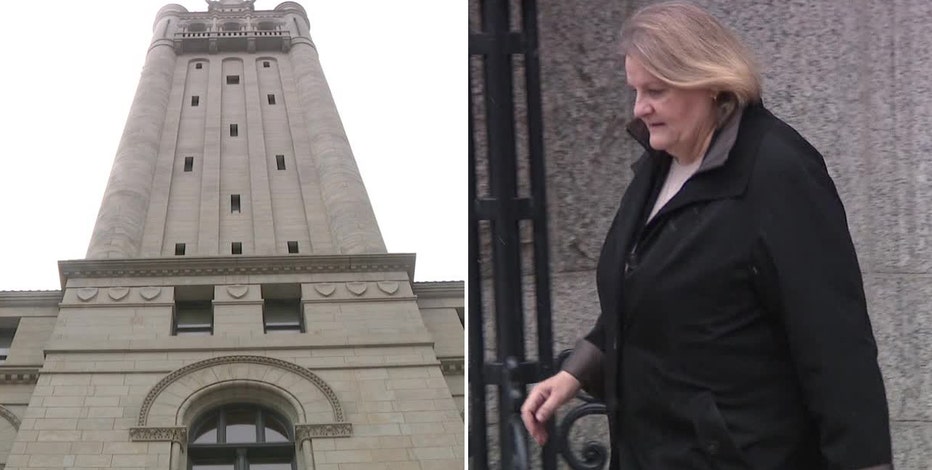
Milwaukee County Judge Dugan trial: How does federal court work?
Jury selection in the federal trial of Milwaukee County Judge Hannah Dugan begins Thursday. So how does federal court work?
Agents arrested Flores-Ruiz outside the courthouse after a brief foot chase that day. Dugan was arrested by federal agents at the Milwaukee County Courthouse on April 25.
The Wisconsin Supreme Court later suspended Dugan indefinitely after she was arrested and charged. Flores-Ruiz later pleaded guilty to illegally reentering the U.S. and, in November, was deported.
Federal Judge Lynn Adelman is overseeing the Dugan trial.
Complete coverage
Dig deeper:
FOX6 News will stream special coverage of the Dugan trial each day on FOX LOCAL. The app is free to download on your phone, tablet or smart TV.
- Judge Dugan trial: Jury seated after day of questioning (Dec. 11, 2025)
- Judge Dugan trial: How did we get here?
- Judge Dugan trial: Who is Eduardo Flores-Ruiz?
- How does federal court work?
- Courthouse immigration enforcement policy questions remain
The Source: FOX6 News reviewed court filings and video associated with the case, is at the federal courthouse for the trial and referenced prior coverage of the case.