

National Geographic photographer brings science into focus at Berkeley's Wonder Lab
Oakland, Calif. - Mark Unger has built a career capturing moments most people never get to see, from the up-close diversity of moths to the rare sight of a lobster breaking free of its shell.
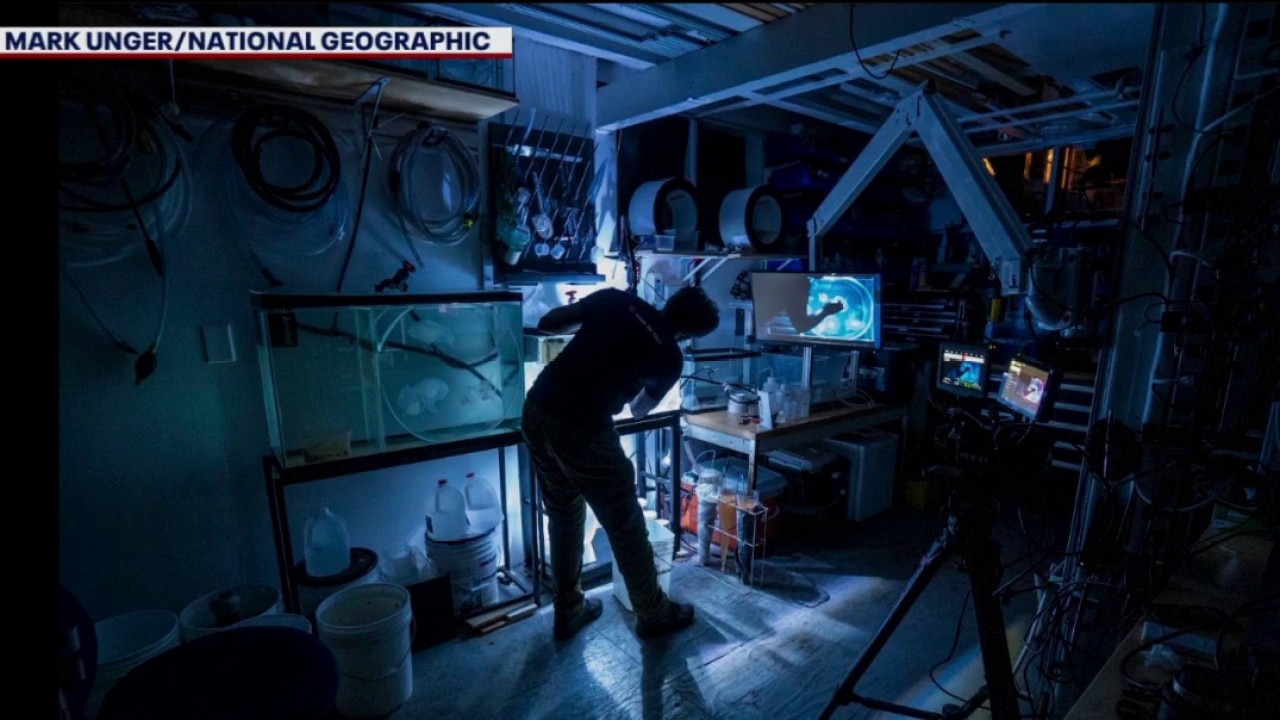
Unger, a National Geographic Explorer and science photographer, works at Wonder Lab in Berkeley, a space he describes as part science lab, part classroom and part photography studio.
"So we have our science sort of aspects, we have the education aspects, and then mainly we're a photography studio," Unger said. "So we do all sorts of biology, photography, animals, plants, critters, scientific phenomenon, all wrapped in one."
National Geographic Science Photographer teaches Bay Area kids
Professional science photographer, Mark Unger shares the importance of kids learning photography ahead of World Photography Day, Aug. 19
Unger's work is funded by the National Geographic Society, a global nonprofit that supports explorers doing storytelling and conservation photography.
"I think many people who choose photography as a career are trying to learn about the world around them, and that's what I still get to do today," Unger said. "Now I've always loved science, and so working with animals, working with scientists, that's just the dream place to be."
One of his recent projects involved photographing moths with Dr. Yash Sondi, who studies why the insects are drawn to artificial light.
"Most people when they think moths think, oh no, they're gonna eat my sweaters or they're like gonna get in my ears," Unger said. "But they're very charismatic, and I wanted to share all of the feelings I had about moths and all of the cool science there."
Another standout assignment took him to Maine, where he and fellow National Geographic Explorer Pete Muller spent weeks trying to capture lobsters molting on camera.
"They don't grow like you and I do, where we just get a little bit taller and a little bigger," Unger said. "They actually have to break out of their shells once a year and inflate. And this is not a thing that almost anyone has ever gotten to see, so we flew the lobsters in and we actually slept in the lab for weeks at a time until we had that one moment, where 20 minutes later, the lobster had cracked out."
At Wonder Lab, Unger said the goal isn't to teach technical camera skills alone but to help students see photography as a way of directing their attention.
"Photography does this incredible job of expanding our perception," Unger said. "It lets us see things that we normally couldn't see by ourselves. So we use high speed cameras to slow things down. We use time lapses to speed things up."
He pushed back on the idea that smartphones have made photography education unnecessary for kids.
"I think kids already know photography because photography is just pointing your curiosity in a direction and tapping a little button or a little shutter to save that and share it with the world," Unger said.
Unger's next project focuses on killifish, small fish native to Africa that researchers at Stanford and UCSF are studying for what they might reveal about longevity.
"There's a couple of labs here in the Bay Area at Stanford and UCSF who study how these little fish may actually change how long we can live," Unger said.
Unger's visit came ahead of World Photography Day, which falls this Wednesday.
The Source: KTVU interview with Mark Unger, National Geographic Explorer and science photographer