

Berkeley is deciding whether to start a public bank for the East Bay with funding from taxpayer dollars
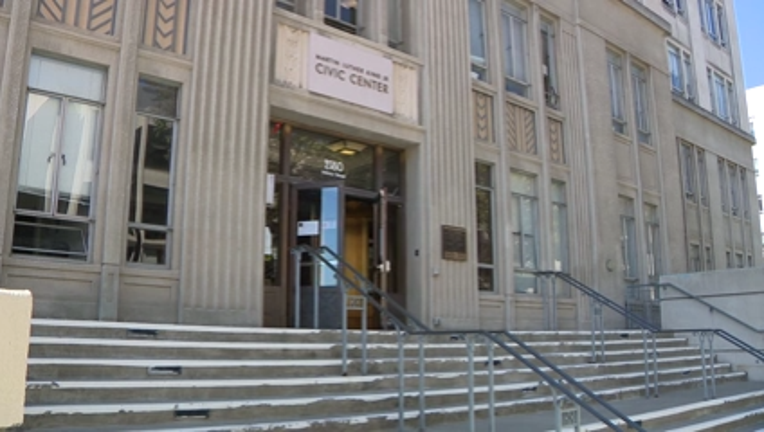
Berkeley's Measure Z on the Nov. 3 ballot would create a parcel tax to fund a public bank.
BERKELEY, Calif. - Voters in Berkeley are being asked to decide on a parcel tax to establish seed money for a regional public bank.
The bank would finance affordable housing, small businesses as well as green energy and sustainable infrastructure efforts not only in the city but regionally, in the East Bay.
What we know:
Measure Z on the Nov. 3 ballot seeks to raise $58.3 million over six years through the special tax.
Advocates say the goal would be to provide loans at lower interest rates than those compared to conventional private banks.
"Big corporate banks prioritize shareholder profits, rather than Berkeley’s needs," they stated in the legislative text of Measure Z.
Under the proposal, Berkeley would be a shareholder of the financial institution.
"Unlike a private bank, Berkeley is an owner. The community holds seats on the bank's board, reviews its books, and has direct input into what it funds," said the Coalition to Keep Berkeley Money Local. "And when the bank turns a profit, that money comes back to Berkeley — not to Wall Street shareholders."
Parcel tax on Berkeley property owners
Approval of Measure Z would mean starting Jan. 1, 2027, property owners in Berkeley would be taxed up to $0.06 per square foot on residential spaces. A tax at the rate of $0.09 per square foot would be levied on commercial and other non-residential properties.
"All funds would be subject to review, allocation and approval by the City Council. The City Council would annually increase the tax rate based on inflation," according to the Berkeley city attorney’s analysis of Measure Z.
The revenue will be placed in a dedicated fund that is separate from Berkeley's general fund, according to the Coalition to Keep Berkeley Money Local.
The public bank would be run by a governing board that sets policy and lending priorities.
The board would include elected officials, community members, and financial professionals, with experienced, professional bankers, not city staff, behind the institution’s day-to-day operations, the coalition stated.
Investing its own money
What they're saying:
"Berkeley's priorities are under threat from the banks, corporations, and D.C. politicians controlling our money. Federal cuts have undermined our ability to provide truly affordable housing and have clawed back the funds that were supposed to go towards building healthy and resilient communities. Small businesses are struggling to access the capital and support they need to thrive," argued the Coalition to Keep Berkeley Money Local, adding, "Berkeley deserves a better way to invest its money."
Proponents also pointed to the fact that the revenue would be reinvested back into the community.
Dig deeper:
Many pointed to the success of the Bank of North Dakota, the only state-owned bank in the United States.
The long-running financial institution was established in 1919 with a goal "to support agriculture, commerce and industry."
The Bank of North Dakota's loan programs are now geared toward the wider economic needs of the state.
In addition to supporting agricultural and other business development efforts, loans are granted to students attending North Dakota colleges and other educational funding as well as support for local communities, public facilities and essential infrastructure needs in the state.
As part of the public bank model, the financial institution's earnings go back to the state.
Last year, BND reported a net income of $231.8 million, up from $200.4 million from the year before, figures that the institution said reaffirmed "its long-held role in strengthening North Dakota’s financial resilience."
Loans outside of Berkeley
Among the arguments against Measure Z, the pushback appears to stem most from concerns about who would benefit from the loans generated by funds established by Berkeley property owners.
"It’s Berkeley money for a regional institution. Loans can go anywhere in the East Bay," argued StopMeasureZ.com on its website. The organization is leading the campaign against the initiative.
The group couched the measure as one that would leave Berkeley footing the bill for municipalities outside the city. "Imagine if only Berkeley paid for BART. That’s the financing plan," StopMeasureZ.com stated.
The volunteer-led organization Affordable Berkeley echoed those concerns. The group also said the measure doesn’t offer any guarantees and presents itself as a gamble for the city of Berkeley as there are no assurances that the public bank would ever get licensed to operate.
And while noting that supporting affordable housing, clean energy and lending to small businesses are goals widely shared by the city’s residents, Affordable Berkeley argued that as a regional bank, the measure could leave Berkeley bankrolling the East Bay, with no contributions from Oakland, Richmond or Alameda County.
Larger loan portfolio
Advocates addressed that concern, saying that a larger volume of loans can lead to greater profitability.
"A larger, more diversified regional loan portfolio that spans Berkeley, Oakland, Richmond, and other East Bay communities is lower-risk and more profitable than a single-city lender, and Berkeley shares proportionally in that profitability as an owner," the Coalition to Keep Berkeley Money Local argued.
SEE ALSO: 2026 Election Voter Guide: What’s on the California midterm election ballot?
The group also said Berkeley's role would be to provide the start-up capital of the bank and that the long-term goal has and will continue to be to establish a "fully co-owned regional bank, with Oakland, Richmond, and Alameda County contributing their own capital alongside Berkeley's."
Supporters and opponents
Those in support of the initiative include State Sen. Jesse Arreguín, D-Berkeley; Berkeley City Council Member Ben Bartlett; Alameda County Supervisor Nikki Fortunato Bas; and State Controller Malia Cohen.
Those against the measure include Berkeley City Council Members Mark Humbert and Terry Taplin as well as the Berkeley Democratic Club.
Measure Z requires a majority vote to pass.
Bay Area election officials challenge DOJ voter demands as federal court battle continues
Election officials in Santa Clara, Contra Costa and Solano counties are pushing back against Justice Department demands involving suspected noncitizen voters. A federal appeals court dismissed the DOJ's emergency appeal as the legal fight continues ahead of Election Day.