

East Bay woman and stage 4 lung cancer survivor shares story of hope five years later
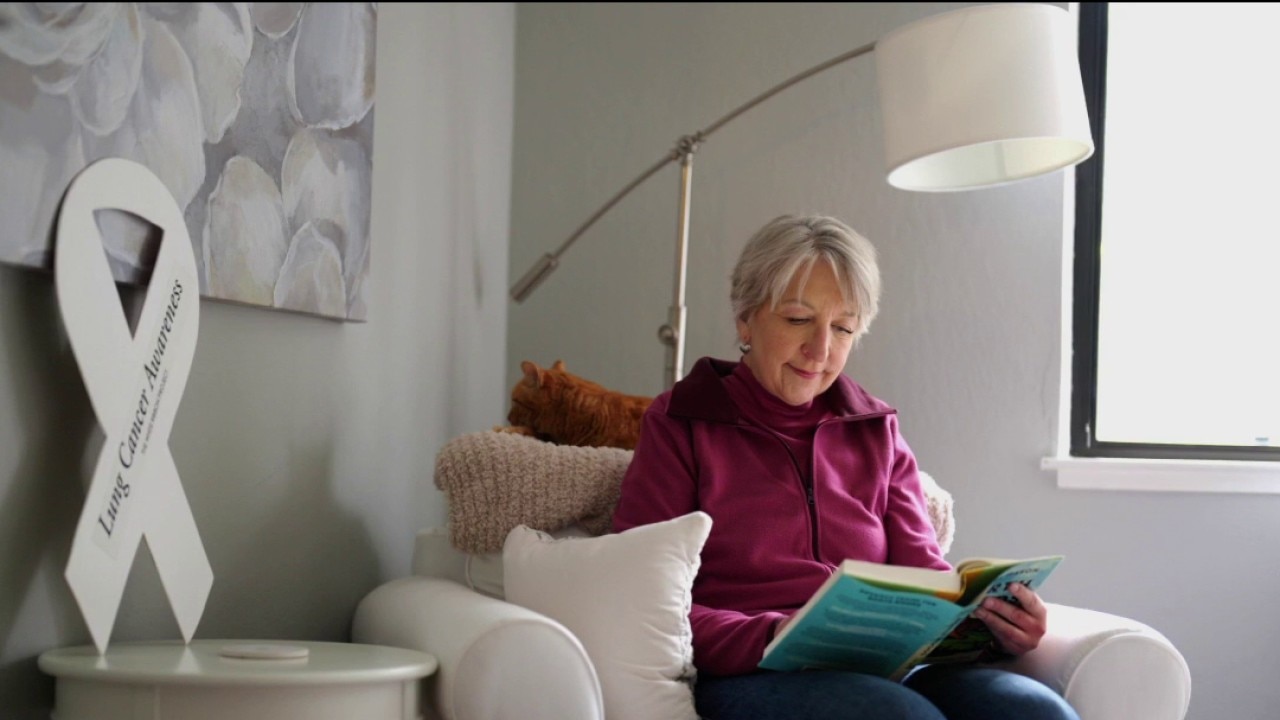
World Lung Cancer Day: A Bay Area Story of Survival
East Bay woman recounts her five-year journey from stage four lung cancer diagnosis to international awareness advocate. According to the American Lung Cancer Foundation, 60% of lung cancer diagnoses are for non-smokers - just like Maggie McCloskey.
Oakland, Calif. - Lung cancer is often associated with smoking, but according to the Lung Cancer Foundation of America, 60% of people now diagnosed with lung cancer are non-smokers. Maggie McCloskey is one of them.
McCloskey was diagnosed with lung cancer in 2021, and she shared her story in the KTVU studio as part of an effort to highlight survivors and raise awareness about the disease.
"I had a big birthday that year and I thought this is going to be the best year of my life," McCloskey said. "Then a month or so later I started having these weird symptoms, ocular migraines, the partial DVT in my leg, more vision problems."
McCloskey said a random pain in her chest led to an EKG at her primary care doctor's office, which showed an abnormality. That led to a referral to cardiology, and eventually a CT scan on Aug. 31, 2021.
She found out the results before she was able to speak with her doctor.
"I was reading these words, metastasis, these cancer-sounding words," McCloskey said.
A brain MRI later showed McCloskey had brain metastases, which were causing her vision problems. She said she never had traditional lung cancer symptoms, such as coughing or shortness of breath.
"The only thing I knew about cancer, stage four, is that it's terminal," McCloskey said. "I thought, okay, I'll do chemotherapy, I'll lose all my hair, and I didn't know if I'd be around by Christmas."
Five years later, McCloskey is still here. She credits hope and a shift in perspective for helping her through the ongoing process.
"I know that I can choose to think about things a different way," McCloskey said. "So I looked at lung cancer as, what can I learn from this experience."
McCloskey said the year of her diagnosis turned out to be one of the best of her life — a statement she acknowledged might surprise people.
"The best year," she said, when asked to confirm. Asked why, McCloskey pointed to the treatment option that became available to her. "Because there was something that could deal with my cancer. I was still — I'm still here five years later."
McCloskey said she is not in remission, but is managing the disease, which she compared to a game of whack-a-mole. She is currently on her sixth line of treatment, some of which weren't available when she was first diagnosed five years ago — something she said underscores the importance of continued lung cancer research.
McCloskey said biomarker and genomic testing played a critical role in her treatment. Testing revealed she had a specific mutation, allowing her to take a targeted therapy pill rather than undergo chemotherapy.
"So in my case, the silver lining on that, what turned out to be one of the best years of my life, was that I did have a biomarker," she said. "I could take a pill, a targeted therapy pill, that stopped the cancer in its tracks for a while, rather than having to go chemotherapy. It's kind of like the target, the sniper, as opposed to the chemo."
McCloskey encouraged anyone newly diagnosed with lung cancer to seek out biomarker testing, and encouraged friends and family members of patients to promote research and connect their loved ones with lung cancer support organizations specific to their mutation or diagnosis.
McCloskey is continuing her advocacy work and will travel to Seoul, South Korea, in September for the World Conference for Lung Cancer.
The Source: KTVU interview with Maggie McCloskey, American Lung Cancer Foundation