

FDA assigns highest-risk status to 1.5M eggs recalled over salmonella risk
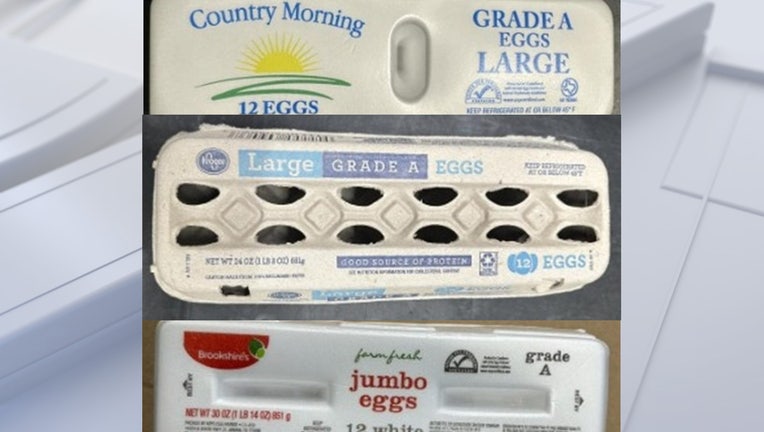
Salmonella fears spurred the recall of over 1.5 million eggs that were sold in multiple states under several different brand names. (FDA)
The U.S. Food and Drug Administration has assigned the highest-risk Class 1 status to an egg recall that was initiated last month.
Over 1 million eggs recalled
Dig deeper:
The Class 1 status was assigned to the recall on August 12, according to an FDA alert.
A Class 1 status indicates "a situation in which there is a reasonable probability that the use of or exposure to a violative product will cause serious adverse health consequences or death," the FDA said.
The recall was issued by Midwest Poultry Services, L.P., in July and covers 1,589,577 white shell eggs and brown cage-free shell eggs that were sold under the Kroger, Simple Truth, and Country Morning names, among others.
The eggs were produced in Texas but shipped to multiple states, including:
- Arkansas
- Louisiana
- Mississippi
- New Mexico
- Oklahoma
- Texas
The eggs subject to the recall have an identifying code on the left or right sides of the carton in date-coding ink only. Only the ones with the codes P-1950 or 0840962 with a Julian Date between 157 and 184 on them are subject to the recall.
So far, no illnesses have been reported in connection to this egg recall.
List of affected egg cartons
What you can do:
Anyone who has purchased the eggs affected by the recall is urged not to eat them and to return the products to where they were bought for a full refund.
Why you should care:
Eating food that has been contaminated with Salmonella can cause salmonellosis, a common bacteria-based foodborne illness. Most infected people will experience fever, diarrhea, or abdominal pains within six hours to six days after eating the food. The illness can last up to a week. Even though it can cause some hospitalizations, most people recover without treatment.

What is salmonella infection?
People with salmonella infection often suffer diarrhea, fever, and stomach cramps after getting in contact with infected animals, their feces, or their environment or eating contaminated food or drinking contaminated water.
The Source: Information for this article was taken from an FDA alert issued on August 12, 2026, the FDA website and previous reporting by FOX Local. This story was reported from San Jose.