

Kaiser nurses, employees strike across California and Hawaii

Kaiser nurses, employees strike across California and Hawaii
A large strike by Kaiser Permanente employees kicked off Monday morning, with union leaders calling it an open-ended "unfair labor practice strike."
OAKLAND, Calif. - A large strike by Kaiser Permanente employees kicked off Monday morning, with union leaders calling it an open-ended "unfair labor practice strike."
By the numbers:
The unions involved include the United Nurses Associations of California and the Union of Healthcare Professionals.
Together, they represent about 30,000 Kaiser employees across California and Hawaii, including registered nurses, lab professionals, nurse midwives, physical therapists and physician assistants. About 3,000 Kaiser employees are on strike in Northern California.
Picketing began at 7 a.m. in Oakland and at other Kaiser facilities across the state, including in Roseville and Santa Clara.
"We struck in October and since that time we’ve made no real progress," registered nurse anesthetist Sanne Jaobsen said while picketing in Oakland. "Kaiser walked away from the bargaining table for a month and then when they've come back to the table, they continue to not bargain in good faith. Despite their claims, they are not bargaining in good faith, they are not showing up and having real discussions and bringing decision makers to the table."
Arezou Mansourian, a physician's assistant on the bargaining team, agreed.
"We’ve told them that all of these patients are going to not have providers for an indefinite period of time," Mansourian said. "They have basically shown and said in so many words that they don’t care. It’s not about patient care to them, and it’s definitely not about employees."
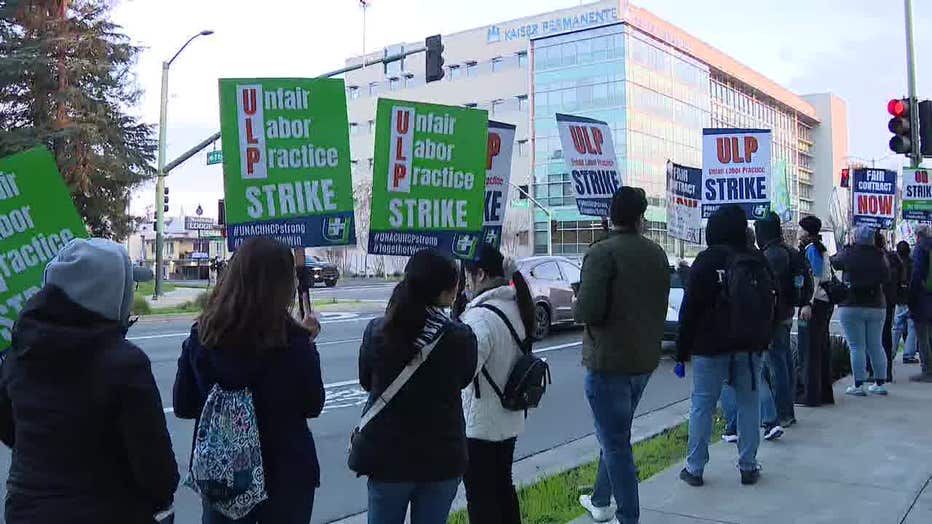
Kaiser nurses and employees go on strike in Oakland. Jan. 26, 2026
What they're saying:
Union leaders say the strike is driven by what they describe as a growing crisis caused by Kaiser’s failure to invest in safe staffing levels, timely access to quality care and fair wages for frontline workers. The two sides have been bargaining for seven months in an effort to reach a contract agreement.
Kaiser said its hospitals, emergency rooms and nearly all medical offices will remain open during the strike, though some appointments may be shifted to virtual care. The company said it has employees ready to step in, although union workers worry those employees are not licensed to do their jobs.
The other side:
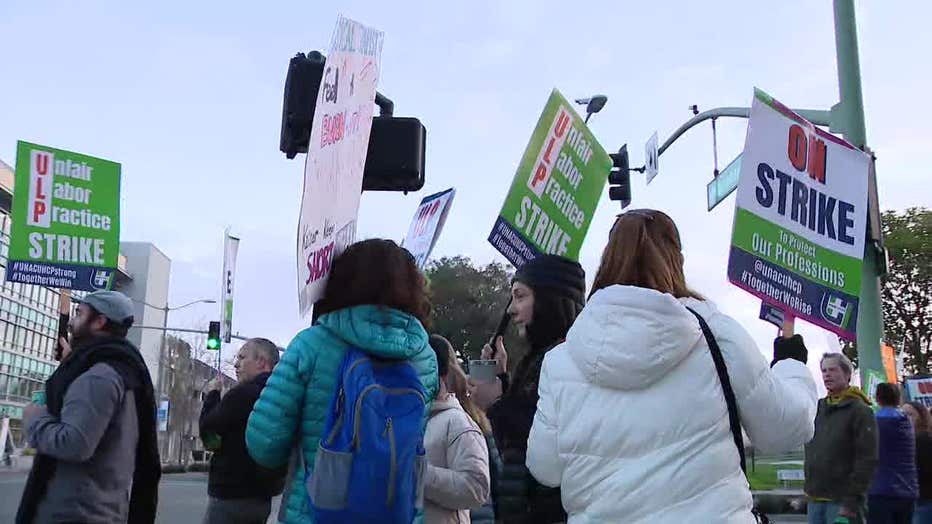
Kaiser nurses and employees go on strike in Oakland. Jan. 26, 2026
In a statement, a Kaiser representative said the strike comes at a time when healthcare costs are rising and millions of Americans are at risk of losing health insurance. The statement said, "This underscores our responsibility to deliver fair, competitive pay for employees while protecting access and affordability for our members. We’re doing both."
Kaiser also said alliance employees already earn an average of about 16% more than similar roles at other healthcare organizations, and 24% more in some markets. The company said its current proposal, which it described as the strongest compensation package in its national bargaining history, includes a 21.5% wage increase over the life of the contract, with 16% within the first two years.
Nurses said the proposal is not enough when Kaiser is also trying to decrease their retirement, life insurance and healthcare benefits.