

PG&E to defer $2B in capital investments after wildfire reforms collapse
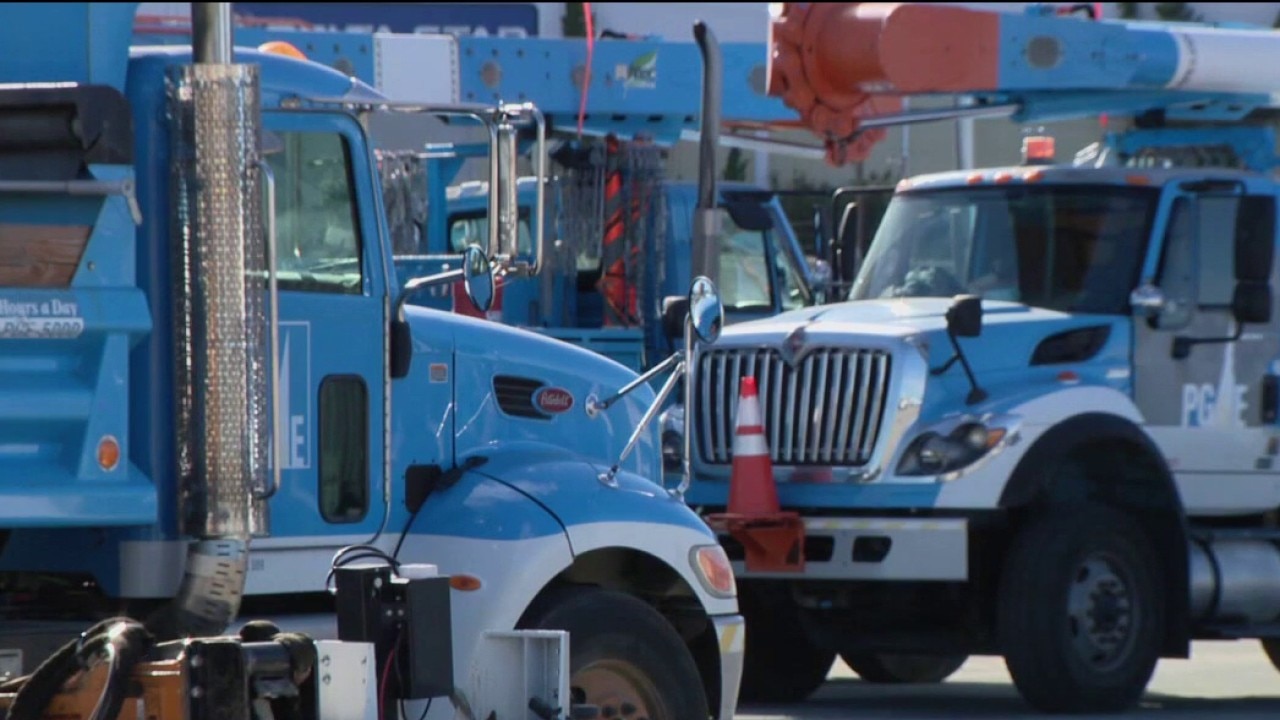
PG&E to scale back spending following wildfire liability bill failure
PG&E's CEO Patti Poppe said the utility will defer $2 billion in planned spending next year, which could delay electrical connections for new homes, renewable-energy projects, data centers and other development after SB 492 -- a wildfire liability reform measure - failed in the California legislature. PG&E announced it will cut capital spending by $2 billion in 2027 to $11.4 billion.
OAKLAND, Calif. - Pacific Gas and Electric Company announced plans on Wednesday to postpone roughly $2 billion in capital investments next year to bolster its finances, aiming to "reinvent" itself and improve its financial outlook.
Cutting capital spending
What they're saying:
CEO Patti Poppe said the nearly 15% cut to capital spending stems from increased borrowing costs tied to state liability frameworks.
The company's 2027 plan now includes an investment of $11.4 billion, compared with $13.4 billion previously.
"We're unable to fund the continued transformation at our current pace," she said in a pre-recorded video. "Because of the way California law assigns the risk of wildfires to utility customers and investors, risk goes up for them unlike in any other state. When risks go up, lenders charge more."
Reduction could impact projects
Why you should care:
The reduction in capital spending could impact project timelines for connecting new homes, establishing data centers, and implementing clean energy initiatives. However, PG&E emphasized that its wildfire safety plans will be fully maintained.
"This is a serious moment. But I believe it can also be a turning point," Poppe said. "Because of the way California law assigns the risk of wildfires to utility customers and investors, risk goes up for them unlike in any other state. When risks go up, lenders charge more."
Wildfire bill collapses
Why you should care:
The decision follows inaction a day earlier by California lawmakers, who declined to vote on a proposed wildfire liability bill, SB 492, on the final night of the legislative session.
The bill would have established an expedited payment system for wildfire victims while holding major utilities, including PG&E and Southern California Edison, liable if their equipment sparked a catastrophic fire.
Gov. Gavin Newsom had initially supported a plan alongside PG&E and other investor-owned utilities that would have limited the utility's payouts if its equipment causes another wildfire.
The proposal also would have allowed insurance companies to seek reimbursement from the utility providers to recoup financial losses.
That was the part of the reform bill investor-owned utilities, PG&E and Southern California Edison opposed.
Their CEOs wrote letters to Assembly Speaker Robert Rivas earlier this week, urging lawmakers to change the bill to limit the amount of money they would have to pay if their equipment sparked a wildfire.
On the final day of the legislative session, Rivas declined to bring the bill up for a vote, saying it didn't deliver adequate reforms, effectively killing it. After the bill died, PG&E's stock increased 7 percent.
TURN upset
The other side:
Mark Toney, CEO of The Utility Reform Network, known as TURN, a longtime critic of PG&E, was upset.
"The legislature adopted nothing," he said.
Toney said things TURN wanted were also ignored to keep the California Wildfire Fund able to cover liabilities caused by electric utility equipment.
"We need a plan that makes the $40 billon last and doesn't get depleted," he said. "That didn't happen."
TURN's position is that PG&E should live within the money it has and quit the slow, expensive process burying power lines.
"At a cost of $4 million a mile and we're gonna replace those with insulating overhead powerlines, insulated poles, at one-fifth of the cost and it can be done much faster," he said.
Toney likened the strategy to an individual waiting to buy a car until their credit improves to secure lower rates, noting that "ratepayers do pay the interest."
"It doesn't surprise me that PG&E would say, 'You know, what we're going to delay taking out some loans until the interest rate goes down,' just like you might say, 'Well, I'm not going buy the car today because my credit is bad, but I'm gonna work on my credit.' And maybe in a few months, I'm going to look again because my credit has gone up and I will pay less."
In response to the stalled legislation, PG&E is initiating a review to evaluate regulatory, financial, and operational alternatives.
The process is expected to take more than a year to complete.
The Source: Information for this story came from PG&E CEO Patti Poppe, Mark Toney, CEO of The Utility Reform Network, and prior reporting