

SNAP uncertainty: Bay Area families worried about 'food crisis'
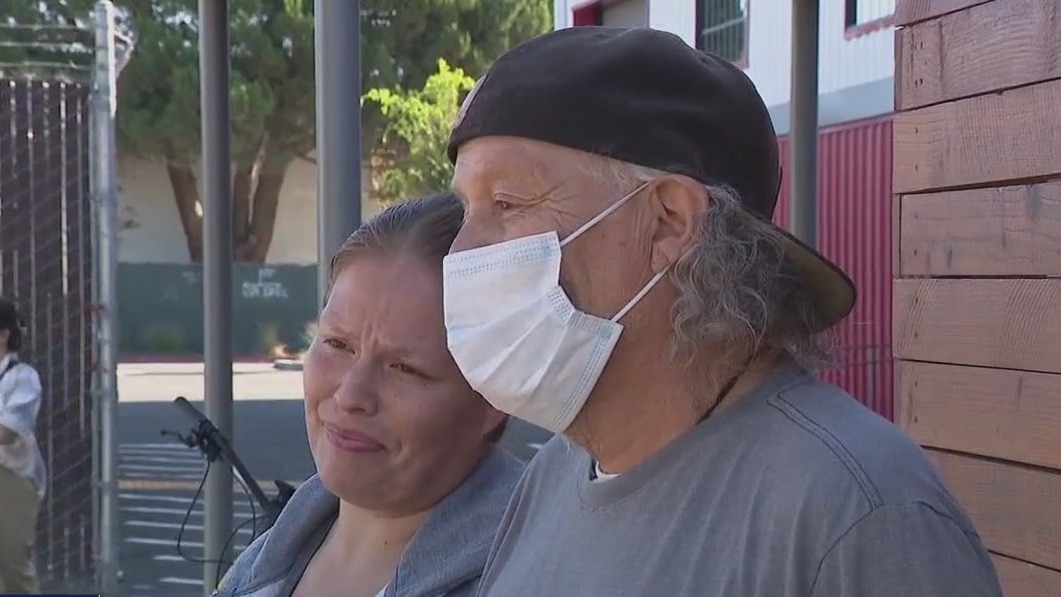
Alameda families trying to get by in SNAP uncertainty
Kelly and Javier Gonzalez of Alameda are trying to get by in times of SNAP uncertainty.
ALAMEDA, Calif. - Kelly Gonzalez and her father, Javier, were among the many shoppers at the Alameda Food Bank on Monday, worried about how they will put food on the table, since the Trump administration's announcement that it will partially fund federal food supplements, and then another bombshell that it wouldn't pay for SNAP until the federal shutdown ends, has left more questions than answers.
Doing the best they can
"We're doing whatever we can to make ends meet for the rest of the month," said Kelly Gonzalez, a working mother of three who still can't make ends meet. She's currently working and also caring for her father, who has cancer.
"His health right now is taking a toll on all of us," Kelly Gonzalez said.
Javier Gonzalez worries about his daughter, too.
He sees how hard she's working, but she still needs financial help to buy groceries.
"Milk, eggs, they're double at Safeway," he said. "It's very expensive. I know she needs help."
He said he's grateful to the food pantry, where he took home a cart full of fresh vegetables and cage-free eggs.
"I like to make chicken soup," he said. "And they always have cabbage."
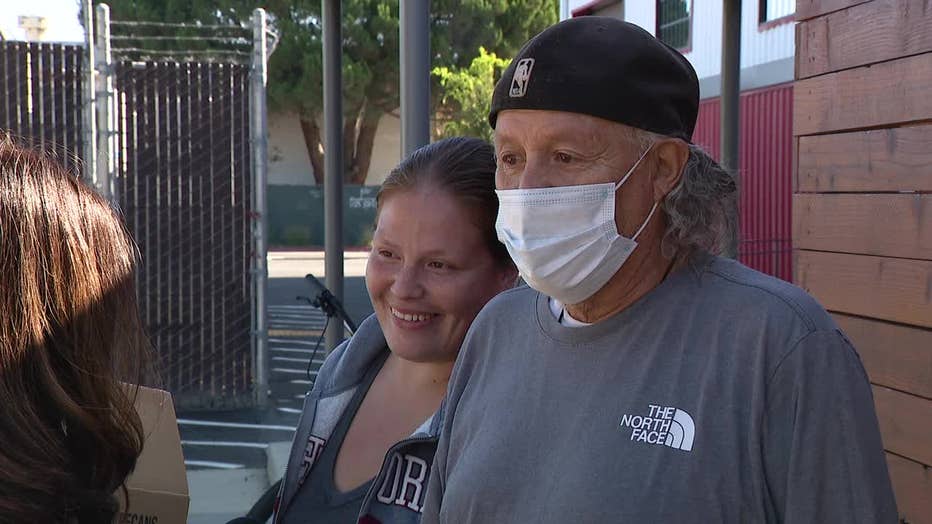
Kelly and Javier Gonzalez get food at the Alameda Food Bank. Nov. 3, 2025
500K CalFresh recipients
And there are many more people in need, like the Gonzalez family.
In the nine Bay Area counties, more than half a million people rely on SNAP benefits, known as CalFresh in California.
Food banks need more volunteers and are running out of food. The average benefit is usually about $190 a month, and this month's recipients will likely get about half of that, after federal judges ruled last week that the Trump administration can't withhold SNAP benefits altogether.
Trump's announcement on Monday that it will partially fund SNAP benefits has been confusing. And then he posted on Truth Social on Tuesday that SNAP benefits won’t be paid until the government reopens.
Teale Harden, executive director for the Alameda Food Bank, said the need for food has been growing steadily over the years, and now with the government shutdown, there is "still so much uncertainty."
In 2019, the Alameda Food Bank served 60 people a day from a triple-wide trailer, she said. Last Wednesday, there were 760 families, with an average of 1,600 families shopping for free food a week before the SNAP fears.
She still doesn't know how the food bank will keep up with providing enough food to people.
"It's going to be a big challenge," she said. "We know people will be struggling."
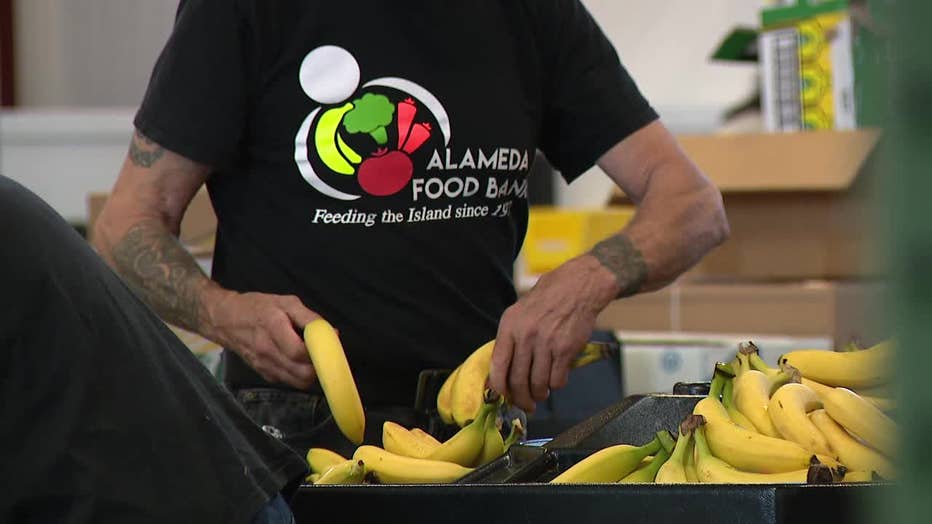
Volunteers puts out bananas at the Alameda Food Bank. Nov. 3, 2025
Could take weeks, months
The process of loading the SNAP cards, which involves steps by state and federal government agencies and vendors, can take up to two weeks in some states.
But the USDA warned in a court filing that it could take weeks or even months for states to make all the system changes to send out reduced benefits. People who receive the benefits are trying to figure out how to stretch their grocery money further.
California Attorney General Rob Bonta said at a news conference that it would take his state about a week to load benefit cards once the funding is made available.
"These are folks who are hungry, and every day matters," Bonta said.
The SNAP scramble all stems from an announcement from the US Department of Agriculture last month that said the November SNAP benefits wouldn’t be paid due to the federal government shutdown.
That set off a scramble by food banks, state governments and the nearly 42 million Americans who receive the aid to find ways to ensure access to groceries.
And then on Tuesday, Trump seemed to change course by putting on social media will only be given when the "Radical Left Democrats open up government, which they can easily do, and not before!"
It wasn't immediately clear what result from Trump's threat.
Stress on local food banks
Michael Altfest, spokesman for the Alameda County Community Food Bank, said they are bringing in about twice as much food as they typically do.
"We are adding pop-up distributions, looking at increasing our home delivery," he said.
People shop at the Alameda Food Bank. Nov. 3, 2025
Regi Young, executive director of the Alameda County Community Food Bank, was more blunt, calling what's happening a "food crisis," as many food banks are running out of food within hours of opening up.
Javier Gonzalez hopes that doesn't happen
And he is already thinking ahead to the holidays.
"It's sad, you know," he said. "It's sad because a lot of people are going to be hurting on Thanksgiving, you know, and we sure could use help any way we can get it."