

What are ICE-free zones? What they can and can't do
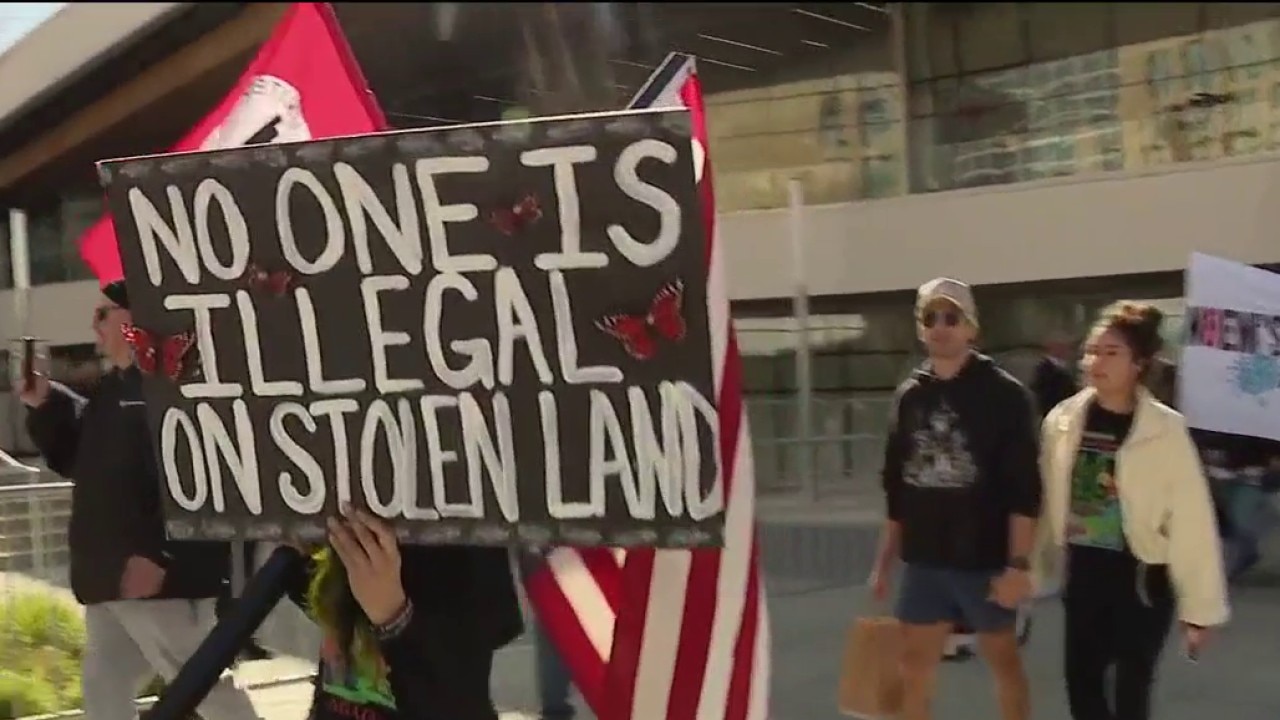
South Bay activists say ICE presence at Super Bowl LX not welcome
Super Bowl week will bring lots of fans and attention to Santa Clara County. Community groups fear it will also bring ICE.
OAKLAND, Calif. - Cities and counties across the country have started to create what's known as "ICE-free zones," as a way to prevent, or at least deter, unauthorized federal immigration actions on their property, fueled in large part by aggressive raids in Chicago and the deaths of two Americans at ICE protests in Minnesota.
In the Bay Area, Santa Clara County and San Jose have both enacted ICE-free zones, and Alameda County and Oakland, and other jurisdictions, have followed suit.
KTVU interviewed Alameda County Supervisor Nikki Fortunato Bas on what an ICE-free zone can and can't do after supervisors passed her legislation last month.
Put simply, the zones serve as a deterrent to federal immigration activities and are intended to make community members feel safe through the use of signs – but they have several limitations as well. Counties can't prevent ICE from serving judicial warrants or using federal land. And if they decide to enter an ICE-free zone, municipalities could send a cease-and-desist letter, or take them to court.
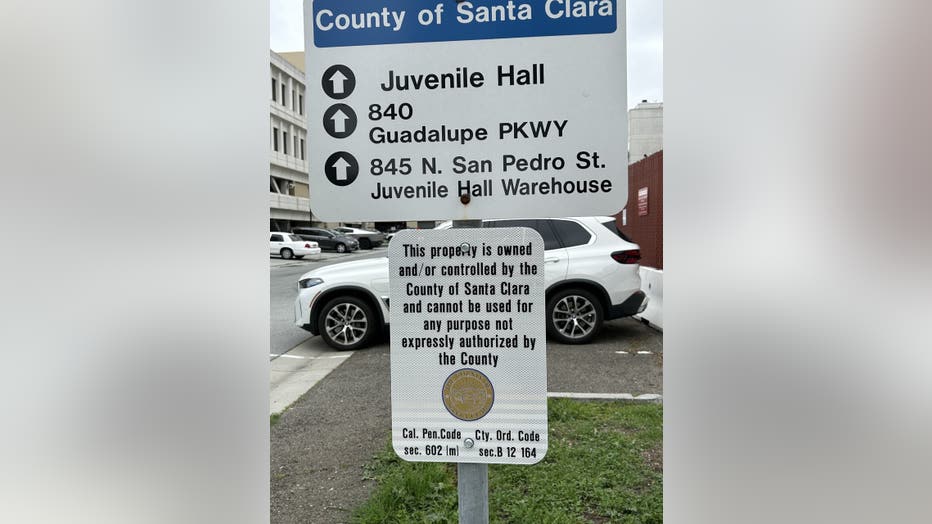
A sign denoting an ICE-free zone in Santa Clara County at juvenile hall.
What is an ICE-free zone?
An ICE-free zone is an area – mostly in the form of signs and physical barriers – that signifies the municipality wants to block federal immigration agents from using city- or county-owned property for unauthorized federal immigration purposes.
The signs don't say "ICE-free zone", either. Rather, they simply state that the property is owned by the jurisdiction and that unauthorized use is forbidden, including for civil immigration enforcement operations.
"In our case, Alameda County property can only be used for authorized purposes, for the county's services, for example," Bas said. "And we will prohibit ICE from using our county property for civil immigration enforcement. That could be staging and planning operations, processing people who are detained, for example. Those types of activities would not be allowed on our county property."

The city of Richmond discussed ICE-Free Zones at a city council meeting.
What can an ICE-free zone do?
ICE-free zones are intended to make community members feel safer.
So, if someone is visiting a county courthouse, hospital or library, Bas explained, they'll see a sign that says the property is only for authorized county use, and that unauthorized immigration actions are forbidden.
"The basic premise is that, as a county, our charge is to provide county services, safety net services, social services, health services," Bas said. "The county is not in the business of enforcing and doing other government entities' business, like civil immigration enforcement. So what should be happening on our property is only our own work."
Bas added: "Our intent is really to make sure that we are able to provide our services and that people feel that we are protecting their safety as they come to our county for services."
Specifically, ICE-free zone policies call for a specific inventory of property that could be used for immigration activity, and then Alameda County will put up signs and physical barriers, as well as establish protocols, to make sure the property is used for those purposes.
Alameda County does work with other law enforcement agencies, like Oakland police, the U.S. Marshals and the DEA, for example. If those agencies want to use the property, they would have to talk with the sheriff and get permission.
What can't an ICE-free zone do?

Dozens of California Highway Patrol officers donning riot gear faced off with demonstrators protesting against a surge of federal immigration officers in the Bay Area at the entrance to Coast Guard Island in Oakland, Calif., Thursday, October 23, 202
Alameda County supervisors can't tell the federal government what to do on its own property.
For example, supervisors cannot ban the federal government from creating an ICE detention center at the now-closed FCI Dublin women's prison, because that property sits on federal land.
These zones also don't – and can't – stop ICE from arresting people if they have a valid judicial warrant.
Instead, the zones aim to prevent broad, warrantless operations on county property.
Who else has ICE-free zones?
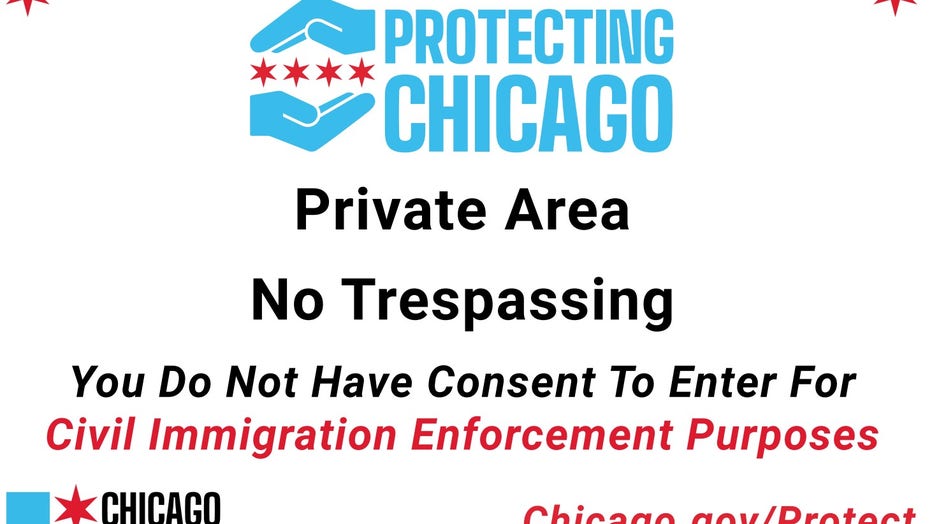
A no trespassing sign in Chicago to prevent ICE actions. Courtesy Chicago.gov
Chicago was the first in the country to enact an ICE-free zone on Oct. 5, 2025. That's when the Chicago mayor signed an executive order preventing ICE's use of public school and city-owned parking lots, where immigration officers had indeed staged immigration enforcement operations.
Santa Clara County's supervisors voted unanimously to create such a zone two weeks later.
The cities of San Jose, Oakland, Santa Clara, Portland, Ore., and Evanston, Illinois, also have these zones. Minneapolis' mayor signed an executive order issuing an ICE-free zone in December 2025.
San Francisco, Berkeley and Richmond are actively considering ICE-free zones. Los Angeles County, a county in Michigan, and Alameda County adopted ICE-free zones in January.
"There's strength in numbers," Bas said. "As you know, we are not the first, and we won't be the last jurisdiction to pass these types of policies."
Doesn't California already have sanctuary status?
A sanctuary city or state, like California, limits cooperation between a government and ICE.
An ICE-Free Zone sets physical boundaries and adds a layer of response and communication.
What are examples of ICE-free zones?
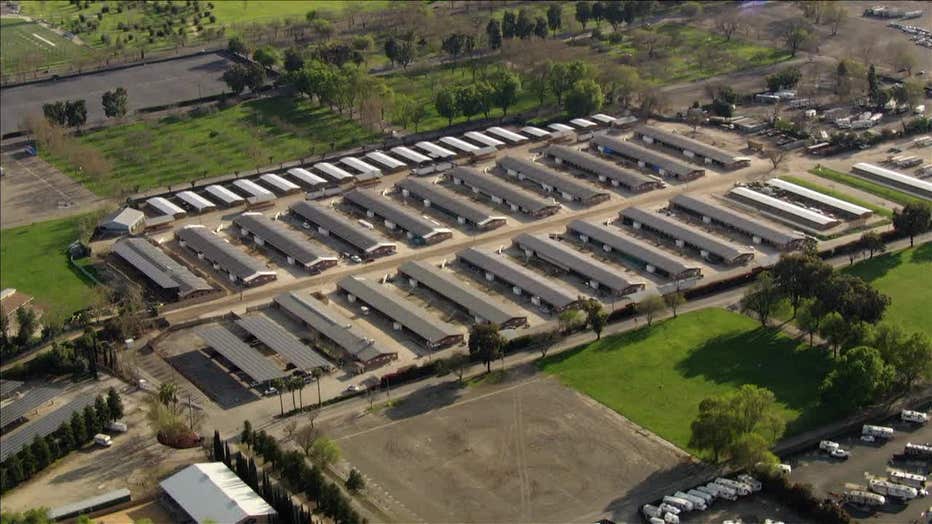
An aerial view of the Alameda County fairgrounds in Pleasanton.
In the Bay Area, Alameda County owns the Pleasanton Fairgrounds and part of the Oakland Coliseum, which potentially could be used for large-scale operations. The county is currently taking an inventory of all its property and will eventually put up signs.
Santa Clara County owns the fairgrounds on Tully Road in San Jose and the South County Airport on Murphy Avenue in San Martin, as other examples. They also own the jail and juvenile hall, where signs are already up.
So far, immigration officers have not been known to commandeer any property in the Bay Area.
And not all property will be subject to these ICE-free restrictions.
For instance, when Customs and Border Protection agents came to the Bay Area for one day in October 2025, before President Trump called off the surge, they used US Coast Guard property in Alameda, which is federal land.
What does the Department of Homeland Security say?

Secretary of Homeland Security Kristi Noem and Border Patrol official, Gregory Bovino. (Photo by Carlos Gonzalez/The Minnesota Star Tribune via Getty Images)
KTVU reached out to the Department of Homeland Security and ICE to see if either agency would comment on these orders and whether they planned to adhere to them.
In an email, a DHS spokesperson called Oakland's move "legally illiterate," as enforcing federal immigration laws is a "clear federal responsibility" under Article I, Article II and the Supremacy Clause.
"While California sanctuary politicians continue to release pedophiles, rapists, gang members, and murderers onto their streets," the DHS spokesperson wrote, "our brave law enforcement will continue to risk their lives to arrest these heinous criminals and make California safe again."
The DHS then provided a list of people that ICE has arrested in California, including someone from the MS 13 gang, a man convicted of aggravated sexual assault of a child and a woman convicted of cruelty toward a child, fraud, hit-and-run, criminal threats, and dissuading or intimidating a witness or victim.
"How does this serve the people of Oakland?" the DHS spokesperson asked rhetorically of the ICE-free zones. "The biggest losers are the people these politicians were elected to serve."
What if ICE doesn't abide by the policy?

A protester holds an ICE Out Now sign at Coast Guard Island Alameda. Oct. 23, 2025
Bas doesn't envision sheriff's deputies getting into physical fights with ICE officers if they disobey or ignore the ICE-Free signage.
Instead, she figures these matters would head to court.
"What will likely happen is we'll have to use our legal channels," she said. "You know, this is an unprecedented situation that our country is in. Ideally, the feds would follow the law."
If they don't, Bas said, it's likely the county counsel would issue them a cease-and-desist order.
"You know, then we may have to meet as a board and decide whether to sue them," Bas said.