Bay Area biotech's groundbreaking blood test to detect 50+ cancers gets critical FDA panel approval
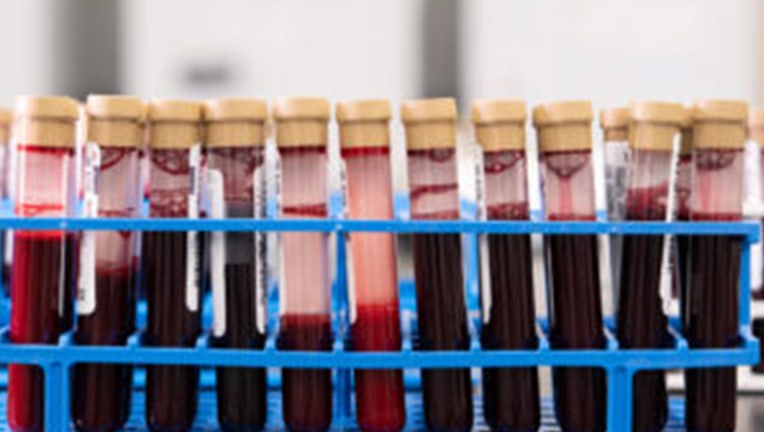
An FDA panel votes favorably on Sunnyvale-based GRAIL' Galleri, a multi-cancer early detection test designed to detect more than 50 cancers. (GRAIL)
SUNNYVALE, Calif. - A Bay Area biotech company appears to be one major step closer to receiving final federal approval for its groundbreaking multi-cancer early detection (MCED) test, designed to screen for more than 50 types of cancer with a simple blood draw.
Sunnyvale-based GRAIL Galleri has shown to detect four to seven times more cancers compared to standard care alone, with clinical studies also showing that most cancers were found at earlier stages when treatment may be most effective, the company said.
What we know:
On Sept. 23, GRAIL received a big win as part of its Food and Drug Administration approval process, with a favorable response from the FDA’s Molecular and Clinical Genetics Devices Panel of the Medical Devices Advisory Committee.
As part of the approval process, the FDA hears from an advisory committee to gain independent expert advice on a product.
Stanford University Associate Professor of Medicine, Division of Oncology Dr. Pauline Funchain said it's rare that the full FDA goes against its panel's recommendations.
"Typically they will go with the votes," Funchain told KTVU.
How the blood test works
The test works by identifying DNA in the bloodstream shed by cancer cells.
GRAIL explained that cancer can stay hidden in the body for months, but many cancers can leave DNA "clues" in the blood, noting the test has the capability of detecting cancer even before symptoms appear.
Dr. Funchain said the technology is an exciting development that allows average healthy people who wouldn't otherwise have a reason to be tested to do so while avoiding potential long-term radiation risks from medical scans like CT and PET tests.
"The blood is taken, and in the blood there are little shreds, pieces of your organs, and particularly, if there's a cancer, a cancer tends to shed more material that might show up in the blood so that you can see it," Dr. Funchain explained.
The company said the test screens for a "signal" shared by dozens of types of cancers, noting it's an especially valuable tool for those cancers that currently lack routine, single standard screening tests.
Breakthrough from prenatal testing
The backstory:
Funchain explained that the technology came out of the first non-invasive or minimally invasive, prenatal testing more than a decade ago.
"Those first blood tests that we offered to pregnant women to see if their babies had any kind of chromosomal abnormalities. And we actually also could find the sex of the baby," she said.
Doctors were surprised to find how much those blood tests revealed.
"What happened back in those early days when we first started doing those tests, was we got these really messy tests, where it just looked very strange, like it didn't look like a baby at all, right? And it turned out that for all of those women, they were diagnosed with cancer through their blood. So that's where the technology started," Funchain said.
Detection at an early stage
GRAIL said roughly half of the cancers its test detects are found at an early stage.
The company also explained that Galleri has shown to be successful in identifying cancers with high rates of mortality.
"The test is especially sensitive to many of the deadliest cancers," the company explained on its website, "like pancreatic, liver, and ovarian."
Funchain said the product offers a very promising way to approach cancer diagnosis, especially for those that have a low survival rate due to being diagnosed in late stage.
"Let's say, pancreatic cancer, pretty scary cancer. We tend to find it pretty late. People can die very quickly after a diagnosis of pancreatic cancer," she said. "And could we catch some of these things earlier? We can't scan everyone. If we scan everyone in the country, (a) it would be very expensive and (b) we would start giving people radiation risk, which would increase their risk of cancer from the radiation."
GRAIL did note that not all cancers can be detected in the blood. The company also stressed that the test does not predict future genetic risk for cancer.
FDA panel's 3 key questions
Dig deeper:
The 10 voting members of the FDA panel weighed in on three different questions:
On the question of "reasonable assurance that Galleri is safe for use in patients who meet the criteria specified in the proposed indication," the panel voted unanimously in favor.
What they're saying:
"I believe it's safe based on the data we've seen, and that along, as an adjunct to age-appropriate cancer screening, is safe," said Dr. Kelly Hunt from the University of Texas MD Anderson Cancer.
When asked to weigh in on whether there is "reasonable assurance that Galleri is effective," the vote was 6 to 4 in favor.
Among those who voted no was the National Cancer Institute’s Dr. Stanley Lipkowitz.
"It’s a transformative test, but that unfortunately means that we really need to be more critical before we approve it," Lipkowitz said.
The committee voted 7 to 2 with one abstention on the question of whether the benefits of the test outweighed the risk.
"The post-market surveillance and everything is a must, and I think that's an important piece of where this research is and where this field is right now in terms of multi-cancer detection," said the Mayo Clinic’s Dr. Aditya Ghosh who voted that the benefits did outweigh the risks.
The panel’s review is the last step before the FDA gives its final deliberations, documentation, and notification of its decision.
"The advisory committee is comprised of members who offer scientific, technical and policy related expertise in the evaluation of FDA regulated products," a Health and Human Services public affairs official explained to KTVU in an email. "The FDA held this advisory committee meeting to hear the viewpoints and assessments of these experts on both the benefits and the risks of Galleri."
Who should use the test?
GRAIL said its test is recommended for adults facing an elevated risk for cancer, including those 50 years and older.
It’s not recommended for people 21 and younger, those undergoing cancer treatment, and pregnant women.
Reading the results
When patients use Galleri, they will receive two possible results: No cancer signal detected and cancer signal detected.
Test results are expected about two weeks after the blood sample is received at GRAIL's lab.
By the numbers:
"Nearly 99% of people who use the Galleri test, will screen negative — which is exactly what you want to hear," the company explained.
The roughly 1% who receive a positive result can expect what GRAIL called a "Cancer Signal Origin" (CSO), indicating what organ or type of tissue is predicted to be where the cancer first started growing.
"After diagnostic evaluation, around 62% of these people are expected to have a confirmed cancer diagnosis," GRAIL said its studies showed.
The biotech firm said its clinical study of the test is one of the largest in cancer screening with more than 385,000 participants across multiple large-scale prospective studies.
False negatives, false positives
Experts warn false positive and false negative results do occur.
GRAIL cited figures that showed its test had a 0.4% false positive rate, or 1 in 250 people, calling it the lowest of any MCED test on the market.
"What I'll say is all of us kind of want this to work," the Funchain said, adding that there are deep concerns about receiving an incorrect result.
"So the problem with a false positive is, you know, there's all this stress. There are all these tests you do to try to figure out where this cancer is. And it costs money, time, energy," the oncologist said, adding that for physicians, it's important that their patients don't experience emotional harm.
What's even more concerning are false negative results.
Doctors worry certain cancers that shed little or no DNA, like early-stage breast or prostate cancers, can lead to overall false negative results and can lead to complacency in getting the recommended tests.
The test has shown to have a roughly 51% overall sensitivity across all cancer types and stages. So that means about 50% of cancers can be missed under those metrics.
"The scariest part to us is, you do this test. Someone gets a negative result. They're like, great, I don't have cancer and they actually do. Then they might not do the colonoscopy that they should do every 10 years. Or they may not do that mammogram that they need to do every year," Funchain said.
After a positive result
Galleri users who get a positive result showing cancer, should be prepared to be faced with a potentially complicated process thereafter, the expert warned.
"It's not like once you get this test, you just get a CT, and then you start treatment," the oncologist said, explaining that the next step would be to prove the patient does indeed have cancer.
Like a ‘metal detector’
And that process could go from taking one test to the next if a scan does not turn up definitive results.
"It's not going to be that straightforward, because you essentially have a signal, and then you have to figure out where to find it," Funchain explained. "It's almost like a metal detector. You can have a metal detector on the beach, and it can ping, but then you're like, is it under the rock? Is it under the sand? How far do I have to dig? Is it at the top or do I have to dig down 5 feet?"
Timeline:
GRAIL submitted its application for premarket approval to the FDA in January.
The company said Galleri was granted "Breakthrough Device Designation" by the agency back in 2018.
Galleri has been available since 2021, operating as a prescription-only laboratory-developed test.
Insurance coverage?
Big picture view:
FDA approval is an important step toward getting the test covered by insurance.
For the Centers for Medicare & Medicaid Services to consider covering Galleri for Medicare beneficiaries, an FDA approval is required, the company explained.
GRAIL also noted that most private health insurance companies have indicated they want to wait for FDA approval and/or Medicare coverage before adding it as an eligible expense.
Galleri cost
The current list price is $949, though the company noted that cost may vary depending on the medical practice setting or healthcare provider who orders the test, with some employers, life or health insurance carriers offering their own discounts.
"In the meantime, we are using promotional pricing to broaden access while we remain in a predominantly self-pay market," a GRAIL spokesperson explained to KTVU. "We have a small number of progressive payers offering Galleri to a pilot population within their membership base, typically high risk or Medicare Advantage populations as a precursor to adopting medical policy coverage for Galleri, as well as many self-insured employers," the company spokesperson added.
Dig deeper:
Dr. Funchain explained that an FDA approval doesn't necessarily mean insurance coverage approval. And if hereditary genetic testing for cancer is any indication, it could be an uphill battle to have private insurance companies cover the cost of the test any time soon.
"You know, the preventative stuff has always been an issue with insurance companies, so this is even true for when we do genetic testing, so like if somebody has a strong family history of cancer, and we want to do genetic testing to see if somebody is a carrier, that's not always approved," the doctor said, though there have been improvements in the past 15 years or so, she noted.
Funchain said patients who want this extra layer of information as part of their health assessment will need to ask their physicians for it.
What's next:
"At some point it could be included in guidelines if we thought it was strong enough, but I don't think that the medical industry is anywhere near the point where they think that everyone should get it at a certain age, you know, like mammograms or colonoscopies. It's not there yet," she said.
And while there are many variables involved, Funchain speculated it could be at least five years, maybe closer to 10 years, to get to that point.
A final decision on whether the FDA will give Galleri full approval is expected in the coming months, GRAIL said.
‘Wonderful additional piece’ of info
Funchain noted that the multi-cancer early detection technology is expected to only improve and be more refined to eventually add more cancers to its detection list.
"And the number of false positives will go down, or false negatives will go down. I'm sure that will happen over time," she said.
GRAIL said that its product must not be used to replace standard cancer screenings.
It's a point that Funchain also stressed, saying the tool is extremely valuable if patients consider it as an extra layer in their health assessment process.
"This test is a wonderful additional piece of data. And if you consider it as an additional piece of data, it is a remarkable step forward," she said.
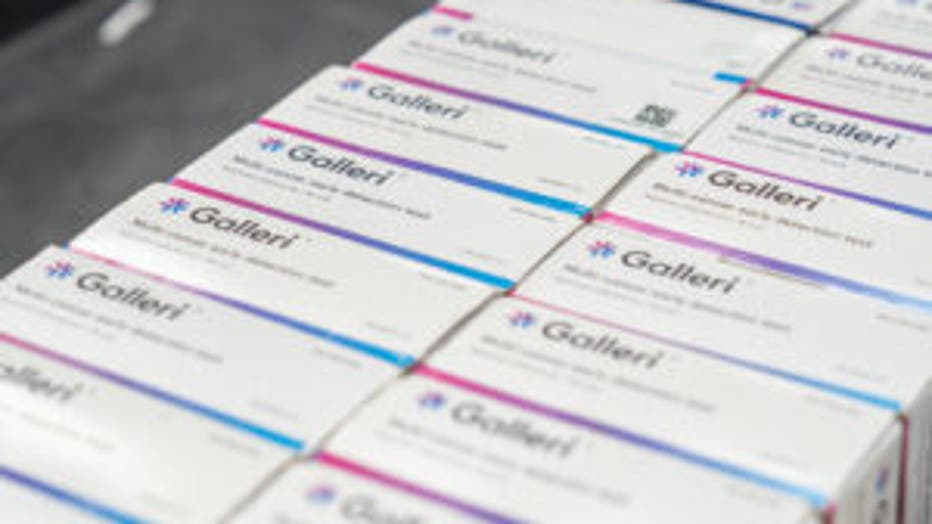
Sunnyvale-based GRAIL said its Galleri test can detect more than 50 kinds of cancer. (GRAIL)