

These states are most affected by government shutdown, analysis shows

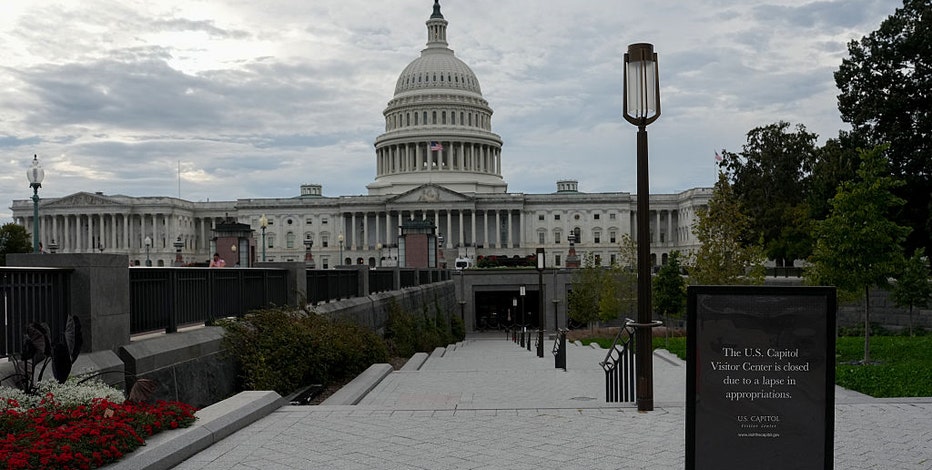
Pedestrians in downtown Washington, DC, US, on Wednesday, Oct. 8, 2025. More than a quarter million federal employees didn't receive their scheduled paychecks this week as the US government shutdown enters its second week. Photographer: Eric Lee/Bloo
WASHINGTON - A study shows the ongoing government shutdown is hitting the District of Columbia, Hawaii, and New Mexico, particularly hard due to the large number of federal workers and federal government contracts.
Big picture view:
To determine the government shutdown’s impact on states, WalletHub compared the 50 states and the District of Columbia across five key metrics:
- Share of federal jobs
- Federal contract dollars per capita
- Real Estate as Percentage of Gross State Product
- Percent of families receiving the Supplemental Nutrition Assistance Program (SNAP)
- National park access
How the ongoing government shutdown is hurting the District of Columbia
Dig deeper:
It’s not surprising the District of Columbia is most affected by the shutdown as over 25% of all jobs in D.C. are related to the federal government, the highest share in the country. That means a huge portion of D.C.’s residents are going without pay for an extended period of time. D.C. also has the highest number of federal contract dollars per capita, at over $50,000, meaning contracted projects will not have funding until the shutdown ends.
In addition to pay, D.C. has the second-highest percentage of residents who enrolled in the Supplemental Nutrition Assistance Program (SNAP). SNAP is still operating during the shutdown, but if lawmakers remain deadlocked, it could lead to it running out of money, leaving people without assistance.
Here's who Americans blame for government shutdown, according to poll
With many Americans feeling the impacts of the government shutdown, this is who they are holding accountable for where things stand based on a recent poll.
How the ongoing government shutdown is hurting Hawaii
Hawaii ranks number two in terms of shutdown impact because of the large number of federal workers in the state. Around 5.6% of all jobs in Hawaii are federal positions.
The real estate market in Hawaii makes up nearly 23% of the state’s gross state product (GSP), the fourth-highest percentage in the nation. The shutdown will impact mortgage processing due to staffing shortages at the IRS, FHA and VA resulting in Hawaii’s economic driver experiencing delays.
And tourism could be impacted as Hawaii has the seventh-most national parks and the eighth-most national-park acreage per capita. With the shutdown, the parks will see far lower staffing and maintenance, and certain visitor centers being closed could sour the visiting experience for residents and tourists alike.
How the ongoing government shutdown is hurting New Mexico
New Mexico comes in third in the rankings due largely to the fact that it receives more than $6,000 per capita in federal contracts and more than a fifth of that state's population is enrolled in the SNAP program.
In addition, New Mexico has the seventh-highest percentage of federal jobs and the fifth-most national parks per capita. This means many workers are going without pay and its natural spaces won’t be well-staffed.
What factors determined the most affected states during the government shutdown?
To determine the impact of the federal government shutdown on states, WalletHub assigned a weight to each of the five metrics:
- Share of federal jobs -Double Weight
- Federal contract dollars per capita - Full Weight
- Percent of families receiving the SNAP - Double Weight
- Real Estate as a percentage of GSP- Full Weight
- National park access - Full Weight
Each metric was scored on a 100-point scale, with 100 representing the biggest impact from the government shutdown. WalletHub then determined each state and the District’s weighted average across all metrics to calculate its overall score and used the resulting scores to construct their final ranking.
The Source: The information in this story comes from a WalletHub study on how certain states are being hit particularly hard due to their high share of federal workers and contractors. This story was reported from Orlando.