

Former San Quentin death row prisoner sues Alameda County for $290M
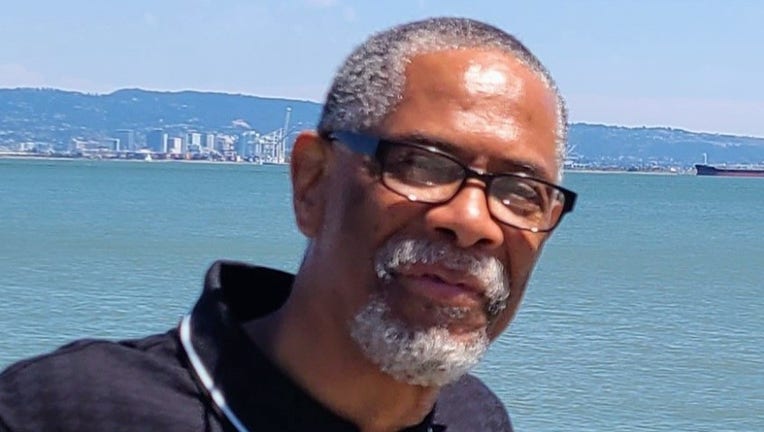
Curtis Ervin, 73, now lives in Richmond after more than 30 years of being on death row at San Quentin. Photo: Courtesy of Brian Pomerantz
RICHMOND, Calif. - A 73-year-old Black man who was incarcerated on San Quentin's death row for three decades is suing Alameda County, specifically the District Attorney's Office, for $290 million, alleging that he never got a fair trial because the jury who convicted him was chosen unconstitutionally – all but one were white.
‘Unconstitutional jury selection’
What they're saying:

San Quentin death row to be replaced by 'positive, healing environment'
California's death row at San Quentin, the largest in the country, will be closed under a plan discussed by Gov. Gavin Newsom. Condemned inmates would be transferred to other prisons to make way for a "positive, healing environment." Newsom had previously declared a moratorium on executions.
Curtis Lee Ervin, who now lives in Richmond and declined an interview through his attorneys, filed a federal suit on May 27, alleging that the DA's Office engaged in an "unconstitutional pattern and practice of discrimination in jury selection," kicking off prospective Black and Jewish jurors, whom prosecutors felt wouldn't send defendants for capital punishment.
This pattern was practiced for decades, starting in the 1980s, and was part of a longtime unwritten policy of the DA's Office, according to the 33-page complaint, filed by attorneys Pamala Sayasane and Brian Pomerantz.
The lawsuit alleges a string of prosecutors from 1980 through 2012 promoted unofficial policies that paved the way for this racial discrimination to take place, often by not disciplining prosecutors who allegedly excluded certain jurors in violation of the Constitution. The practice was taught and shared among employees in the DA's office, the lawsuit claimed, highlighting once when a deputy district attorney said that Jewish people be left off juries during a 1992 conference in San Diego.
The suit notes that prosecutors believed many Jewish people wouldn't want to send a defendant to the gas chamber, a remnant of Hitler's Holocaust, and therefore would be undesirable in capital punishment cases.
In an interview on Thursday, Pomerantz said he doesn't think much has changed today.
"The current DA has no interest in remedying the unconstitutional conduct by the office in prior years," he said, referring to District Attorney Ursula Jones Dickson. "I'm not seeing much difference in Alameda County vs. what's happening in Republican counties."
DA has no comment
The other side:
Jones Dickson's office responded by email that they don't respond to pending litigation. The DA's office also did not comment on Pomerantz's specific accusation about her personally.
The Alameda County Board of Supervisors discussed the lawsuit at a meeting this week in closed session. Last month, in an unrelated case, the supervisors announced they were paying the family of a husband-and-wife killed by a sheriff's deputy an unprecedented $36 million.
Black juries
Local perspective:

Brendon Woods, Alameda County public defender
Dave Clark speaks with Brendon Woods, the public defender for Alameda County. Woods is passionate that everyone deserves free access to legal services regardless of their position in life. Too many people who are innocent, especially people of color, wind up behind bars because they could not afford a vigorous defense, he said. Woods hopes Gov. Newsom will not slash funding for public defenders and he hopes to see more African-Americans serving on juries.
Alameda County Public Defender Brendon Woods has long lamented the fact that it's nearly impossible to find Black juries in Alameda County, offering a myriad of reasons.
He wrote an op-ed for the Chronicle, reminding the public that California law forbids people with past felony convictions from serving on juries — no matter how old the conviction, no matter if the person had successfully completed probation or parole, and no matter whether the old crime is now no longer a felony. "As a result, nearly one-third of African American men are permanently excluded from jury service," he wrote.
This pattern, Woods told The Oaklandside, is especially concerning in Oakland, where roughly 1 in 5 of the city’s residents are Black, but where it’s not uncommon for juries to lack any Black representation. When a jury’s members don’t reflect the community, Woods has argued, it undermines the defendant’s constitutional right to a trial by their peers.
A UC Berkeley Law study released in 2020 called "Whitewashing the Jury Box," outlines how the exclusion of Black and Latino jurors is an "ever-present" feature of voir dire in California.
The Constitution’s Sixth Amendment guarantees the right to a trial by an impartial jury of one’s peers, which has been interpreted since the 1960s, to mean that juries should be composed of a cross-section of the community where the alleged crime was committed.
Prosecutors and defense attorneys are allowed to question and exclude jurors who show obvious bias and for other reasons — but they’re not allowed preemptively exclude jurors simply because of their race or because they’re members of another protected class.
Judge: ‘pattern of serious misconduct’
The backstory:

Former prosecutors accused of tossing Black, Jewish jurors
Former Alameda County prosecutors excluded Black and Jewish jurors from death penalty cases, prompting a federal judge to order a review of dozens of such cases, said District Attorney Pamela Price on Monday.
The basis for Ervin's lawsuit stems from a watershed ruling in 2024 by U.S. District Judge Vince Chhabria in San Francisco, who found "strong evidence" that prosecutors had been "engaged in a pattern of serious misconduct automatically excluding Jewish and African American jurors in death penalty cases."
The ruling prompted then-DA Pamela Price to review the convictions of nearly three dozen people still awaiting execution, many of whom received new sentences and a chance at parole.
In Ervin’s case, a prosecutor refused to seat nine prospective Black jurors at his death penalty trial — leaving his case to be decided by 11 white people and one Black man, according to his suit.
Ervin was convicted and sentenced to 39 years stemming from a 1986 murder-for-hire plot, where prosecutors believed he was paid to kill someone's wife. He spent 34 of those years on San Quentin's death row.
Ervin has always maintained he "was not part" of the plot at all, Pomerantz said.
But he ended up pleading guilty to a manslaughter case, thinking it was the "quickest route to getting out," Pomerantz told KTVU.
In 2024, Ervin's murder conviction was overturned after the California attorney general concluded that the jury in this case was illegally selected.
As a result, Ervin's death sentence was vacated, and he was finally released from custody on the manslaughter conviction in August 2025.
$290 million
What's next:
As for the amount of money that he is asking for – compensatory damages totaling $40 million for the nearly four decades he was in custody and punitive damages totaling $250 million – Ervin's lawyer said there is no amount of money that can ever truly compensate Ervin for the damage caused by Alameda County.
And he wants this amount to be so great so that Alameda County will never again "dare to conspire to brazenly deny its citizens fair trials in the future."
"Money is a poor proxy for what he has lost—the ability to chart his own course and the time with loved ones that he can never get back—in short, his freedom," Pomerantz said. "Knowing this, it is our hope to get him compensated as best we can, while also sending a strong message so that no one else will suffer as he has from Alameda County’s decades-long racist policy."
The Source: Civil lawsuit, interview with Brian Pomerantz, UC Berkeley Law study, Public Defender Brendon Woods op-ed, The Oaklandside via AP, Alameda County District Attorney, prior reporting