

Judge approves request to dismiss Jan. 6 cases against Oath Keepers

Timeline: Jan. 6 U.S. Capitol riot
A timeline of what transpired during the deadly Capitol riot on Jan. 6.
WASHINGTON - A federal judge on Tuesday dismissed the remaining criminal cases against members of the Oath Keepers convicted of seditious conspiracy for their roles in the Jan. 6, 2021, attack on the U.S. Capitol, closing the final chapter of the Justice Department's prosecution of the riot.
Judge dismisses final Oath Keepers cases
Big picture view:
U.S. District Judge Amit Mehta dismissed the cases against Oath Keepers founder Stewart Rhodes and eight other defendants after the Justice Department moved to vacate their convictions.
The defendants had already been released after President Donald Trump commuted their prison sentences as part of a sweeping clemency order covering nearly all of the roughly 1,600 people charged in the Capitol attack. Unlike most Jan. 6 defendants, the nine received sentence commutations rather than full pardons, leaving their convictions intact until the Justice Department sought to dismiss them.
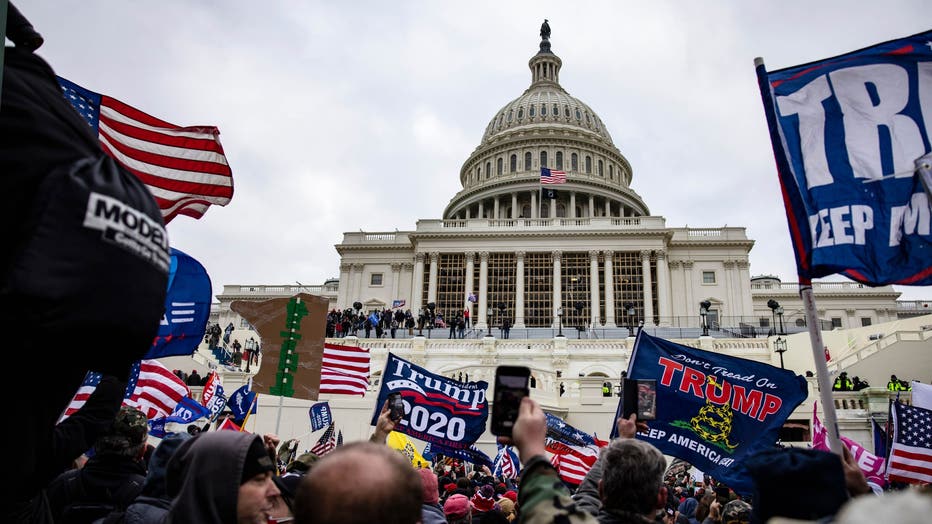
Pro-Trump supporters storm the U.S. Capitol following a rally with President Donald Trump on January 6, 2021 in Washington, DC. (Credit: Samuel Corum/Getty Images)
Rhodes, who had been serving an 18-year sentence before Trump commuted it in January 2025, has denied wrongdoing, noting he never entered the Capitol.
The Justice Department said dismissal was appropriate because Trump directed prosecutors on his first day back in office to end all remaining Jan. 6 cases. Although Trump has repeatedly called the prosecutions a "grave national injustice," prosecutors did not rely on those arguments in court.
What they're saying:
Mehta sharply criticized the administration's decision but said prosecutors had the legal authority to seek dismissal.
"Today's epilogue diminishes the gravity of that day, denigrates the work of the prosecutors and law enforcement officers who secured these convictions, and excuses criminal acts that caused a centuries-long pillar of our democracy — the peaceful transfer of presidential power — to buckle," Mehta wrote. "The court cannot write a different ending."
Mehta said the government was asking the court "to absolve these Defendants of crimes against the United States itself," but concluded he had no legal basis to reject the request.
"This is the last of the prosecutions seeking to hold accountable those responsible for the events of Jan. 6. That book is now closed," he wrote.
Trump has argued that the Jan. 6 defendants were treated unfairly by the justice system, saying the pardons were intended to end "a grave national injustice that has been perpetrated upon the American people" and begin "a process of national reconciliation."
More than 1,200 convicted after Capitol attack
The backstory:
The ruling ends one of the Justice Department's most significant Jan. 6 cases.
Juries convicted Rhodes and other Oath Keepers leaders of seditious conspiracy for plotting to stop the peaceful transfer of power after Trump's 2020 election defeat.
RELATED: Trump administration deletes Jan. 6 riot case updates from website
The Justice Department has also moved to vacate seditious conspiracy convictions involving Proud Boys leaders, reversing its position under the Biden administration, which defended the convictions as important accountability cases.
More than 1,200 people were convicted in connection with the Capitol attack, including about 200 who pleaded guilty to assaulting law enforcement officers. Trump issued "full, complete and unconditional" pardons to most Jan. 6 defendants while commuting the sentences of Rhodes and several others convicted of seditious conspiracy. He also directed the attorney general to dismiss roughly 450 pending Jan. 6 cases, ending what had been the largest criminal investigation in Justice Department history.
The Source: This story was reported from Los Angeles. The Associated Press, Reuters contributed.