

Look up to catch a once-a-year, mid-summer's celestial event this week
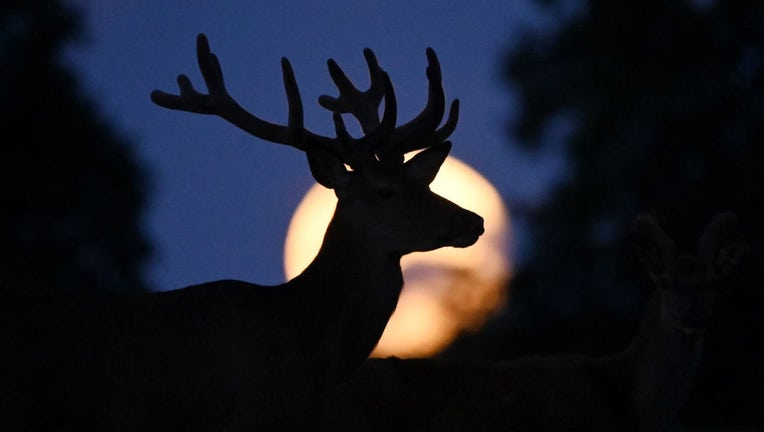
FILE - A full super moon known as the "Buck Moon" is seen as a deer grazes outside the village of Taarbaek, some 15 km north of Copenhagen, on July 14, 2022, in Denmark. (Photo by Sergei Gapon/Anadolu Agency via Getty Images)
OAKLAND, Calif. - Skygazers will be treated to a mid-summer's treat this week, with the rise of the full buck moon.
The full moon’s peak happens during daylight on Wednesday morning at 7:36 a.m., so experts say the best viewing times will be in the evening on Tuesday or Wednesday.
The Farmers’ Almanac said the viewing will be "perfect for an evening walk, backyard stargazing, or snapping a photo."
Why is it called buck moon?
Dig deeper:
The annual lunar event received the name of buck moon by the Native American Algonquin people, as it refers to the final, full-growth stage of the male deer’s antlers this time of year.
"Bucks shed and regrow their antlers each year, producing a larger and more impressive set as the years go by," according to The Old Farmer's Almanac.
Active meteor showers
The buck moon comes during an active celestial time.
Three meteor showers — the Southern delta Aquariids, the alpha Capricornids and the Perseids — are all currently active.
The Southern delta Aquariids and alpha Capricornids are both set to peak on Wednesday and Thursday.
Experts note the brightness of the moon could make the meteors challenging to spot.
SEE ALSO: Astronomers discover sugar in space, offering hints to life’s origins
Perseids peaks next month
The Perseids meteor shower is expected to peak Aug. 12 into the early morning of Aug 13, according to the American Meteor Society.
The Old Farmer's Almanac called the cosmic event a summer favorite, saying, "Expect a spectacular show of fast, bright fireballs."
The Chabot Space and Science Center plans to host an overnight Perseids meteor shower watch party on Aug. 12 at 11:00 p.m. to August 13 at 3:00 a.m.
Experts advise the best way to view a meteor shower is at higher elevations and inland areas, as well as viewing away from the coast and city lights.
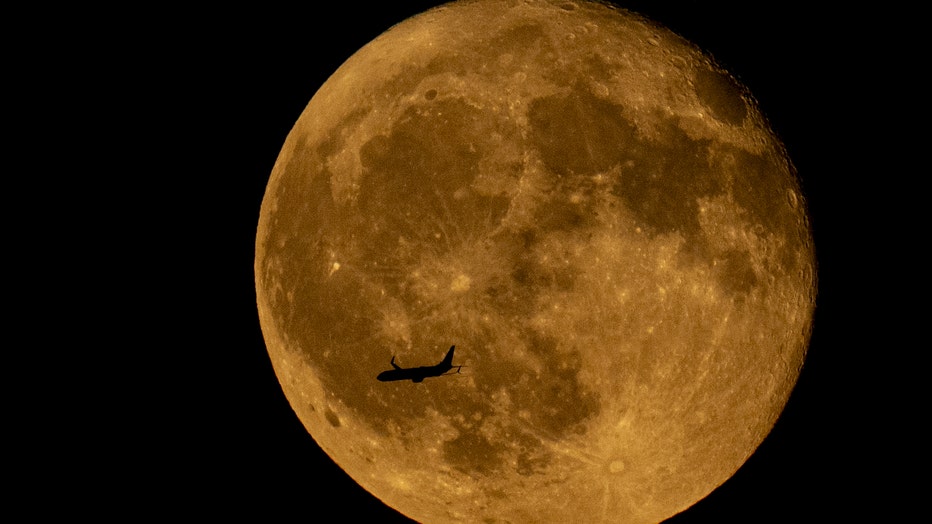
WASHINGTON DC, UNITED STATES - JULY 11: A Full Buck Moon rises in the sky as a plane passes by in Virginia, United States on July 11, 2025. (Photo by Celal Gunes/Anadolu via Getty Images)
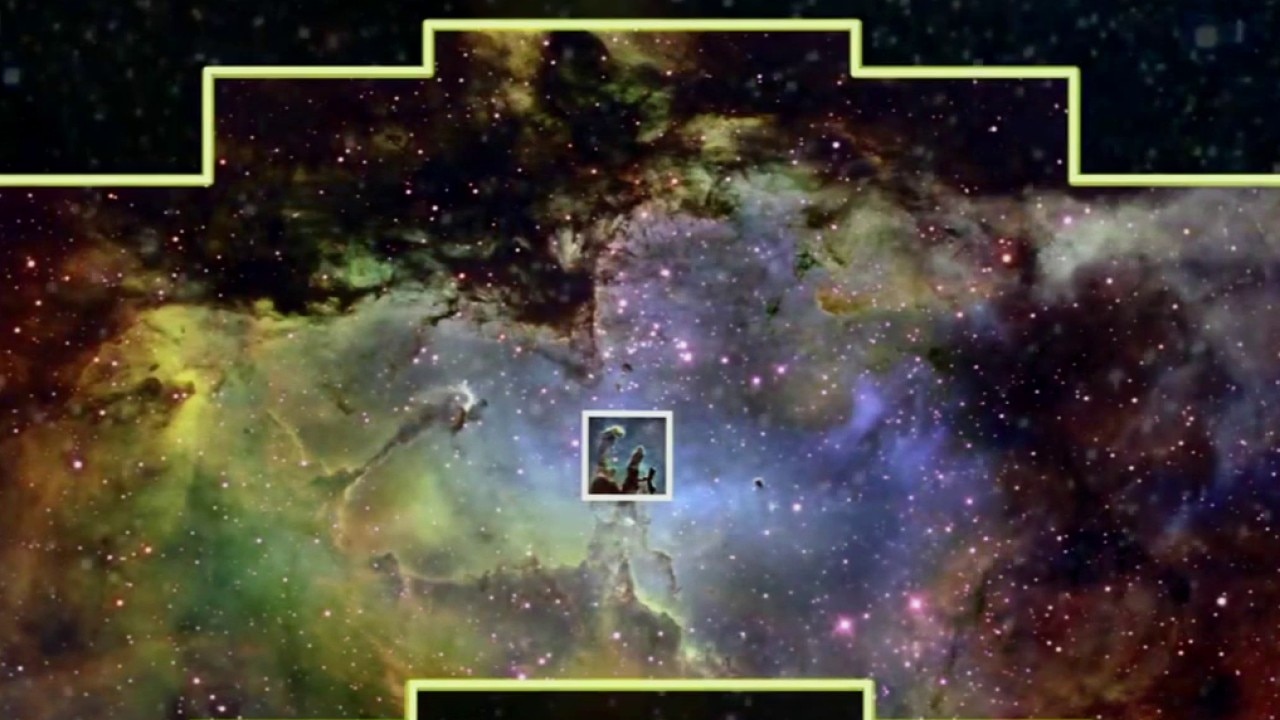
NASA’s Roman Space Telescope nears launch ahead of ambitious mission
NASA’s Nancy Grace Roman Space Telescope is preparing for launch and could transform how scientists study the universe. Dominic Benford, NASA Roman program scientist and chief technologist for astrophysics, joined us on 'The Nine' to discuss the telescope’s mission, timeline, and what researchers hope to discover over the next five years.