

Robert Mueller, former FBI director, dies at 81
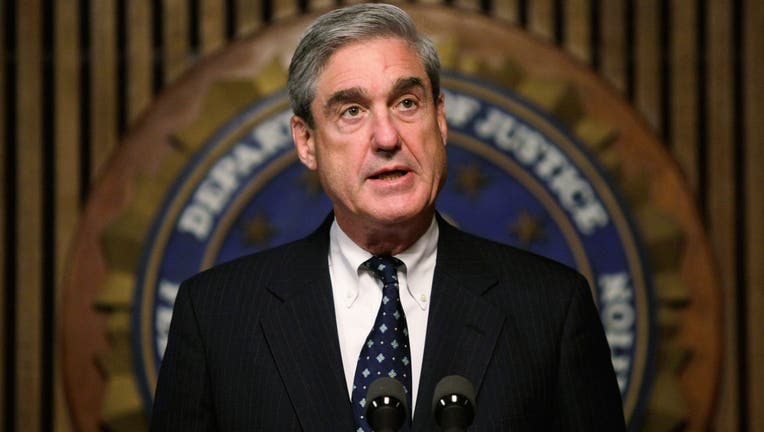
FILE: FBI Director Robert Mueller speaks during a news conference at the FBI headquarters June 25, 2008 in Washington, DC. (Photo by Alex Wong/Getty Images)
Robert Mueller, the former FBI director who led a polarizing two-year investigation into President Donald Trump’s ties to Russia, has died. He was 81 years old.
Trump cheered his death on social media, saying, "I'm glad he's dead."
Robert Mueller’s death
What we know:
The family of Robert S. Mueller III released the following statement about his death:
"With deep sadness, we are sharing the news that Bob passed away last night. His family asks that their privacy be respected."
What we don't know:
Mueller’s family didn’t share how he died.
What they're saying:
"Robert Mueller just died," Trump wrote on his Truth Social platform. "Good, I’m glad he’s dead. He can no longer hurt innocent people!"
Robert Mueller’s life and career
The backstory:
Mueller was nominated by President George W. Bush, and became the nation’s sixth FBI director on Sept. 4, 2001 – a week before the Sept. 11 attacks.
Mueller had to immediately overhaul the bureau’s mission from solving domestic crime to preventing terrorism. He served as FBI director for 12 years, under presidents from both parties, before retiring in 2013. President Barack Obama asked Mueller to stay on as director after his 10-year term was up. He was the second-longest serving director of the FBI; only J. Edgar Hoover served longer.
RELATED: Celebrity deaths of 2026: The entertainers and artists we lost this year
Later, he was brought on as special counsel in the Justice Department’s investigation into whether the Trump campaign illegally coordinated with Russia to sway the outcome of the 2016 presidential race.
The Mueller report
Dig deeper:
Mueller's 448-page report, released in April 2019, identified substantial contacts between the Trump campaign and Russia, but did not allege a criminal conspiracy. He laid out damaging details about Trump’s efforts to seize control of the investigation, and even shut it down, though he declined to decide whether Trump had broken the law, in part because of department policy barring the indictment of a sitting president.
Mueller also pointedly noted that the report was not an exoneration for Trump, despite Trump's repeated claims that the report proved his innocence.
"If we had confidence after a thorough investigation of the facts that the president clearly did not commit obstruction of justice, we would so state. Based on the facts and the applicable legal standards, we are unable to reach that judgment," the report stated.
He was more blunt when asked about it while testifying before Congress in 2019.
"And what about total exoneration? Did you actually totally exonerate the president?" Rep. Larry Nadler asked during the hearing.
"No," Mueller replied.
This is a developing story. Check back for updates.
The Source: This report includes information from a statement issued by Robert Mueller’s family to New York Times reporter Michael S. Schmidt.