

San Jose reports 32% drop in homeless population with new tracking model
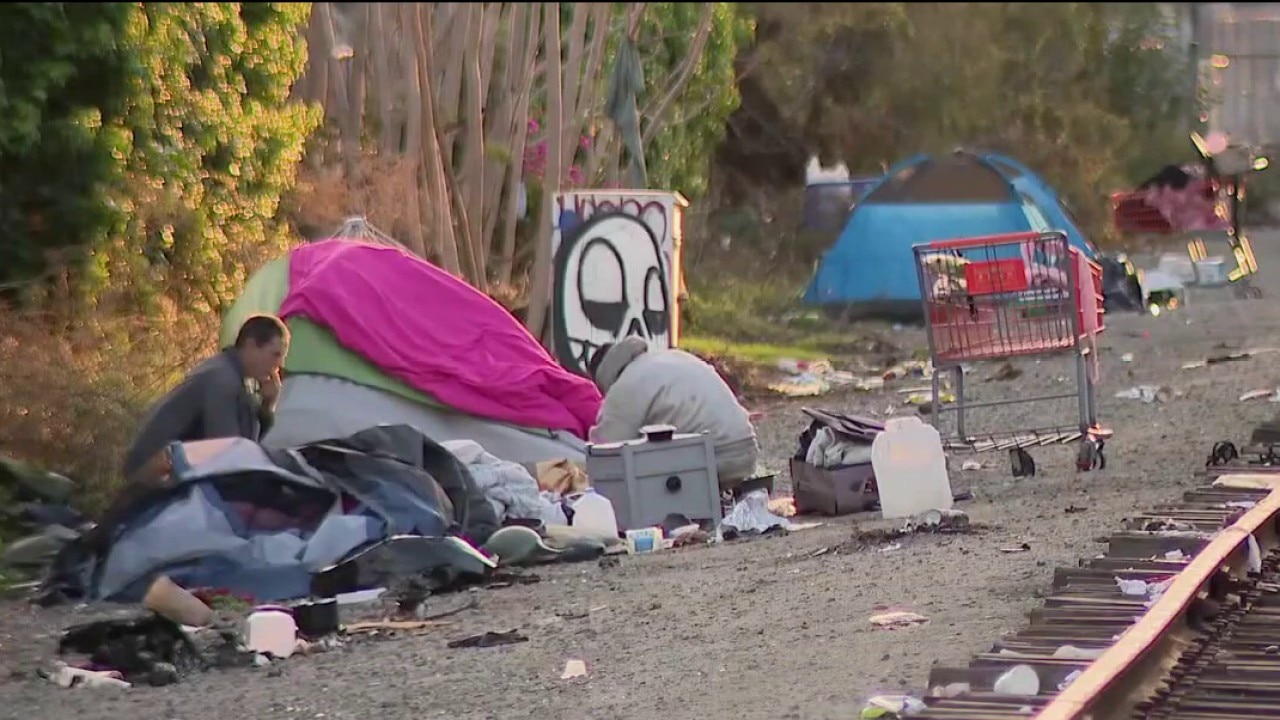
San Jose sees drop in homelessness
San Jose officials say the city’s unhoused population has dropped dramatically over the past year and a half, and new data tracking methods are behind their ability to measure the shift.
SAN JOSE, Calif. - San Jose officials say the city’s unsheltered population has dropped by nearly one-third over the past 18 months, crediting the expansion of temporary housing and a new system for tracking homelessness.
San Jose reports 32% drop in unsheltered population
What we know:
City leaders attribute the decline to the creation of 1,000 interim housing units, including quick-build tiny homes and converted motel rooms.
Featured
Berkeley starts clearing homeless camp after deadly leptospirosis outbreak linked to rats
The city of Berkeley on Tuesday began clearing a large homeless encampment after officials declared the area a fire hazard and public nuisance following a deadly leptospirosis outbreak linked to rats.
The city also developed an algorithm that uses 15 data points collected from first responders, homeless outreach teams and the Department of Transportation. Officials say the system allows them to track changes more frequently and adjust services in real time.
New data model tracks homelessness
Dig deeper:
San Jose traditionally relied on the federally mandated Point-in-Time count, which is conducted every two years and provides a snapshot of homelessness on a single night.
City officials believe the PIT count underestimates the number of people living on the streets. The new data model is designed to produce quarterly estimates, giving officials more frequent information to guide outreach efforts, housing programs and shelter development.
Featured
Supreme Court ruling allows San Jose to penalize homeless people
San Jose hasn’t hesitated to implement a wave of policies and programs aimed at tamping down homelessness since a U.S. Supreme Court ruling opened the floodgates to ban homeless people in public spaces.
By the numbers:
- 32%: Decline in San Jose’s unsheltered population over the past 18 months.
- 1,000: Interim housing units created, including tiny homes and motel rooms.
- 15: Data points used in the city’s tracking model.
- 5,477: San Jose’s internal count from February 2025.
- 3,959: Federal Point-in-Time count recorded in January 2025.
- 3,702: San Jose’s updated model estimate for August 2026.
Questions remain about new model
What we don't know:
City leaders acknowledge the algorithm is not perfect. It remains unclear how heavily state and federal agencies will rely on San Jose’s internal data compared with mandated PIT figures when distributing funding.
The new quarterly estimates will operate alongside the traditional PIT count. The federal count will continue to help determine funding allocations, while San Jose plans to use its internal data to guide daily operations and policy decisions.
What officials are saying
What they're saying:
San Jose Mayor Matt Mahan criticized the limitations of the Point-in-Time count.
"The frustration we hear with the Point-in-Time count, the inaccuracy, the likely undercount, the infrequency, is legendary. It’s everywhere, and people are all looking for improvement," Mahan said. "And in a classic San Jose way, we are trying to use data to be smarter, to be more responsive."
Shaunn Cartwright of the Unhoused Response Group said the data should also hold the city accountable for gaps in services.
"I hope it reflects their failures as well as, yes, the people who aren’t living up to their own. But it really needs to hold the city accountable for what they’re not offering people," said Cartwright.
San Jose model draws interest
What's next:
Mahan said mayors from large cities across California and beyond have contacted San Jose to learn more about its quarterly tracking model and interim housing strategy.
The city hopes other jurisdictions in Santa Clara County and across California will adopt similar data-driven methods to address homelessness regionally.
The Source: Information for this story was reported live from downtown San Jose by KTVU reporter Ann Rubin, featuring statements and data from San Jose Mayor Matt Mahan, San Jose Housing Department Director Erik Soliván, and Shaunn Cartwright of the Unhoused Response Group.