

Stanford lecturer says red light therapy has real science behind it — but not every device works
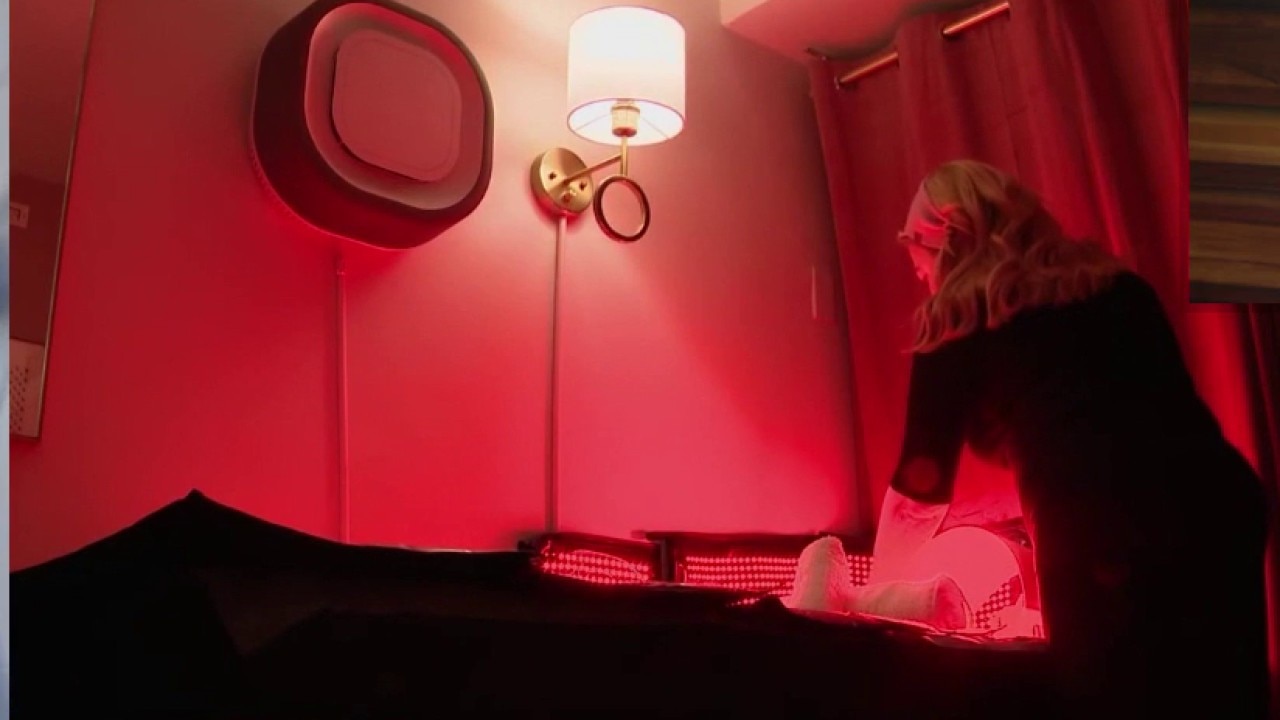
Red Light Therapy - social media fad or real science?
Red light therapy has become a fixture on social media, with influencers claiming it can improve skin, reduce pain and speed recovery. Rachele Pojednic, faculty at Stanford University and chief science officer at Restore Hyper Wellness, said the science behind it is more solid than many people assume.
Oakland, Calif. - Red light therapy has become a fixture on social media, with influencers claiming it can improve skin, reduce pain and speed recovery. Rachele Pojednic, faculty at Stanford University and chief science officer at Restore Hyper Wellness, said the science behind it is more solid than many people assume.
"Red light therapy or low-level light therapy, also called photobiomodulation, is a light therapy that happens at somewhere between 620 and 670 nanometers of light," Pojednic said. "That shows up in your eye as red."
Pojednic said the therapy works by mildly stressing the mitochondria in cells, a process known as hormesis, which prompts the cell to activate its own repair mechanisms.
"It produces ATP, or energy, which can be used by your cells," she said. "And it also produces antioxidants that can be used for the cell to regenerate and repair itself."
Pojednic said the therapy's wavelength is what separates it from damaging forms of light exposure, such as UVB rays.
"The UVB lights are significantly lower in nanometers, so they're usually around 300 to 400. That's the damaging effect," she said. "Once you start to change the wavelength of that light, it can actually have therapeutic benefits."
Among the most well-established benefits, Pojednic said, is skin health.
"Fine lines, wrinkles, collagen production can really be ramped up with these therapies," she said. She added that emerging research is also looking at muscle repair and pain recovery from exercise, since muscle tissue is rich in mitochondria, as well as early data on mental health effects, since red light can penetrate the brain when applied to the face or back of the neck.
Pojednic said not all red light devices are created equal, and price often matters.
"There's a really important metric called fluence when we're talking about photobiomodulation, and that's the intensity of that light," she said. "What we want to see is that you buy a device that's somewhere between five to 30 joules per centimeter squared." She said devices meeting that threshold remain relatively expensive because the technology is still new, but that cheaper alternatives are unlikely to be effective. "You can't take a light bulb, paint it red and hold it by your face and think that it's gonna work."
Pojednic said the recommended usage is 10 to 20 minutes per session, three to five times a week, with results typically appearing within eight to 12 weeks.
"You don't need to use it all day, every day," she said.
Pojednic said she uses red light therapy herself for muscle recovery after workouts and has noticed a difference. Her advice to consumers: be skeptical of bargain-priced devices.
"If you're being advertised on your social media or you see something for $29.99 on Amazon, it's probably not going to do the trick," she said. "If something seems too good to be true, it probably is. It's usually the rule of thumb."
The Source: Source: Interview with Rachele Pojednic, Faculty, Stanford University; Chief Science Officer, Restore Hyper Wellness