

Golden Gate Bridge suicide prevention net a success two years in, data shows

Golden Gate Bridge suicide prevention net a success two years in, data shows
Its been nearly two years since the final touches were placed on the suicide prevention nets attached to the Golden Gate Bridge. There is now data to suggest the project can be called a success.
MARIN COUNTY, California - It's been nearly two years since the final touches were placed on the suicide prevention nets attached to the Golden Gate Bridge. There is now data to suggest the project can be called a success.
Preventing suicide
Experts believe that at least 2,000 deaths have resulted from people jumping off the Golden Gate Bridge, an average of 22 a year since the bridge opened in 1937. Only two out of every 100 jumpers, no more than 40, survived after hitting the water at 75 miles an hour, a speed that makes the water equivalent to hitting a concrete floor.
The stainless-steel Suicide Deterrent Net, finished in early 2024 for $224 million, has seen a total of 12 deaths, eight in 2024 and four in 2025, with zero deaths in the last six months of last year. The Metropolitan Transportation Commission helped to advocate for funding for the Golden Gate Bridge Highway and Transportation District and supplied some funds wishing for such an outcome.
"That this has brought some measure of satisfaction and, ideally, even some measure of peace to those families that have been torn apart by suicide," said John Goodwin of the Metropolitan Transportation Commission.
Last year, 94 incidents where potential suicides were being contemplated, were successfully stopped through interventions by bridge staff, California Highway Patrol, and bypassers of combinations of them.
"So anything like this, built for the sake of us or our children or family members, I think it is a great thing. That's the best they could have done for this bridge," said bridge visitor Gloria Rico.
Acts of kindness
Jehovah's Witnesses are here constantly offering kindness and solace to any troubled person. "When a person takes that action, obviously there's no coming back from it. And, a lot of times, it's just a smile, just an acknowledgment and just a small act of kindness can make a difference in that pivotal moment in time," said Jehovah Witness Gino Blanco.
Bridge history
Just as stellar a performer, the 11-year-old movable media barrier in the middle of the Golden Gate Bridge that splits the northbound lanes from the southbound lanes. From 1970 to 2015, there were 128 head-on collisions, almost three a year, that claimed 16 lives. After the movable barrier, there have been zero head-on and zero deaths.
However, there has been a small increase in non-injury accidents, often involving vehicles hitting the barrier or what's left of the toll plazas. The barrier has also emboldened drivers to drive at increased speeds, over the 45 mile an hour legal limit. But no tragic, unnecessary deaths. "So, preventing all those accidents and deaths is the most amazing thing they could have done to this bridge," said Rico.
The bridge still retains all its beauty, just as a Ferrari does, even with seat belts and airbags.
Featured
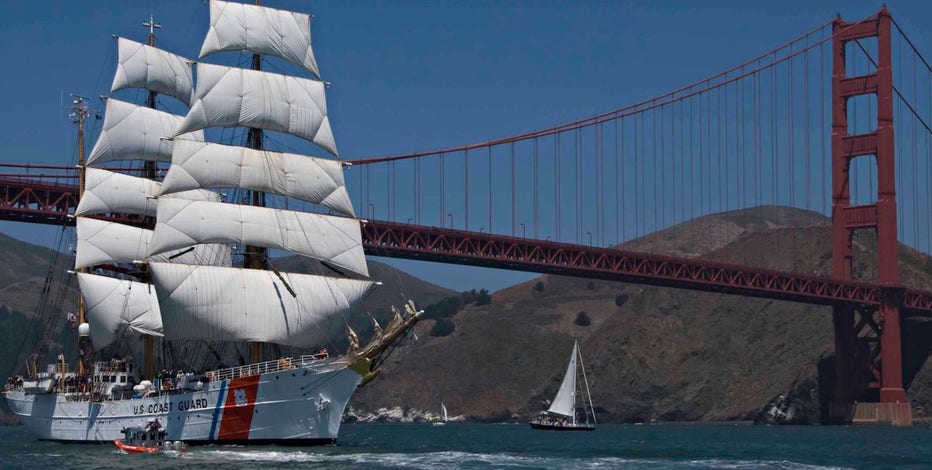
'America's Tall Ship' to sail by the Golden Gate Bridge
The largest tall ship in U. S. government service, the U. S. Coast Guard Barque Eagle, was floating under the Golden Gate Bridge on Wednesday, when KTVU will be along for the ride.