

Live updates: Federal jury verdict sides with OpenAI's Altman over Elon Musk
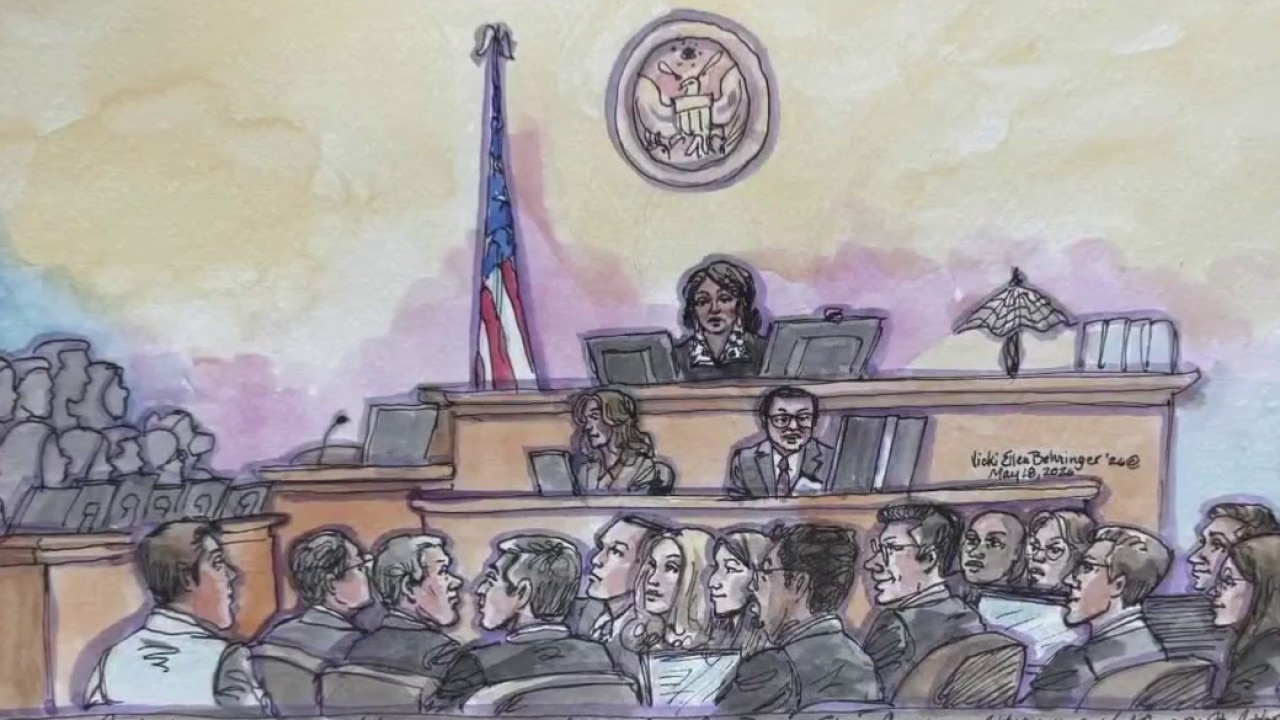
Jury rules Musk lawsuit against Open AI and Altman was filed too late
A federal jury in Oakland took less than two hours Monday to decide a verdict against Tesla CEO Elon Musk, stating his lawsuit against OpenAI's CEO Sam Altman and President Greg Brockman was filed too late to fall within the 2 to 3-year statue of limitations. OpenAI attorneys asserted that Musk co-founded OpenAI with support for creating a future for-profit subsidiary, but the defense says Musk didn't act until he saw OpenAI become a successful competitor to Musk's xAI. Musk claims Altman and Brockman "stole" the charity and created a for-profit for personal enrichment.
OAKLAND, Calif. - Lawyers for Elon Musk and OpenAI made their final arguments Thursday in the landmark trial whose outcome could shape the future of artificial intelligence.
What is the Musk-Altman trial about?
The backstory:
Musk, the world's richest man, was a co-founder of OpenAI, which launched in 2015 and went on to create ChatGPT. After investing $38 million in its first years, Musk accused OpenAI CEO Sam Altman and President Greg Brockman of shifting into a moneymaking mode behind his back, and betraying their shared vision for OpenAI. Since its start as a nonprofit funded primarily by Musk, OpenAI has evolved into a capitalistic venture now valued at $852 billion.
The jury served in an advisory role, but Judge Yvonne Gonzalez Rogers presiding over the case at that federal courthouse in Oakland, accepted the verdict Monday as the court's own and dismissed Musk's claims.
The three-week trial saw Musk, Altman, and Brockman take the stand and provide revealing testimony about Brockman's private journal, their personal text message threads, and emails that gave the public an inside look at how their initial enthusiasm and partnership devolved into the bitter infighting, distrust, and factions among OpenAI staff, the board. Dramatic testimony from Musk's team included his personal home office head and Shivon Zilis, the mother of four of Musk's children who also advised the OpenAI leadership, and kept her romantic ties to Musk secret from Altman and Brockman.
The trial has invited further scrutiny of Altman’s leadership at a crucial time for the company and its competition with Musk’s own AI firm and another rival, Anthropic, formed by a group of seven ex-OpenAI leaders.
What is OpenAI saying?
Lawyers for OpenAI have rejected the allegations brought in Musk’s civil lawsuit and said there were never promises that the company would remain a nonprofit forever. The company has argued Musk’s legal challenge is aimed at undercutting OpenAI’s rapid growth and bolstering Musk’s xAI, which he launched in 2023 as a competitor.
All three firms are moving toward planned initial public offerings that are expected to be some of the largest ever.
KTVU will be inside the courthouse in Oakland each day and will bring you live updates here.
Live Updates: Day 13 – May 18, 2026
The 9-member federal jury began deliberations at 8:30 a.m. Monday, and within 2 hours they had reached a verdict, siding with OpenAI and Altman's defense attorneys, who argued that Musk knew about and supported plans for OpenAI to become a for-profit subsidiary but didn't file the lawsuit until past the statute of limitations when it became evident OpenAI was becoming a formidable competitor to Musk's own xAI.
Musk testified that he had supported a for-profit entity but objected to Altman and Brockman "stealing the charity" and claims they allowed the for-profit arm to overshadow the non-profit mission in order to enrich themselves personally with stakes worth billions of dollars. Musk said in a social media post that he plans to appeal the decision.
Live Updates: Day 12 – May 14, 2026
OpenAI employee says Musk called him a "jackass" for questioning Musk's AGI plan
OpenAI and Musk's attorneys rested their cases Wednesday, after final testimony from 2 Microsoft employees, OpenAi employees and expert witnesses. One OpenAI employee testified that Musk called him a "jackass" when challenged over AI safety. The 9-member jury and Judge Yvonne Gonzalez Rogers are now preparing to hear closing arguments Thursday.
1:00 p.m.
Court resumes after lunch break.
12:25 p.m.
The jury leaves for a 30-minute lunch break.
OpenAI's attorney, Bill Savitt, tells the judge he estimates he'll need about 40 minutes to conclude the defense's closing argument.
Microsoft's legal team is expected to also give closing argument for the Aiding and Abetting charge they face.
12:20 p.m.
OpenAI's attorney, Sarah Eddy, finishes her part of the defense closing argument.
OpenAI says Altman and Brockman had concerns about Musk wanting complete control over OpenAI.
OpenAI Attorney Eddy: "In 2017, Mr. Musk wanted to turn it into a for-profit company that he could control. But the other founders refused to turn the keys over to any one person, especially Elon Musk."
OpenAI Attorney Eddy: "Since Elon Musk abandoned it in 2018, the OpenAI Foundation is now probably the best-resourced non-profit in the world. It has roughly $200 billion in assets. It operates under the oversight of not 1 but 2 state attorneys general in deploying deploy these assets to help AGI turn out well for humanity."
OpenAI attorney argues that Musk's two-to-three-year statue of limitation for the charges has expired.
She says any "charitable trust" between Musk and OpenAI ended in September 2020 when Musk ended his contributions to OpenAI. She says Musk has not proven there was any claim of violation prior to 2020. Eddy also points to Musk's departure from Open AI when he created his own for-profit AI effort xAI.
OpenAI Attorney Eddy: "Ask yourself if what Elon Musk really believed was that AGI had to be pursued within a non-profit open source company, don't you think he'd have lost his own competitor, AI company as a non-profit open source company? That is not what he did. He launched it as a for-profit."
OpenAI's attorney also defends Musk's claim that OpenAI violated its "open source" mission. Altman said in 2022 OpenAI publicly amended its certification, removing the "open source" mission because the reason for not being open source is so it would not accelerate competitors' progress.
11:07 a.m.
OpenAI attorney Sarah Eddy begins defense closing arguments. Bill Savitt will also address the jury.
OpenAI attorney Sarah Eddy: "Mr. Musk is trying to persuade you that his year's-ago contributions to OpenAI was intended to last forever...and this gave Mr. Musk perpetual control over OpenAI."
"Even the people who work for him. Even the mother of his children cannot back his claims."
"No documents corroborate Mr. Musk's story....No restrictions were placed on Mr. Musk's donations."
"The non-profit still controls the for-profit..."
10:35 a.m.
Court resumes after a 15-minute break. Musk's attorney Steve Molo finishes his closing argument.
10:20 a.m.
A very tense exchange between Judge Gonzalez Rogers and Musk's attorney during the break.
OpenAI attorney Bill Savitt objected to Musk's attorney Steve Molo telling the jury that "we are not asking for money."
The judge had said two weeks ago, Musk's attorneys were not permitted to do that.
For context, two weeks ago, Musk's attorneys told the judge that Musk did not personally want the damages of about $150 billion, but planned to donate any damages he might receive to OpenAI's non-profit foundation.
Judge Gonzalez Rogers said that the whole case rested on the plaintiff claiming damages. She told Musk's attorneys at that time that either they would drop their entire case, or they must proceed with the understanding that Musk would receive the damages.
Today, the judge sharply rebuked Musk's attorney Steve Molo.
Judge: "You and I have a disagreement on what and whether you can do. You need to retract that statement or you need to drop your claim for billions of dollars ..."
Molo later says: "I said one sentence."
Judge; One sentence could be a lot."
Molo: "I don't think that one was."
Judge: "I disagree. You slipped it in nicely."
Molo apologized, and the judge instructed the jury that Musk is seeking damages, but it will not be on their jury sheet.
9:05 a.m.
The nine-member jury began their day by hearing Judge Yvonne Gonzalez Rogers explain the jury instructions that will shape how they deliberate about the case. The judge described Musk's charges of Breach of a Charitable Trust and Unjust Enrichment against OpenAI CEO Sam Altman, OpenAI President Greg Brockman, and OpenAI. The judge also explained that if OpenAI is cleared, then Microsoft also is cleared.
Musk's attorney Steve Molo delivers his closing argument.
Molo began by saying Musk's intention was always to donate to OpenAI as a non-profit, or a non-profit that controlled any for-profit arm.
Molo:"He was not opposed to create a for-profit subsidiary ... to support the non-profit."
"Elon wanted OpenAI to remain essentially a philanthropic endeavor..."
Musk's attorney said along with Musk's financial donations, Musk also gave his name, stature within the tech world, connections, and knowledge to benefit OpenAI.
Musk's attorney said Altman and Brockman violated OpenAI's mission by pursuing personal enrichment goals. He cited Brockman's personal journal submitted as evidence, where Brockman mentions he could gain as much as $1 billion dollars if OpenAI became a for-profit entity.
Musk's attorney said Altman and Brockman proceeded to create the for-profit OpenAI subsidiary with a capped investment that would limit investor profits. But he said they later abandoned the mission when they removed the capped profit structure.
Musk's attorney:"There's nothing wrong with people making money at a non-profit. Especially if they are doing work that's challenging work."
Musk's attorney compared the situation to people who manage a large university endowment, such as UC Berkeley or Stanford.
Musk's attorney: "Those same people, if they were working at a hedge fund, not a non-profit, like Stanford or Berkeley would be making more...but they're there in part to serve the mission. Here it was completely flipped on its head."
"The nonprofit funds are supposed to go to advancing the mission. They're not supposed to make employees and their for-profit partners Microsoft rich."
Live Updates: Day 11 – May 13, 2026
12:58 p.m.
Both sides rest their cases. End of testimony.
Judge Yvonne Gonzalez Rogers tells the jury that Thursday will be closing arguments. She will give them instructions, and then they can begin deliberations.
The judge says there will be more than two hours available Thursday for both plaintiffs and the defense to make their closing arguments.
12:20 p.m.
The court resumes the testimony by Harvard Law Professor John Coates.
Witness Louis Dudney, forensic accounting expert, was called by OpenAI to testify about OpenAI's finances.
11:51 a.m.
The jury takes a second 20-minute break.
Witness Daniel Hemel, law professor at NYU, was presented as an expert in intellectual property and non-profit organizations.
Hemel: "For a large non-profit organization, having for-profit affiliates that advance the organization is pretty much the norm."
Hemel testified that most of the largest non-profits have for-profits arms. Testifies that Mozilla and Firefox, Paul Newman pasta sauces, Hershey, are all for-profit entities controlled by non-profits.
OpenAI witness John Coates, a Harvard Law professor, was presented as an expert on corporate governance and boards of directors on non-profits and for-profits.
Coates:"So you took $60 million, and you grew it into $200 billion with a 'b'. Those growth patterns are very rare."
Coates testified that the OpenAI non-profit benefited from forming the for-profit arm.
10:30 a.m.
Josh Achiam, chief futurist at OpenAI describes being called a "jackass" by Musk when raising concerns about Musk's decision to leave OpenAI and begin a separate AI effort.
Achiam resumed testimony about his role at OpenAI and a tense exchange he had with Elon Musk at a February 2018 company-wide meeting to discuss Musk's departure from OpenAI.
Achiam recalls Musk's departure meeting with all OpenAI staff. Says he was concerned that Musk indicated he was starting his own research firm and would be competing for the same engineers as OpenAI to pursue Artificial General Intelligence (AGI).
Achiam: "It sounded like he (Musk) wanted to race towards AGI. Like, he wanted to build it very fast because he was very worried that someone else if they got it, would do the wrong thing with it. And a few of us shared a concern that trying to race toward AGI, was potentially, given the things that we knew about AI and AGI at the time a fairly unsafe proposition."
"To be clear, we didn't at the time know what exact technical path would lead to AGI. We didn't know whether a science fiction super-intelligence bootstrapping event, where you'd set the thing running one night and you'd come back the next morning and it's so unbelievably smart that it can crack encryption and take over the world, was a science fiction or not."
Achiam testified that he challenged Musk in front of the all-hands employee meeting.
Achiam: "He was proposing to do something that seemed based on our understanding at the time, obviously unsafe and reckless."
Attorney: "How did Mr. Musk respond to you?"
Achiam: "Defensively. We had a pretty tense exchange and he snapped and called me a jackass."
Achiam testified that at the next meeting, he received support from his OpenAi colleagues. He said he received a golden trophy in the shape of a jackass from Dario Amodei, currently the head of Anthropic who was an OpenAI employee at the time., that read 'Never stop being a jackass for safety.'
Musk's attorney is cross-examining.
Musk's attorney: "Mr. Achiam, just a few minutes ago you testified about a tense exchange....You've also had tense exchanges with Greg Brockman correct?"
Musk's attorney: "Would you agree that good managers can push so hard the make people around them mad?"
Achiam: "Yes."
Musk's team appears to be raising questions about Achiam's motives. Musk's attorney asks about Achiam's stake in OpenAI. He testified that he has a stake in OpenAI worth more than $50 million, which changes over time.
8:30 a.m.
Testimony begins with Kevin Scott, Chief Technology Officer at Microsoft.
Scott testified about Microsoft's early dealings with OpenAI and caution at the time in doing "due diligence" to investigate OpenAI's capabilities. Said Microsoft was interested in getting insights into AI developments, as Google seemed to innovate with new chips and technological advances in AI that was leaving Microsoft and others behind.
Scott said he visited the OpenAI offices and saw interesting AI deployments such as a robot that could solve a Rubik's cube, but nothing at the time that would align with Microsoft's commercial interests. Scott said Microsoft later invested in OpenAI without expectation of profits.
Musk's attorney pushed back asking whether Scott had ever spoken with Musk as a major investor and co-founder (he hadn't) and Microsoft's level of involvement in OpenAI, which grew over time as it became a for-profit.
Live Updates: Day 10 – May 12, 2026
OpenAI CEO Sam Altman takes the stand
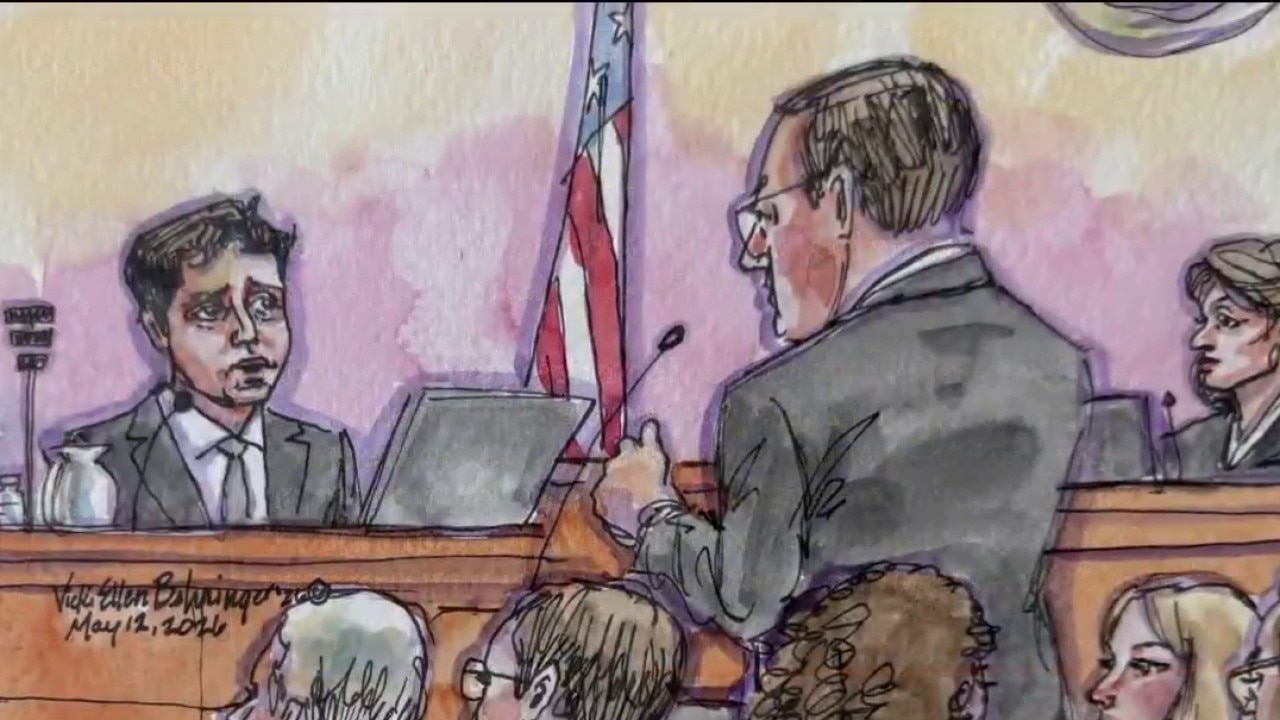
OpenAI's CEO Sam Altman:testimony: dishonest or AI defender?
Sam Altman testified in the trial, defending himself and OpenAI against charges by co-founder Elon Musk that Altman betrayed Musk's trust that OpenAI would be a non-profit not a means of Altman enriching himself. Musk's attorneys pointed to testimony by OpenAI's former CTO and board members who said Altman was not trustworthy. Altman said Musk wanted control for himself.
1:40 p.m.
Judge Yvonne Gonzalez Rogers dismisses the jury.
Judge Gonzalez Rogers says there will be one more day of evidence, and then closing statements are set for Thursday.
1:18 p.m.
Defense witness Jeremy Kolter, a professor at Carnegie-Mellon and OpenAI Board member since August 2024, finishes his testimony. Kolter is an AI safety researcher and expert on OpenAI’s safety and security processes. Musk has claimed that Altman and Brockman pursued profits over safety.
Kolter: "It has not been my experience that OpenAI has prioritized profit over safety."
Kolter testifies that about 200 people work on safety at OpenAI in teams, including the safety systems team that works on guardrails, preparedness team, model team, model policy team, and investigations.
Kolter: "These safeguards include things like safety training of the model itself to make the model answer in the correct way, and they also include monitoring, to understand the use of models after they are released."
Open AI attorneys present video testimony from Sam Teller, Musk's former Chief of Staff. The video segment includes Teller testifying that he had not heard of any conditions attached to Musk's donations to OpenAI.
12:43 p.m.
Microsoft's attorney questions Sam Altman and asks about other investors who had also backed OpenAI. Altman lists SoftBank, Amazon, Nvidia.
Microsoft's attorney also pushed back at Musk's attorneys' arguments earlier in the trial that Microsoft was trying to take over control of OpenAI intellectual property.
Microsoft Attorney: "What rights to AGI does Microsoft get if OpenAI does not commercialize AGI?"
Altman: "Microsoft only gets to commercialize to the extent that OpenAI commercializes itself or with other partners. If we determine that there is, for example, a safety reason not to commercialize some of the research, Microsoft doesn't get that either."
OpenAI's attorney, Bill Savitt, returns to questioning Altman, who testified that he initially admired Musk.
Altman: "I am grateful to Mr. Musk for his early contributions and guidance. I've said this many times."
But Altman testified he later felt Musk was posting negative comments on social media about OpenAI and the Microsoft funding out of "jealousy, as we got more successful."
12:38 p.m.
Afternoon testimony continued with Sam Altman being cross-examined by Steve Molo, Musk's attorney. Molo continues questioning Altman about his honesty and trustworthiness.
Musk's attorney asked why Altman pursued a commercial deal with Microsoft to get funding for OpenAI, instead of charitable donations:
Musk's Attorney: "Stanford not long ago raised over $3billion in a year up the road."
Altman: "I'm not familiar with that."
Musk's Attorney: "And there's other non-profits that raise billions of dollars a year. You're aware of that?"
Altman: "I'll accept your representation."
Musk's Attorney: "Had OpenAI raised funds, rather than done these commercial transactions with Microsoft, it would have much, much, much more money in the non-profit, wouldn't it?"
Altman "I do not believe that I could have taken any actions to get much more than $200billion into a non-profit."
Musk's Attorney "If you're not giving away something to Microsoft in exchange for the donation, but instead of soliciting charitable donations, then OpenAI is going to have more...?"
Altman disagreed, saying the more the for-profit OpenAI could raise, the more the non-profit benefits.
10:50 a.m.
Musk's attorney, Steve Molo, begins the cross-examination of Sam Altman with a series of quick questions about his honesty and integrity.
Musk's Attorney: "Are you completely trustworthy?"
Altman: "I believe so."
Musk's Attorney: "Should the jury believe your testimony?"
Altman: "I think that's up to them. But I believe so."
Musk's Attorney: "You believe so? Or they should?"
Altman: "Sir, I'm not going to tell the jury what to think."
Musk's Attorney: "Have you misled people with whom you do business?"
Altman: "I do not think so."
Musk's Attorney: "Would they think so?"
Altman: "I can't answer that for other people."
Musk's attorney, Steve Molo, continued asking Altman about testimony from co-founder Ilya Sutskever, former OpenAI Chief Technology Officer (CTO) Mira Murati, and former board members Helen Toner and Tasha McCauley, who Musk's attorney says accused Altman of being dishonest and lying about OpenAI's safety processes and dealings.
Musk's attorney: "Ilya Sutzgever you've known since 2014... In November of 2023, he told the OpenAI board that you were consistently exhibiting a pattern of lying."
Altman says he disagrees with the characterization by Musk's attorney, and asked Musk's attorney to show him the testimony, during a series of questions about McCauley.
Altman: "Clearly there was a breakdown of trust between me and the board and a big difference of opinion."
Musk's attorney: "That's not my questions sir. My question is Tasha McCauley ... accused you of creating a 'toxic culture of lying' at OpenAI. You're aware of that aren't you?"
Altman: "I'm not aware of it in those words."
10:30 a.m.
Judge Yvonne Gonzalez Rogers is clear about keeping attorneys in line with their questioning, and instructing the jury that attorneys' questions and statements are not facts.
She has praised the jury many times for their service. Today, she thanked the jury again and noted that this is National Jury Appreciation Week, which drew smiles.
Judge Yvonne Gonzalez Rogers: "You've all been on time and engaged. It's important. It's important for our country."
8:41 a.m.
8:54AM Sam Altman, CEO and Co-founder, OpenAI was sworn in for testimony after Bret Taylor, OpenAI Board Chair finishes testimony.
OpenAI's attorney, Bill Savitt, said he wanted to open with a direct question:
OpenAI attorney: "You have been accused of stealing a charity, Mr. Altman. What is your response to that?"
Altman: "It feels difficult to even wrap my head around that framing...we created the largest or one of the largest charities in the world. I think this foundation is now doing incredible work..."
"It took a huge amount of work to create this over the last decade—plus and a lot of creative ways to keep it going given the huge capital requirements that were needed."
"It does not fit with my conception the words 'stealing a charity' to look at what has actually happened here."
Altman testified that after OpenAI won a DOTA2 video game competition against 5 top players, Musk seemed excited about progress, and they agreed they needed more funding to increase OpenAI's compute, or computing power.
Altman testified that when they discussed structures for OpenAI, he became uncomfortable with Musk wanting control.
Altman : "Mr. Musk felt very strongly that if we were going to form a for-profit he needed to have total control over it initially."
OpenAI attorney: "How did you feel about Mr. Musk's demand for total control?"
Altman: "I was extremely uncomfortable with it. Part of the reason we started OpenAI was that we did not think AGI should be under the control of any one person, no matter how good their intents are."
Altman testified that he also had concerns about Musk's suggestion "that he should have 90% of the equity. It then softened, but it was always a majority."
Altman: "A particularly hair-raising moment is when my co-founders asked Mr. Musk if you have control what happens if you die? He said something like, I haven't thought about it a ton, but maybe control should just pass to my children. I didn't feel comfortable with that."
Altman testified that he had donated more than $20million in cash to OpenAI.
He also testified that he felt bad about what he called "misunderstandings" with the OpenAI board that led to his firing, and subsequent rehiring. OpenAI board members have testified that he was not truthful with them.
Altman: "I was not trying to deceive the Board... I feel badly for the misunderstandings. That was never my intent."
Court paused for a break until 10:21AM.
Live Updates: Day 6 - May 5, 2026
OpenAI President Greg Brockman continues testimony
OpenAI president Greg Brockman testimony wraps up day 6 of the Musk v. Altman trial. Jury faces a decision about this key witness and his motives. The question is which side to believe:
The defense attorney portrayed Brockman as trying to uphold OpenAI's charitable mission and protect it from Musk.
Musk's attorney portrayed Brockman as an unknown, incompetent co-founder who wanted to get rich off of Musk's donations and OpenAI's for-profit potential.
1:10 p.m.
Brockman finishes testimony for now, Judge Yvonne Gonzalez Rogers excuses Brockman, but says he can be called back to testify later if needed.
Musk's attorney now plans to show videos to the jury of some depositions. Judge is instructing the jury that depositions are to be considered just as though it is live testimony.
11:23 a.m.
OpenAI attorney finishes a cross-examination of Brockman.
During the cross-examination, the OpenAI attorney asked Brockman to speak about his holdings of companies that have struck deals with OpenAI. The prior day, Musk's attorney had suggested Brockman had a conflict of interest. Brockman testified that his holdings of Stripe were only as a founding member from 2010 and that he left in 2015.
He said he never hid his ownership stakes in Cerebras from Musk and was recused from any decisions regarding the Cerebras/OpenAi deal.
Brockman also testified that Shivan Zilis, a venture capitalist who worked at Musk's Neuralink and served as a liaison with Musk, joined the OpenAI board in 2020, did not disclose her relationship with Musk.
OpenAI attorney: "In the years you worked with Ms Zilis, did you have any awareness of a romantic relationship with Mr. Musk?"
Brockman: "No, she told me the opposite."
Brockman said he only learned about Zilis's relationship with Musk when she gave birth to twins and news reports indicated that Musk was the father.
"She said it was IVF and it was entirely platonic with Elon," Brockman testified.
Brockman stated some OpenAi board members wanted Zilis to be kicked off the board. Brockman said he and Sam Altman convinced them that Zilis could separate her involvement with Musk and OpenAI, so she should remain. But Zilis later left when Musk launched his own AI effort.
Attorney for Microsoft Jay Jurata's cross-examination.
Asking Brockman series of questions about whether Microsoft played any role in the decisions around the OpenAI shift from non-profit to for-profit. Brockman testifies Microsoft played no role in decision-making.
10:25 a.m.
OpenAI President Greg Brockman resumes testimony after the break.
Brockman continues testifying about the issue brought up yesterday in that Musk felt OpenAI was failing and was pushing to fold OpenAI and employees into Tesla.
Brockman testified about an email he received from Musk in Feb. 1, 2018, where Musk wrote: "The only paths I can think of is a major expansion of OpenAI and a major expansion of TeslaAI."
Brockman stated he did not like the idea of moving to Tesla, because Musk indicated the AGI research would be conducted in secret and Brockman feared it could be adversarial.
"It's not clear whether the AGI project would really be isolated from being sucked into AutoPilot," Brockman testified. "Tesla's mission is something else, and it's also a C-corp."
Brockman also testified about the Feb., 18, 2018, meeting where Musk announced his departure from OpenAI to develop his own AGI effort at Tesla: "He basically said there's no hope. These people think there is one, but I don't," Brockman recalled. "He said he would not work on safety. the most important thing was catching up. "
"If the sheep are dictating safety and the wolves are not, there's no purpose," Brockman testified that Musk told OpenAI employees.
Brockman testified that when Musk left he felt "Relief, some sadness. It was the end of an era."
10 a.m.
OpenAI President Greg Brockman is back on the stand.
Brockman was asked a series of questions about Musk's early involvement in OpenAI. Brockman testified that Musk wanted total control, but Brockman was concerned.
"He knows rockets. He knows cars. He doesn't know AI," Brockman testified.
Brockman related one situation where one employee was giving Musk an early AI chat demo and says Musk called it stupid and missed the point of the demonstration.
Brockman said he "didn't think he'd (Musk) spent the time to get good at it."
Live Updates: Day 5 – May 4, 2026
OpenAI President Greg Brockman testifies
Day 5: OpenAI's Brockman: defends his $30b stake, says Elon Musk received no promises
OpenAI's president and co-founder Greg Brockman testified in day 5 of the Musk v. Altman trial Monday. Musk's attorneys presented entries in Brockman's private journal, where Brockman mentioned he might financially gain $1billion as OpenAI become a for-profit entitty. Brockman said he wanted fair compensation and no funds from the non-profit are being taken to pay his or other employees' stakes in the company.
Court resumes at 8:30a.m. Tuesday with Mr. Brockman continuing his testimony. Musk's attorneys do not plan to call Sam Altman as their witness, but the defense intends to put Mr. Altman on the stand. That will likely come later in the week or early next week.
Brockman's testimony revealed the tension between Brockman, Altman and Musk as the issue of insufficient funding to compete with Google became evident.
Brockman testified that Musk decided to leave OpenAI because Musk felt it could not compete with Google. Brockman said Musk decided his own company, Tesla, was the only company that could compete, so Brockman said Musk told him he'd secretly develop AI at Tesla without notifying shareholders.
2:40 p.m.
OpenAI's attorney Bill Savitt also addressed journalists outside the courthouse, saying:
"OpenAI and Mr. Brockman have been mission-driven since the beginning and remain so today. ANd one of the ways you know it is to look at the not-for-profit organization they created, the OpenAI Foundation, which is one fo the best not-for-profits in the world today."
2:37 p.m.
Musk's attorney, Marc Toberoff, speaks to the press outside the courthouse for the first time since the trial began last Monday. Toberoff said he was pleased with the testimony:
"Mr. Brockman's testimony and his journal, in his own unfiltered words, reinforces our confidence in our claim, and we look forward to building on the progress as the case proceeds."
1:40 p.m.
Court adjourns.
1:10 p.m.
The OpenAI attorney continues the cross-examination of Brockman and the founding of OpenAI.
Brockman gives his biographical and early career information.
Brockman describes in great detail an "off-site" meeting in Napa in 2015 where he and Altman spoke with 10 people they wanted to recruit to OpenAI, including Ilya Sutskever, who had been with Google's AI team.
OpenAI presents text thread in November 2015, from Sutskever expressing concern about Musk's involvement in OpenAI.
"I imagine our work will become very stressful and since he('ll (Musk) be bankrolling, it will be hard to stop," Sutskever wrote in the text.
Sutskever ended up leaving Google to join OpenAI.
Brockman says before OpenAI's launch on December 11, 2015, he received an email from Elon Musk saying Sam Altman's $100 million launch announcement was too low and should be $1billion instead.
Brockman also said Musk stated at the time that a non-profit model wouldn't work and thought it would need to be a non-profit and C-corp setup to succeed.
12:45 p.m.
The OpenAI attorney begins cross-examination of Brockman.
OpenAI attorney: "Did you ever commit to Elon Musk that OpenAI would stay a nonprofit?"
Brockman: "No."
OpenAI attorney: "Did you ever observe anyone at OpenAI do so?"
Brockman: "No."
About Musk's claim that OpenAI was supposed to be open source:
OpenAI attorney: "When Mr. Musk was with OpenAI did OpenAI open source any of its technology?"
Brockman: "No."
OpenAI attorney: "Does OpenAI open source some of its technology today?"
Brockman: "Yes."
About Musk's claim OpenAI violated its non-profit mission:
OpenAI attorney: "For any contribution that Mr. Musk ever made to OpenAI, did you ever hear him attach any condition?
Brockman: "No."
OpenAI's attorney also questioned Brockman about Musk's departure from OpenAI, to develop AI at Tesla. Brockman testified that Musk told him the intent was to compete with Google's AI products because Musk thought OpenAI no longer was able to compete.
Brockman testified that Musk's Tesla AI effort was not a non-profit venture or open.
"He (Musk) said shareholders wouldn't like it. It had to be done in secret," Brockman testified.
12:40 p.m.
A testy exchange between Brockman and Musk's attorney Steven Molo.
Brockman: "I've never been certain on what I'm being sued for."
Musk's attorney: "Did you read the complaint?"
Brockman: "Yes."
Musk's attorney: "You're being sued for breaching the charitable mission for OpenAI which is to develop safe AI for the benefit of humanity...."
12:12 p.m.
Brockman returns to the stand after a 20-minute break. Judge Yvonne Gonzalez Rogers warned Musk's attorney, Steven Molo, he is two minutes late and told him not to let it happen again.
Musk's attorney noted that in 2025 OpenAi transformed to a public benefit corporation (PBC) which has no cap on profits investors can make.
Musk's attorney also stated: "You are exploring the possibility of an initial public offering (IPO)."
Musk's attorney: "If there is an IPO, your personal stake could be worth more than $30 billion dollars."
Brockman: "I'm not sure how those two are connected."
11 a.m.
Musk's attorney asked a series of questions about whether Brockman's intentions were aimed at personal financial gain, instead of upholding his "fiduciary duty" to the OpenAI non-profit.
Musk's attorney submitted emails from August 2017 between Brockman, Musk and Musk's head of office Jared Birchall. In the email, Birchall alerted Musk that Altman had given Brockman a $10-million deal and said, "Naturally, Greg is going to have greater allegiance toward Sam as a result of this arrangement."
Musk's attorney: "Do you think it was fair to have a side deal with Altman?"
Brockman: "We never discussed compensation directly and as you see here, we shared information when he (Musk) asked."
Musk's attorney: "You concealed this from him (Musk)?"
Brockman: "No."
Musk's attorney: "Well he (Musk) certainly didn't know about it."
Brockman: "That's true."
Musk's attorneys presented emails where Musk said "either go do something on your own or continue with OpenAI as a non-profit." Musk's attorney said Brockman indicated he would stay.
Musk's attorney presented Brockman's personal journal entries stating: "Can't see us turning this into a for-profit, without a very nasty fight."
Musk's attorney also read a quote from Brockman's August 2017 journal entry: "This is the only chance we have to get out from Elon.... We truly have a chance to make this happen. Financially that would take me to 1-billion dollars."
Musk's attorney noted that Brockman now has a $30-billion stake in the for-profit OpenAI.
Musk's attorney also noted Brockman, who is president of OpenAI, has equity in Cerebras and other companies which have been granted financial deals with OpenAI.
10 a.m.
OpenAI President Greg Brockman was called as a plaintiff witness and has been on stand all morning for day 5 of the Musk v. Altman trial.
Musk's attorney pointed to the founding of OpenAI and its charter, asking Brockman about the mission that "our primary fiduciary duty is to humanity."
Musk's attorney: "You were an OpenAI executive. Do you believe it's possible you breached your duty to humanity?"
Brockman:"I don't believe that happened. I believe we've created the most well-resourced non-profit in history."
Musk's attorney asked a series of questions about Elon Musk using his stature to help OpenAI acquire employees and "compute" or computing power.
Musk's attorney: "You used Elon to help attract top talent didn't you?"
Brockman: "Obviously he was very polarizing. To some candidates he was attractive, some were turned off."
Brockman testified that he, Sam Altman, and Elon Musk realized they needed more "compute" or computational power.
Brockman: "2017 was when we realized that's the resource we most needed to grow."
Musk's attorney also presented emails between Brockman and Musk, indicating Musk used his personal reputation and connections to reach out to Microsoft's CEO Satya Nadella to get access to more computational power for OpenAI.
Brockman acknowledged he would not have been able to call Nadella, but pushed back on the idea Musk deserved all the credit. Brockman said Altman also was working to get additional assets.
Live Updates: Jury excused — May 1, 2026
10:30 a.m.
Judge Yvonne Gonzalez Rogers met with attorneys at 10 a.m. Friday to handle various motions and objections surrounding the Musk v. Altman trial. A vigorous discussion between the parties over the wording of jury instructions took up a large portion of the meeting.
Musk's attorneys gave the judge the names of the remaining witnesses.
Sam Altman, the co-founder of OpenAI, is not on the plaintiff's list.
- Monday: Musk's attorneys say they plan to call Stuart Russell, a UC Berkeley expert witness, and OpenAI President Greg Brockman to testify.
- Tuesday: Greg Brockman (continued) and several corporate videos
- Tuesday or Wednesday: Shivon Zilis, former employee Rosie Campbell, and a non-profit expert.
Note: Friday, May 1, the jury is excused. Judge Gonzalez Rogers has scheduled a meeting at 10 a.m. Friday with the attorneys to discuss the case and any issues that arise.
The jury will return to court to resume the trial at 8:30 a.m. on Monday, May 4. The list of witnesses who still wait to be called includes expert witnesses UC Berkeley professor Stuart Russell and OpenAI President Greg Brockman.
Live Updates: Day 4 — April 30, 2026
Elon Musk continues testimony
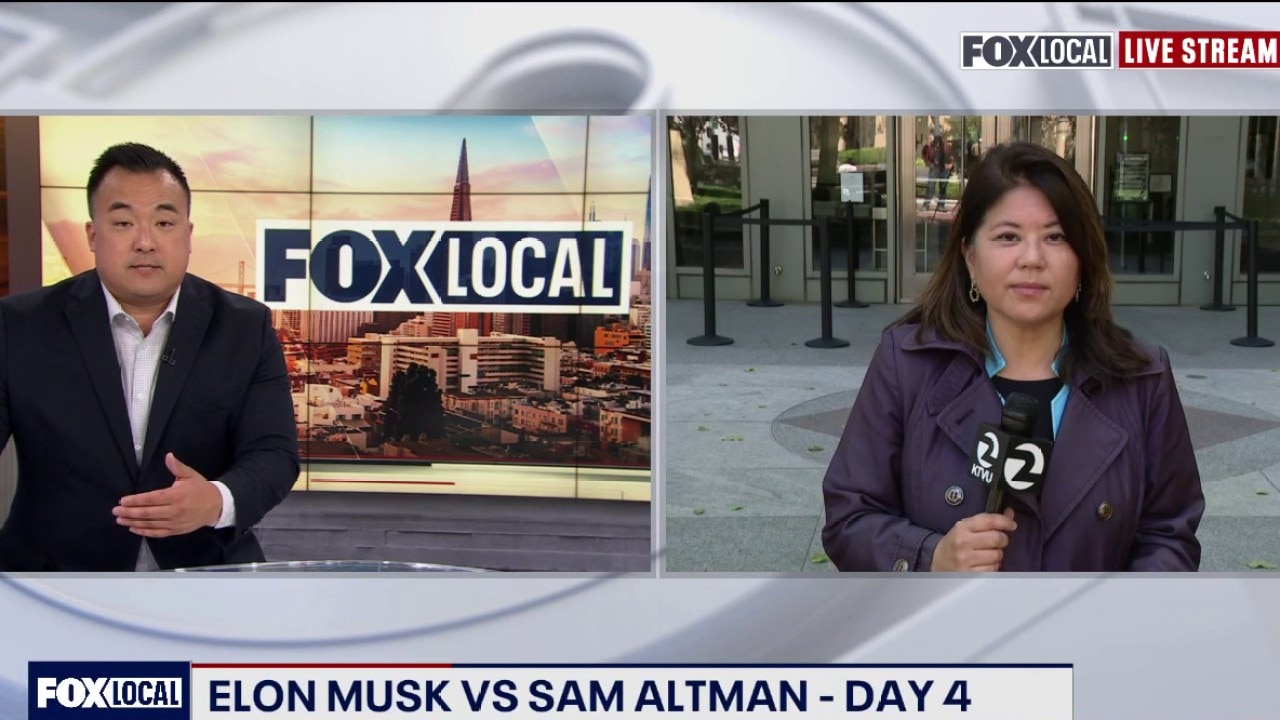
Musk v. Altman - Live update from federal courthouse, Day 4
Another day of contentious exchanges as Elon Musk took the stand Thursday in the Musk v. Altman trial at Oakland's Federal Courthouse. Musk made his points that he felt OpenAI had betrayed the non-profit mission and the non-profit OpenAI Foundation is now secondary to the OpenAI for-profit arm it is supposed to be controlling. The OpenAI attorneys pointed to Musk's financial tax benefits for his donations and noted Musk's attempts to take control of OpenAI and subsequent founding of the for-profit xAI seemed inconsistent with Musk's altruistic claims about the charity.
1:25 p.m.
Judge Yvonne Gonzalez Rogers has dismissed the jury early to speak with attorneys about various objections and motions.
No court on Friday, so the next hearing is scheduled for Monday, May 4, at 8:30 a.m.
11:50 a.m.
The judge called for another 20-minute break and will be returning shortly.
Second witness: Jared Birchall, head of Musk's family office. Initial questions revolved around his knowledge of donations made by Elon Musk to OpenAI and confirming documents showing contributions that were larger than other donors.
Birchall testified that he helped coordinate communications between Musk and the legal team when there was a question with the California Attorney General's office about OpenAI modifying its structure.
Musk's attorney: "What were the nature of your concerns?"
Birchall: "The concerns were (efforts) to further modify the nature of OpenAI and extract profit from the non-profit for the benefit of the for-profit."
OpenAI's attorney asked Birchall about Musk's charitable donations, and said that Musk was benefiting by taking a tax write-off on his OpenAI donations.
Birchall: "It is part of the consideration when making charitable donations."
OpenAI's attorney is pressing Birchall on Musk's donations to OpenAI: monetary charitable donations of $38 million, rent payments for leasing space in San Francisco's Pioneer Building office space, and Teslas which Musk gifted to Altman and others.
10:45 a.m.
Musk's attorneys returned to questions about the timing of Musk's lawsuit. Musk said he did not think the 2019 Microsoft investment of $1-billion in the capped, for-profit OpenAI subsidiary was a breach of the charitable trust. Musk said he also didn't think Microsoft's $2-billion capped-profit investment in 2021 in the OpenAI for-profit arm was a breach of the charitable trust. At the time, the OpenAI for-profit arm was under the OpenAI Foundation, which remained a non-profit.
Musk said it was only later that he felt the for-profit had "looted" the OpenAI non-profit.
Musk: "You can't take a supermajority of the nonprofit's value and move that to a for-profit."
11:00 Before Musk finished his testimony, Judge Yvonne Gonzalez Rogers gave several strong direct orders and warnings to Musk.
One was about making legal statements. Musk had said the OpenAI attorney had been asking "leading" questions. The judge stopped the questioning and stated:
Judge: "Let's remind everyone you're not a lawyer. And you've never taken a class in evidence."
Musk: "I did take Law 101."
Judge: "You are not a lawyer."
Judge: "You don't have statements on the law, at least not in this court."
Also, before allowing him to step down from the witness stand, the judge warned Musk he must not make sweeping apocalyptic statements about AI. Musk had testified that "if we want to make a lot of robots we have to make sure it's safe and not a Terminator situation," referring to the Terminator movie. His attorney asked what the worst-case scenario was and Musk replied, "that AI kills everyone." The judge told Musk he was not to make any such statements in the future. The judge allowed Musk to leave the courtroom. He left the courthouse.
10:30 a.m.
Back in court for more Elon Musk testimony today. Tesla CEO and OpenAI co-founder was on the stand for about an hour and a half. OpenAI defense attorney Bill Savitt started with cross-examination this morning, asking Musk about the development of his own for-profit xAI artifical intelligence entity founded in 2023. Questioning the timing of creating his own competing AI company and suing OpenAI. Also asking again about Musk's support for OpenAI becoming a for-profit entity.
Musk's attorney, Steven Molo, followed with questioning focused on a September 2017 email (exhibit 158) from Sam Altman to Musk highlighting the early negotiations over the founding of OpenAI, with Altman stating, "i [sic] remain enthusiastic about the non-profit structure." Musk also testified that the non-profit and open source mission of OpenAI was the reason he donated his money, time, reputation.
Musk: "Everyone agreed that this was going to be a charity..."
Later, during questioning:
Musk's attorney: "Were your continued contributions affected by this?"
Musk: "Yes. That was the whole basis to my donation of 38 million dollars, my name..."
Musk: "I continued to fund OpenAI as a result of these commitments to keep OpenAI a nonprofit."
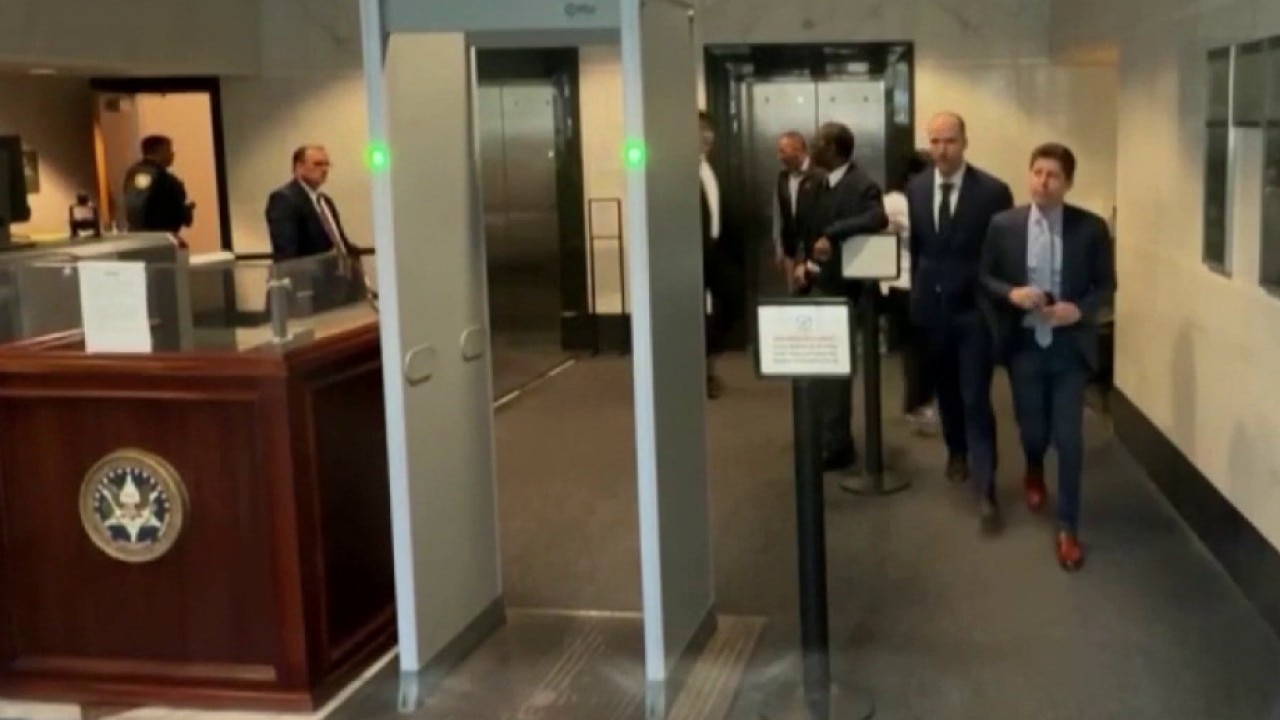
Musk testifies again Thursday in lawsuit against OpenAI's Altman and Brockman
Musk takes the stand for a second day seeing to prove that OpenAI co-founders Sam Altman and Greg Brockman went back on a promise to keep OpenAI open source and a non-profit.
Live Updates: Day 3 — April 29, 2026
Elon Musk on the witness stand
1:40 p.m.
The judge dismisses the jury. The defense attorney indicated there would likely be an hour more of cross-examination for Musk on Thursday, and then Musk's attorney would be able to follow up with questions.
1:30 p.m.
Following the second 20-minute break of the day, the attorney for Altman, Brockman, and OpenAI resumed questioning, with continued contentious exchanges between Musk and the attorney.
Musk said he had difficulty answering the "yes or no" questions, because he felt he needed to add context and tried multiple times to insert other comments. The defense attorney ended up repeatedly reading sections of Musk's previous deposition statements made under oath, so the jury could hear Musk's responses.
At the end of the Day 3 testimony, the defense attorney pressed Musk to identify whether OpenAI posed any greater safety risk than other AI companies, including Musk's own X-AI. During the exchanges, the attorney asked Musk:
Def. Attorney: "Do you think a for-profit AI company creates a safety risk?"
Musk: "Yes, I think it creates a safety risk."
Def. Attorney: "Does X-AI suffer from that safety risk?"
Musk: "Yes."
Def. Attorney: "Do you know what a safety card is?"
Musk: "Why a card?"
Def. Attorney: "Have you ever looked at OpenAi's public documents website to see what it is doing with respect to safety?
Musk: "I don't think it has credibility."
1 p.m.
Musk's testimony continues with questioning now from Bill Savitt, defense attorney for Altman, Brockman, and OpenAI. The exchanges were often contentious, with Musk giving lengthy answers and judge instructing him to answer a simple "yes or no." Musk said questions were not simple and tried to elaborate multiple times.
Musk's financial support:
The defense attorney Savitt began by raising questions about Musk's financial support of OpenAI. Savitt referenced deposition statements from September 2025. The defense attorney noted that Musk cut off quarterly $5-million donations to OpenAI in May 2017, but in the 2023 tweet claimed that he had donated $100-million. The defense attorney read from the deposition:
Musk: "In strict monetary terms I contributed $38 million."
Def. attorney: "So it wasn't true that you donated anywhere near $100 million to OpenAI?"
Musk: "I was mistaken."
The defense attorney also asked Musk about multiple emails where Musk discussed with OpenAI about creating a for-profit arm to raise money:
Musk: "As long as the for-profit is in service to the non-profit, it is not breaking the promise."
Musk's emails discussing OpenAI becoming a for-profit arm
The defense attorney presented multiple email exhibits showing Musk corresponding with OpenAI about the need to raise more money and Musk's openness to a move to "for-profit" status.
Def. attorney: "In 2017, you started having discussions with the others about a potential for-profit structure?"
Musk: "I remember we had discussions."
At one point, during testimony, the defense attorney told Musk to answer questions simply.
Musk: "Your questions are not simple, they're designed to trick me."
Def. Attorney: "You're a bright guy. I'm asking you questions that have yes or no answers."
The judge later pressed Musk multiple times to answer "yes or no" to questions about whether Musk remembered being open to creating an OpenAI for-profit arm.
Musk replied, "Yes."
Musk's interest in bringing OpenAI and OpenAI staff to Tesla's AI team
The defense attorney also asked Musk about emails Musk wrote after he withdrew OpenAI funding in mid-2017. The exhibit emails indicated Musk wanted Tesla to acquire OpenAI in order to compete with Google.
Def Atty: "You proposed that OpenAI should attach itself to Tesla?"
Musk: "I'm not sure what you mean by attach."
The defense attorney pressed Musk on email exchanges where Musk said he lost confidence in OpenAI and wanted to rebuild AI within Tesla. The defense attorney noted that Musk stated in emails that he would actively try to "move people from OpenAI to Tesla" and asked one ally to stay active within OpenAI to "keep info flowing."
"Tesla is the only path to be a counterweight to Google," the defense attorney read from a Musk email exhibit.
11:30 a.m.
The third day of the Musk v. Altman trial began with Elon Musk returning to the witness stand. His attorney addresses defendants' accusations that Musk didn't bring a lawsuit until he had his own competing X-AI company. Musk testifies the reasons why he filed a lawsuit later:
Musk's attorney: "Why didn't you bring this lawsuit in 2018?"
Musk: "In 2018 they had not yet breached the charitable trust. Thinking someone might steal your car is not the same as someone stealing the car."
Musk's attorney: "Why didn't you bring this in 2020?"
Musk: "Same reason."
Musk's attorney: "Why did you only sue after the 2023 Microsoft deal was announced?"
Musk: "The nonprofit had been looted in 2023."
Musk: "My concern was Microsoft would own artificial generative intelligence that was developed by the charity."
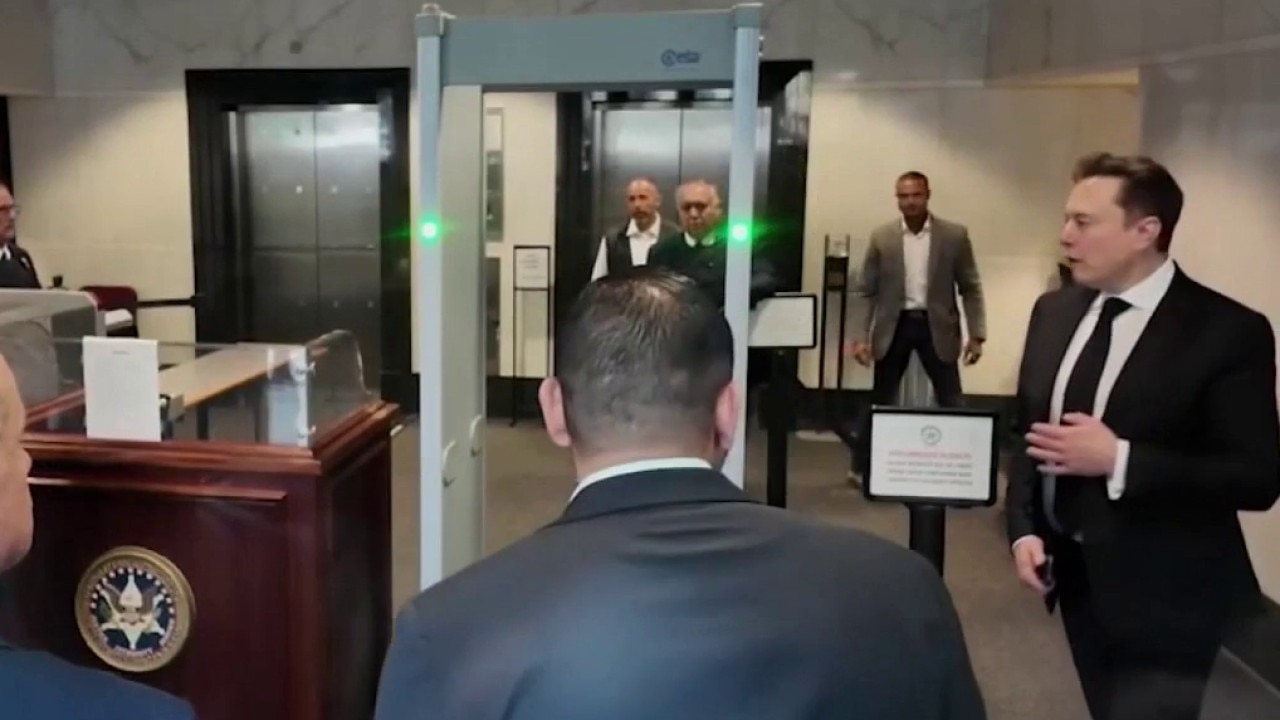
Musk takes stand in lawsuit against Sam Altman and OpenAI
Day 2: Musk v. Altman case started with opening statements and then went straight to the first witness, Elon Musk, who is suing OpenAI's co-founder Sam Altman and others, accusing them of breaching an agreement to keep OpenAI a non-profit, by changing OpenAI into a for-profit entity
The Source: The Associated Press, witness testimony.