

Mountain View 2nd-grader designs 'zero gravity indicator' for NASA's next mission to the moon
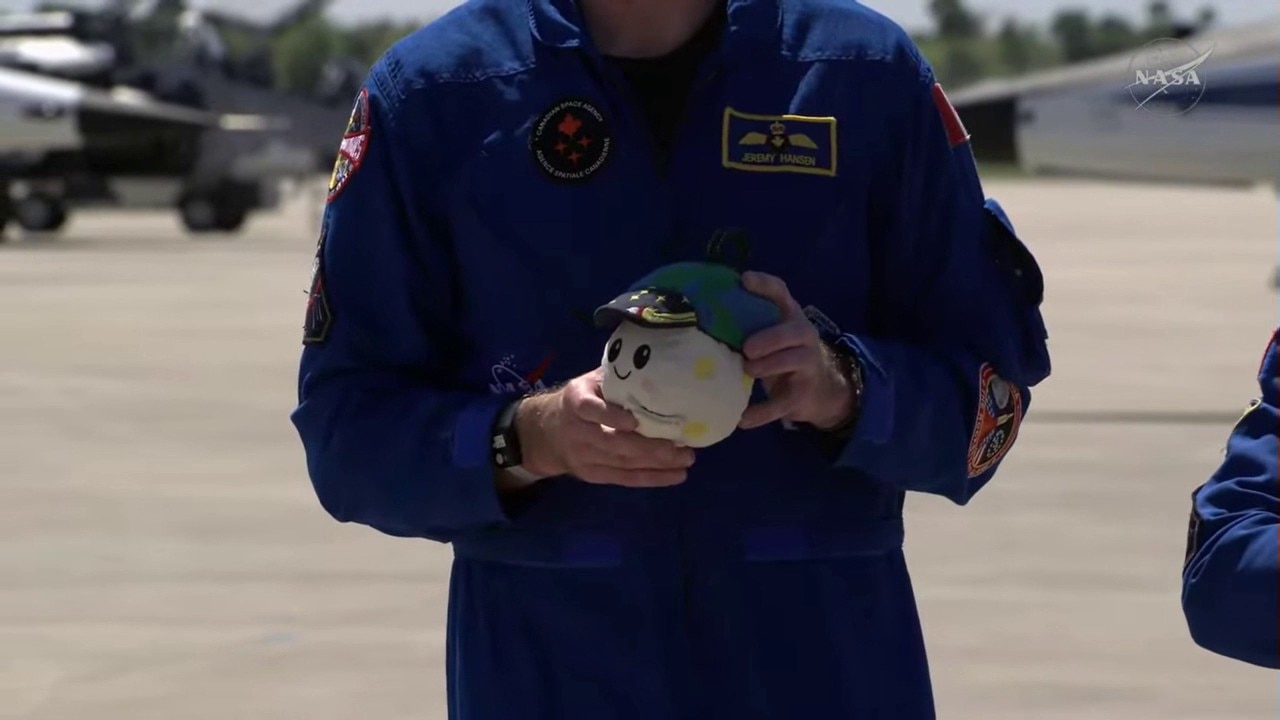
Artemis II: Here's the zero gravity indicator
The Artemis II revealed the winner of its zero indicator submission. Lucas Ye, of Mountain View, California, a second-grade student, submitted "Rise."
A second-grade student from California has designed the mascot that will join NASA's Artemis II mission to the moon.
Known as the zero gravity indicator – or ZGI – the item, which is sometimes a toy or stuffed animal, will help alert the crew when they've reached zero gravity in space. It also serves as a friendly reminder about the "human element" to their mission.
NASA is targeting Wednesday night, April 1, 2026, for the first launch attempt of the Artemis II mission. There are several other launch attempts that same week should NASA need to reschedule the launch.
Meet ‘Rise’
Artemis II Mission Specialist Christina Koch announced March 27 that "Rise," a moon-like plush with an Earth-inspired cap, designed by Lucas Ye, of Mountain View, California, has been selected to join their mission.
Rise was submitted as part of a worldwide design contest that NASA launched. Last year, NASA narrowed the finalists to 25, before Friday's reveal.
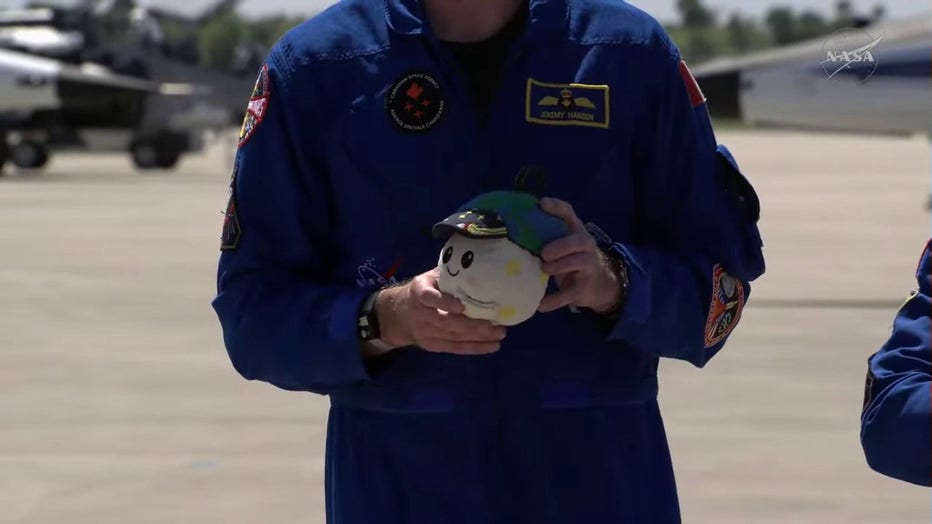
NASA unveils the winner of the Artemis II zero gravity indicator: "Rise," submitted by Lucas Ye, of Mountain View, California.
What they're saying:
"The theme of the mission is Earth Rise photo taken on Apollo 8, which is inspirational to all of us. It is a mission that sort of mirrors our own. And we've incorporated that into our mission patch and into our ethos and values as a crew," she said.
"Welcome aboard, ‘Rise.’ It was a great first flight with you. We look forward to the next one," she said, referring to the crew's flight from Texas to Florida to begin quarantine.
There will also be a MicroSD card inside the zero gravity indicator that contains the names of the public who wanted their names to be sent to the moon. Submissions close Friday night, March 27, at 5 p.m. You can submit here.
What they're saying:
"The Artemis II zero gravity indicator will be special for the crew," said Reid Wiseman, Artemis II commander in a previous statement.
"In a spacecraft filled with complex hardware to keep the crew alive in deep space, the indicator is a friendly and useful way to highlight the human element that is so critical to our exploration of the universe. Our crew is excited about these designs from across the world and we are looking forward to bringing the winner along for the ride."
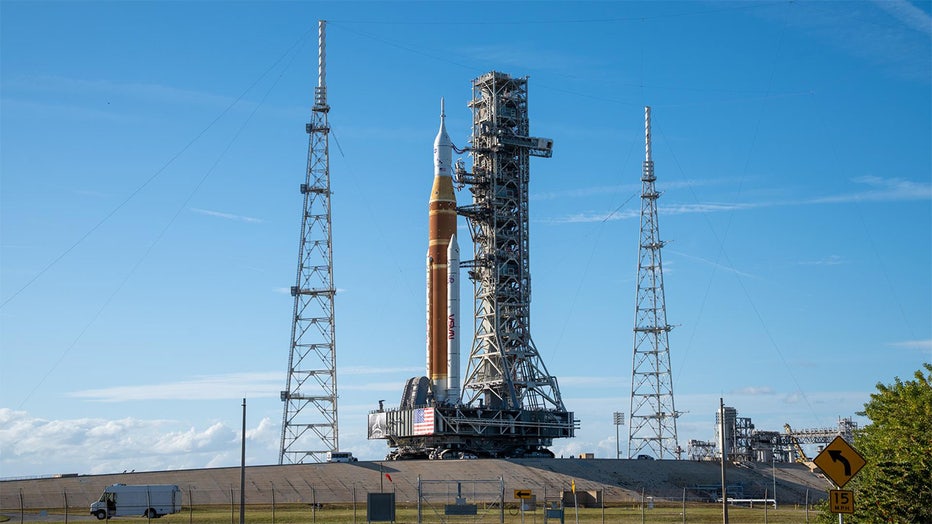
fILE - This image shows NASA’s SLS (Space Launch System) and Orion spacecraft rolling out of the Vehicle Assembly Building at NASA’s Kennedy Space Center. NASA’s massive crawler-transporter, upgraded for the Artemis program, carries the powerful SLS
Other zero gravity mascots
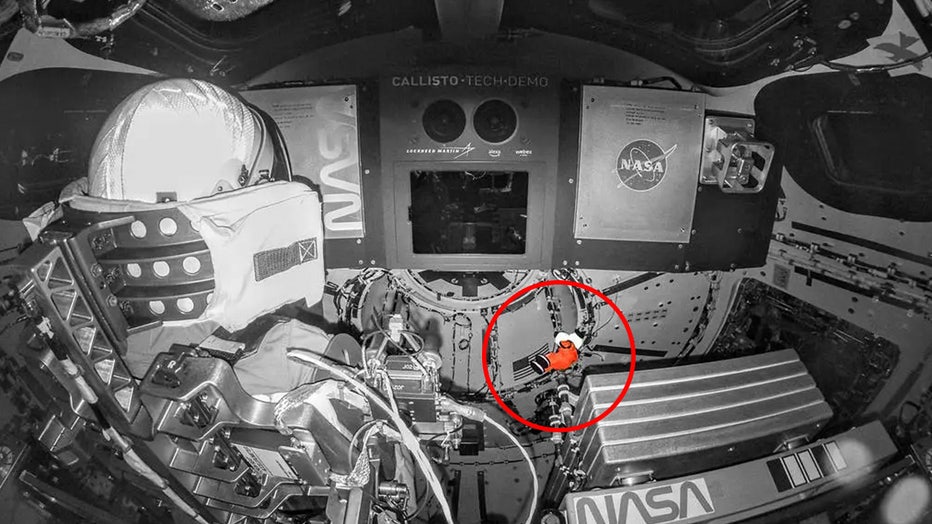
FILE - Snoopy, the zero-gravity indicator for NASA’s Artemis I flight test, floating in space Nov. 20, 2022, while attached to his tether in the Orion spacecraft. (NASA)
For the Artemis I mission, Snoopy hitched a ride aboard Orion to serve as the zero gravity indicator.
"NASA has held an association with Snoopy since the Apollo Era – the character has contributed to the excitement for NASA human spaceflight missions, helping inspire generations to dream big, and is a symbol of NASA’s safety culture and mission success," the federal space agency said.
To kick off SpaceX’s Crew-1 mission back in 2020, Baby Yoda (Grogu from ‘The Mandalorian’ series) served as the zero gravity indicator.
What is the Artemis II mission?
NASA will send astronauts on a 10-day mission to the moon's orbit and back to Earth.
The mission seeks to test the Space Launch System rocket, the Orion spacecraft, the capabilities to fly to deep space, as well as how deep space impacts humans.
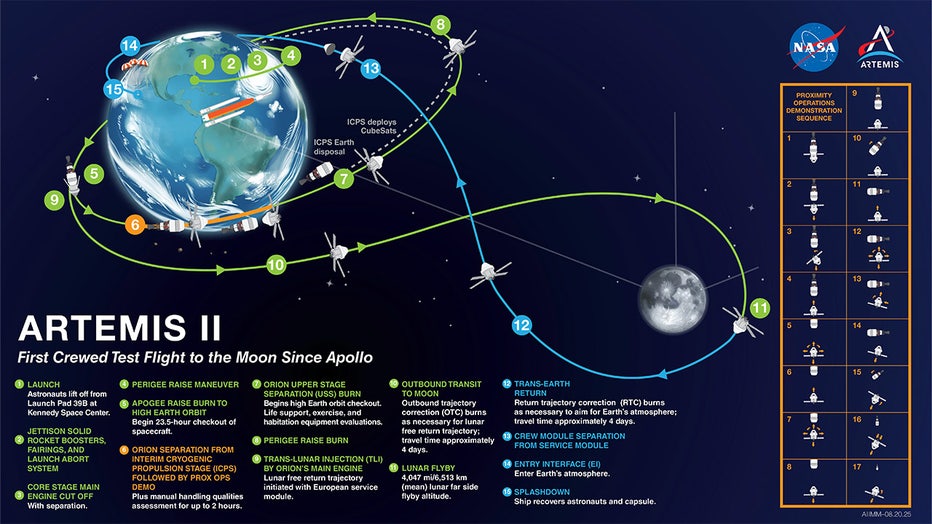
Trajectory for Artemis II, NASA’s first flight with crew aboard SLS, Orion to pave the way for long-term return to the Moon, missions to Mars. (NASA)
Artemis III, Artemis IV, and Artemis V
The Artemis mission is a series of at least 5 space flights whose goal is to land astronauts on the moon.
Artemis I (November 2020): An uncrewed flight to the lunar service and back to Earth.
Artemis II (Tent. April 2026): A crewed flight to the moon's orbit and back to Earth.
Artemis III (2027): Low-orbit demonstration flights of one or both commercial Landers from Space and Blue Origin. It will also be a crewed mission to test "rendezvous and docking capabilities between Orion and private commercial spacecraft needed to land astronauts on the Moon."
Artemis IV (early 2028): This mission's goal is to land humans on the moon and have them transfer from the Orion spacecraft to a lunar lander. The goal is to figure out whether SpaceX's or Blue Origin's will house the astronauts. Work here will also be to standardize the SLS rocket.
Artemis V (late 2028): A lunar surface mission, as well as the initial building of a "moon base."
NASA said it then envisions yearly launches.
The Source: NASA Mission Specialist Christina Koch revealed the zero gravity indicator for Artemis II at a Friday, March 27, press conference at Kennedy Space Center in Florida. This story was reported from Orlando and San Jose.