

Avian flu detected in Bay Area northern elephant seal colony
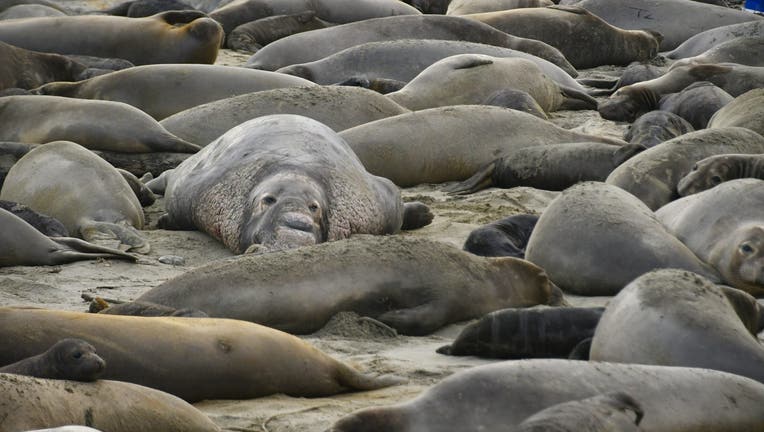
The Bay Area is home to one of the world’s largest mainland breeding colonies for the Northern Elephant Seal. Photo from a previous breeding season. (California State Park / Emma Levy)
SAN FRANCISCO - A highly contagious strain of avian flu has been detected in northern elephant seals at Año Nuevo State Park, the first time the disease has been detected in California’s marine mammal population.
Avian flu, known as H5N1, primarily infects birds and mammals, including humans in rare cases. When humans are infected, avian flu can cause severe disease with a high mortality rate. Those humans in whom the disease has been detected are mostly linked to close contact with infected birds and other animals, as well as contaminated environments, as reported by the World Health Organization.
What they're saying:
The risk to the public is still very low, according to the Marine Mammal Center, a nonprofit organization based in Sausalito, but people should still exercise caution.
"This development is especially concerning because the disease caused mass die-offs in closely related species, southern elephant seals, during an outbreak in Argentina in 2023," a release from the Marine Mammal Center states. "That event showed how quickly this disease can spread through vulnerable marine populations, underscoring the urgency of early detection, close monitoring and rapid response."
Año Nuevo State Park is one of the top northern elephant seal breeding grounds in California, the Marine Mammal Center states. Thousands of the animals gather at the park's rookery every year.
Most of the northern elephant seals in the colony appear healthy, but experts are monitoring the situation to understand potential impacts, and how animals up and down the coast may be affected.
What you can do:
The Marine Mammal Center recommends people and pets stay at least 150 yards away from seals and other marine mammals, never touch live or dead wildlife, and to keep dogs leashed on or near beaches.
Anyone who encounters a sick or injured animal can report it to the Marine Mammal Center’s hotline at 415-289-SEAL (7325).
Big picture view:
The Marine Mammal Center is working alongside the National Oceanic and Atmospheric Administration, the University of California Davis, the University of California Santa Cruz, the Department of Fish and Wildlife, and the California Department of Public Health. Researchers at the organizations are monitoring wildlife health and guide a coordinated, science-based response.
Both the Marine Mammal Center and UC Santa Cruz are asking for donations to help support their ongoing efforts to monitor the disease.
Dig deeper:
The Centers for Disease Control reports that there have been 71 human cases of H5N1 detected in the United States since February, 2024. The virus has caused 2 human deaths.
Data shared by the organization shows that avian flu has been detected in multiple states across the country, with the largest number of cases being in California and Washington.