

California renters can plug in balcony solar panels starting in January
Oakland, Calif. - Californians who live in apartments and condos will soon be able to add solar power to their homes without a rooftop, thanks to a new law that takes effect in January.
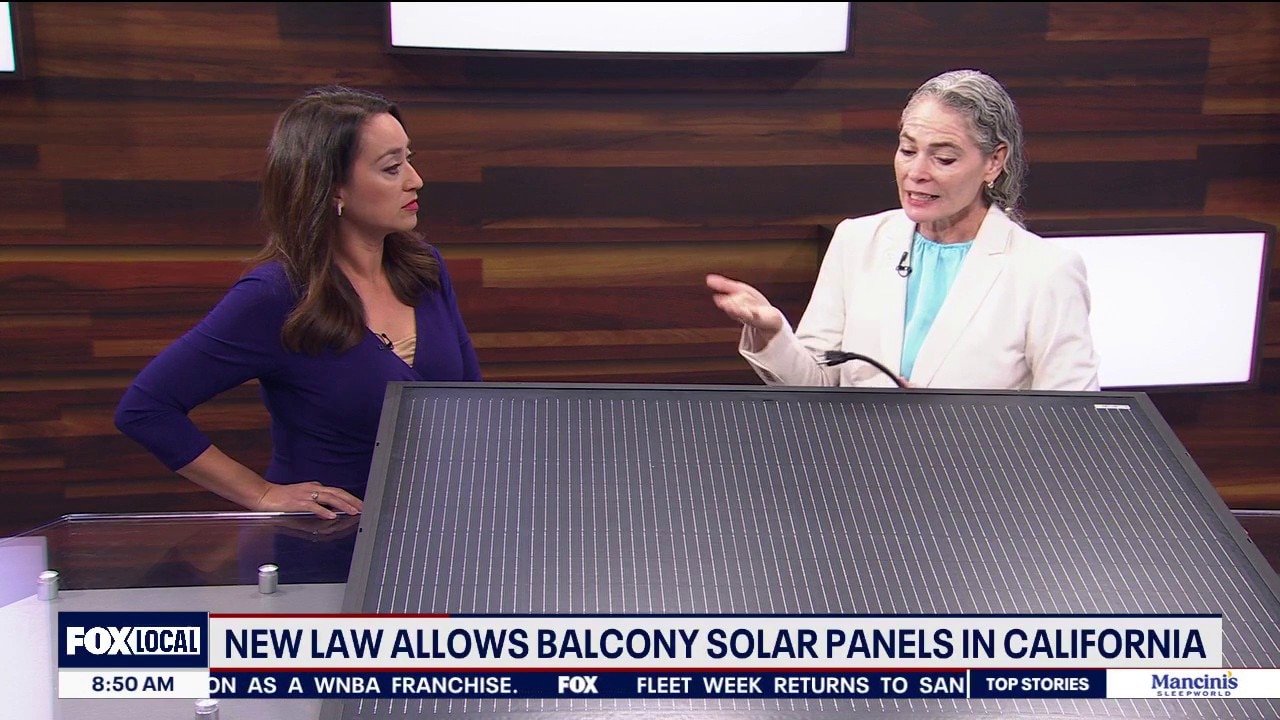
How balcony solar panels work, under new California law allowing them
The non-profit Environmental Working Group supported the bill allowing renters to set up pop-up solar panels. It goes into effect in January. A single, $270 panel is expected to off-set a tenant's energy costs by $150 per year.
The Plug and Play Solar Act, SB 868 by Sen. Scott Weiner of San Francisco, was signed last month. It allows renters to buy lightweight solar panels, set them up on a balcony and plug them into a regular outlet to offset some of their energy costs.
"It’s really easy to use and you can just plug it in to any regular electrical outlet and it’ll immediately start to lower your utility bill," Bernadette Del Chiaro, senior vice president at the Environmental Working Group, told KTVU. The nonprofit was one of the bill’s sponsors.
A small inverter converts the direct current the panel produces into alternating current, the kind homes use. That power flows to whatever is running, from an air conditioner to a modem, which reduces how much electricity a household draws from PG&E.
Del Chiaro said the technology is the same as on rooftops, and do-it-yourselfers have used it for years. What is new is that the panels are portable and come with a simple plug-in inverter.
Until now, she said, California utilities stood in the way. She said they were "putting up a lot of red tape and barriers for people to be able to just do it legally without their permission." Applying for utility approval cost $150 up front, Del Chiaro said, and the interconnection agreements were hard to follow. The new law removes the requirement.
Starting in January, all of the devices, whether sold on Amazon, at Home Depot or at Ikea, must be "certified to the strictest safety standards," Del Chiaro said. That is meant to ease consumer concerns about fire risk.
California is the 10th state to legalize the technology, according to Del Chiaro. She said Germany has four million of the systems, and Great Britain is legalizing them.
One company currently sells a panel for about $270, Del Chiaro said. She expects prices to fall by about 50% within a couple of years as more people buy them. She said the panel would save the average California ratepayer $100 to $150 a year, roughly what a small window air conditioner costs to run. She said it would pay for itself in a year or two and is guaranteed to last at least 10 years.
The law expires in 2030. Del Chiaro said an amendment added late in the process puts the program on pause after a couple of years so lawmakers can review how it is working. She said the state’s utilities were the lone opponent.
"They were the one opponent," she said. Del Chiaro said she is not worried about the sunset. "I think this is gonna spread like, you know, hotcakes," she said, adding that by the time lawmakers revisit the law, "people are gonna be used to it."
The Source: KTVU interview with Bernadette Del Chiaro, senior vice president, Environmental Working Group.