

From San Francisco to the world: La Doña’s 'Corrientes' arrives
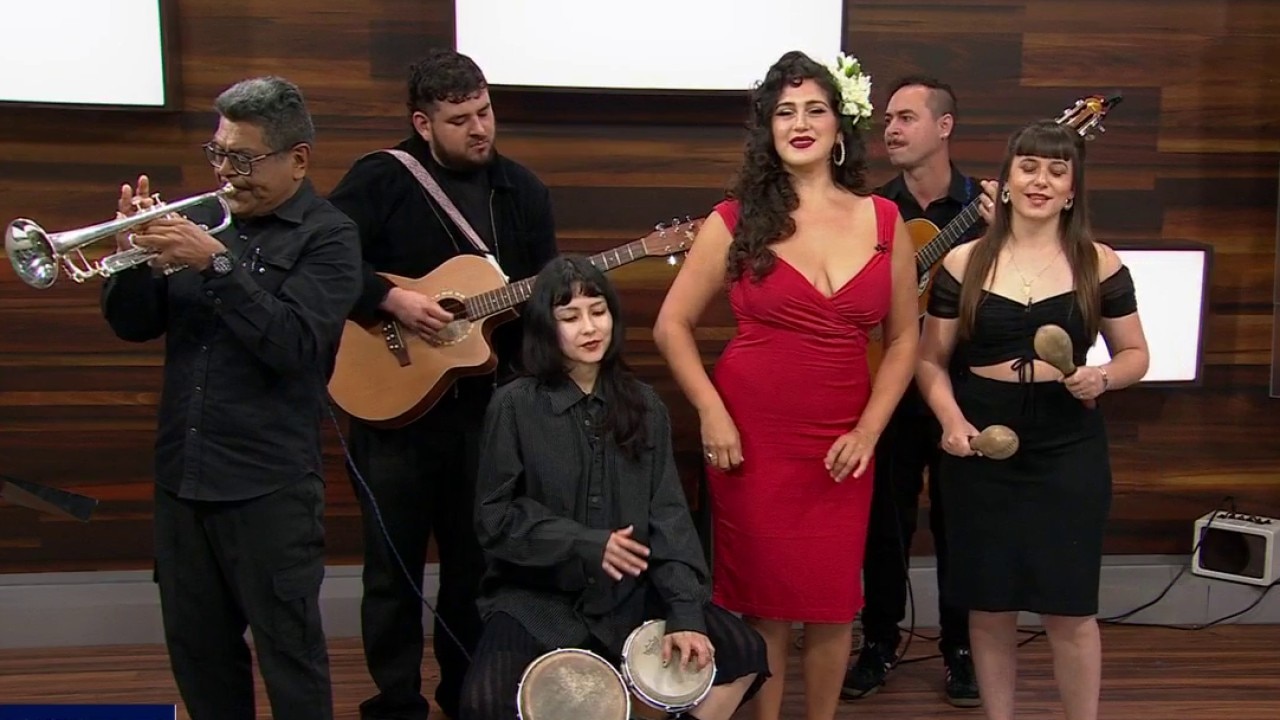
San Francisco's La Doña: culture, community, and music
For La Doña, music is more than performance, it’s a space for healing, connection, and collective action. Corrientes out everywhere April, 29.
OAKLAND, Calif. - San Francisco’s La Doña is back with "Corrientes," a bold, shape-shifting second album that refuses to sit still. The project blends sounds she's known for – cumbia, reggaeton, ranchera, bolero and salsa – while reaching into new territory like bachata, merengue, EDM and son jarocho.
It's a mix that reflects where she's been and where she's going, all at once.
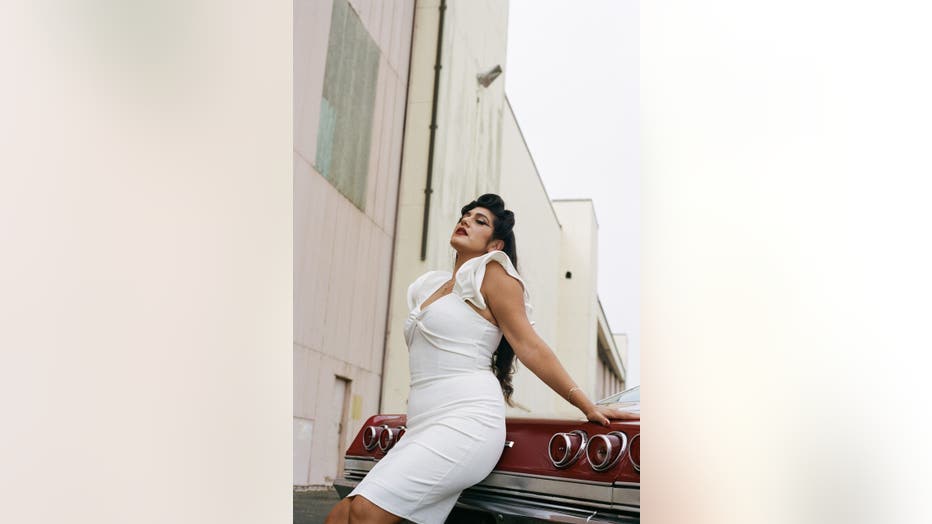
Photo: 95.stef
Meet La Doña, the Bernal Heights-raised artist
Local perspective:
Behind La Doña is Cecilia Peña-Govea, the Bernal Heights-raised artist who grew up steeped in sound. She was onstage by age seven, performing in her family’s conjunto, where music wasn’t just present – it was expected, inherited, and alive in every gathering. That early immersion became her foundation, one she still carries with her.
"By virtue of being able to play and be so present at all the community events, I already had this huge foundation of support," she said. "It paved the way for me to do what I love. I wouldn’t be where I am today without that basis in community music-making."
That sense of rootedness expands on "Corrientes."
Where her 2024 debut "Los Altos de la Soledad" introduced her voice, this new record opens it wide — more layered, more exploratory, more emotionally expansive. It’s an album that reflects her evolution not just as an artist, but as a student of sound itself.
"This album really exemplifies my varied interests," she says. "My approach is about honoring traditional music while also pushing it forward."
And that push is deeply personal.
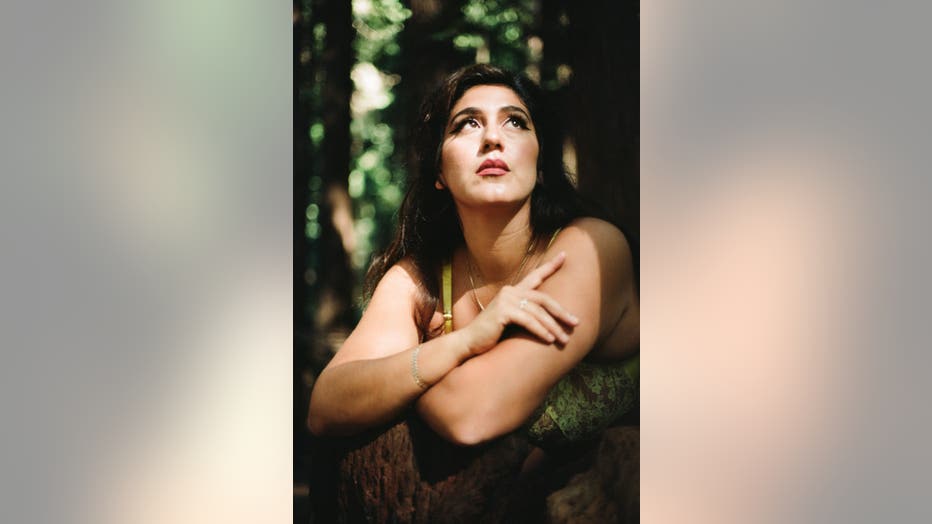
Photo by: María Esme del Río
Traumatic moment shaped her music
Dig deeper:
Peña-Govea has always made music rooted in place, identity and survival. But the moment that shaped her voice in a deeper way came after a 2018 crash on Interstate 280, an experience she still describes as otherworldly.
"I had this kind of interesting spiritual experience where for about a week I felt my soul sitting above my head, like I had been jolted out of my body," she recalls. "When I sang ‘Nada Me Pertenece,’ it just popped into my head and floated out of me — it brought me back into my body, back to life. It sounds funny, maybe outlandish, but that song was a gift."
That moment marked the beginning of La Doña as listeners came to know her. But "Corrientes" moves differently. It doesn’t center rupture — it leans into return. The album unfolds with a quieter emotional gravity, tracing family, memory and lineage while still pushing her sound forward.
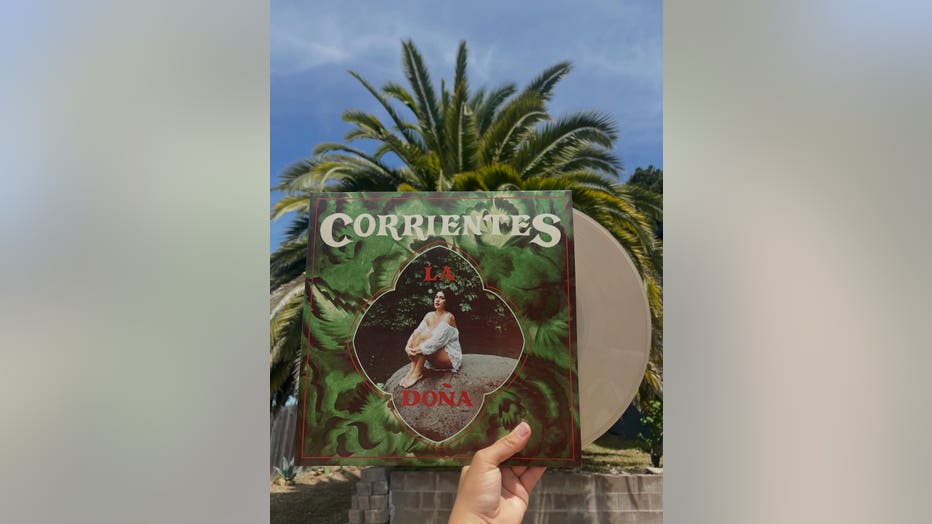
Photo by: María Esme del Río Art by: Spooky Orbison
One of the album’s most intimate threads tells the story of her parents’ 44-year partnership, sparked by a chance meeting at University of California, Berkeley.
That origin story carries a cinematic tenderness: her mother pulling a fiddle from the car that very night, playing the "Jessie Polka"— her rendition of "Jesusita en Chihuahua," a song rooted in the Mexican Revolution.
Here, history isn’t distant, it’s familial, immediate, alive.
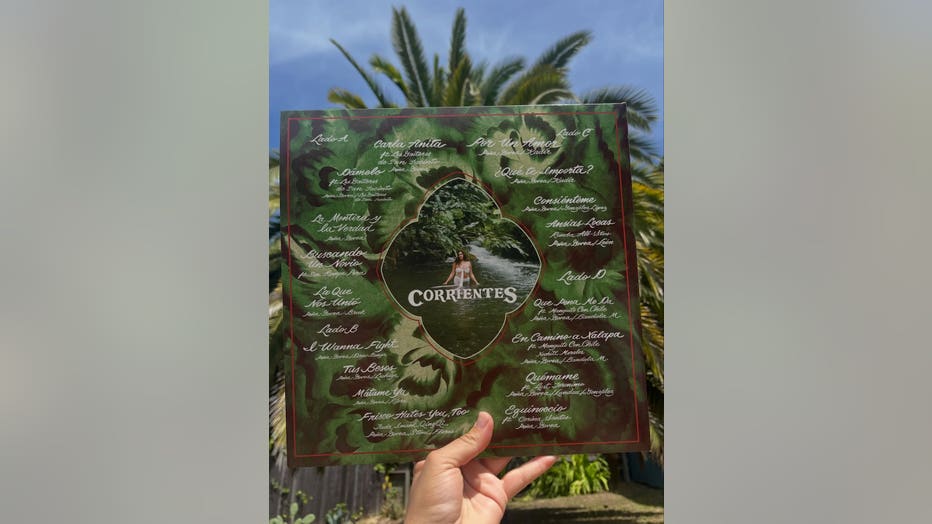
Photo by: María Esme del Río Text art by: Spooky Orbison
How San Francisco shaped her music and worldview
Big picture view:
That spirit of connection extends across borders. On one track, she collaborated with a Cuban producer, recording between the Bay Area and Havana.
"This song is dear to my heart, being able to have that transcultural experience with a bolero is really special. I hope people listen with open ears and open hearts—remembering the old-style boleros they grew up with, but hearing a new message within them," she said.
Even as her sound travels, her center remains San Francisco. Growing up in the Mission and Bernal Heights shaped not just her music, but her worldview.
"It’s been such a beautiful experience, Frisco is such a diverse place," the artist said. "Growing up around so many communities, it feels similar to what I experience in other cities — this ability to bring people together through solidarity and music. That connection always leaves a huge impression on me."
Her earlier work often leaned into politics and self-definition. "Corrientes" doesn’t abandon that — it deepens it, softens it, and lets it breathe through love, memory and inheritance.
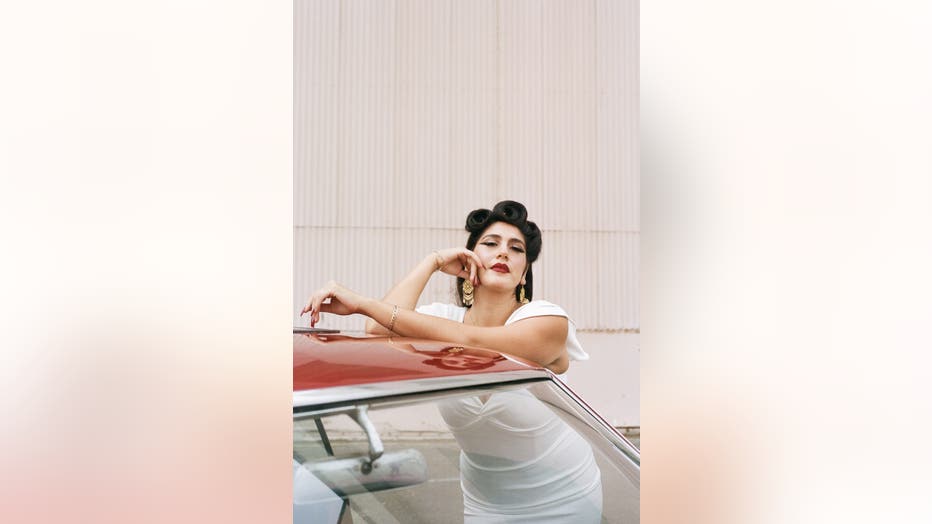
Photo by: 95.stef
Now, with the album out, La Doña stands at a moment of expansion. She has a Northern California release show set for May 15 at Berkeley’s UC Theatre, with more plans still taking shape, even as she weighs graduate school decisions for the fall.
And in true La Doña fashion, she’s documenting it all.
In a recent Instagram post reflecting on a visit to KTVU studios — where she was interviewed by Sal Castaneda, she traced a line back to childhood.
"I grew up in a household where we didn’t watch TV," she said. "I’d steal glimpses at friends’ houses, or at the 3rd Street drawbridge where my father was the bridge tender. His rule was we could watch TV if we practiced trumpet through all the commercials."

Behind the scenes with the Mornings on 2 Team. Photo by: Estefany Méndez
Love letter to San Francisco
The backstory:
She remembers those weekends vividly, hours in the bridge tower, surrounded by levers and buttons, the smell of the bay air drifting in, the quiet trade-off between discipline and delight.
"Standing there in the flesh with Sal brought all those memories flooding back — the leather couch, the brine of the bay, the sirens, the waterfront when it was just Happy Donuts and Red’s and us."
It’s a love letter to a San Francisco that’s changed — and to the one that still lives in her music.
"I’m so lucky for all these experiences that connect me to a San Francisco that no longer exists. Love you, Frisco."
With "Corrientes," La Doña doesn’t just release an album. She carries those places, those people, those sounds forward — letting them ripple outward, one current at a time.
The Source: Interview with La Doña.

Cecilia Peña-Govea, La Doña, poses with her father, Miguel Govea, and Amanda Magaña, Naomi Pasmanick, David Lechuga, and Camilo Landau. Photo by: Estefany Méndez