

Meta accused of features that harm children in social media addiction trial in Oakland
Meta Trial Day 1: Father and Facebook insider testifies Meta did not acknowledge its own internal research showing harm to kids.
A former Facebook employee took the stand on the first day of the landmark Meta trial, saying the company downplayed internal research and other warnings that the social media platforms Facebook and Instagram might be causing harm to kids.
OAKLAND, Calif. - Meta executives appeared in federal court in Oakland on Tuesday, facing what could be the social media giant’s most consequential legal battle yet with major financial and operational consequences on the line.
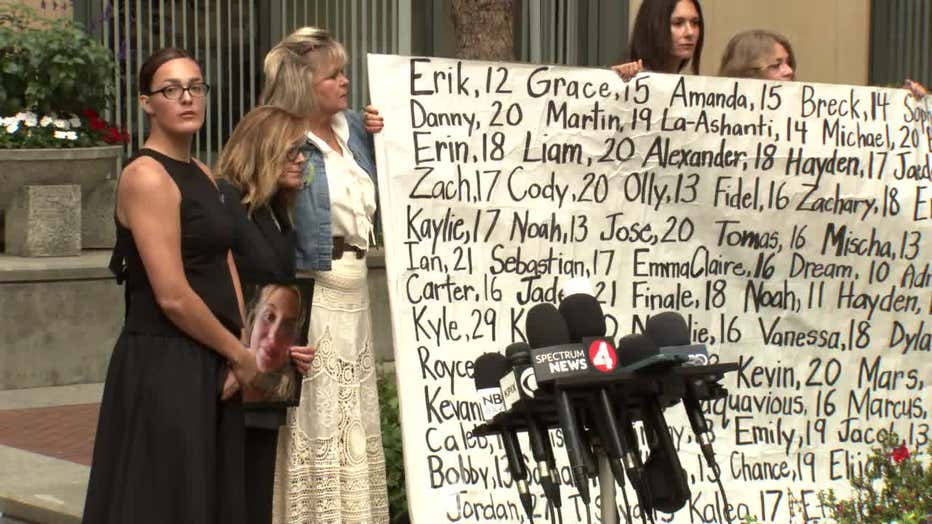
Critics of Meta rally outside the Oakland federal courthouse on the first day of the social media addiction trial against the Silicon Valley company. Aug. 18, 2026
Opening statements
What we know:
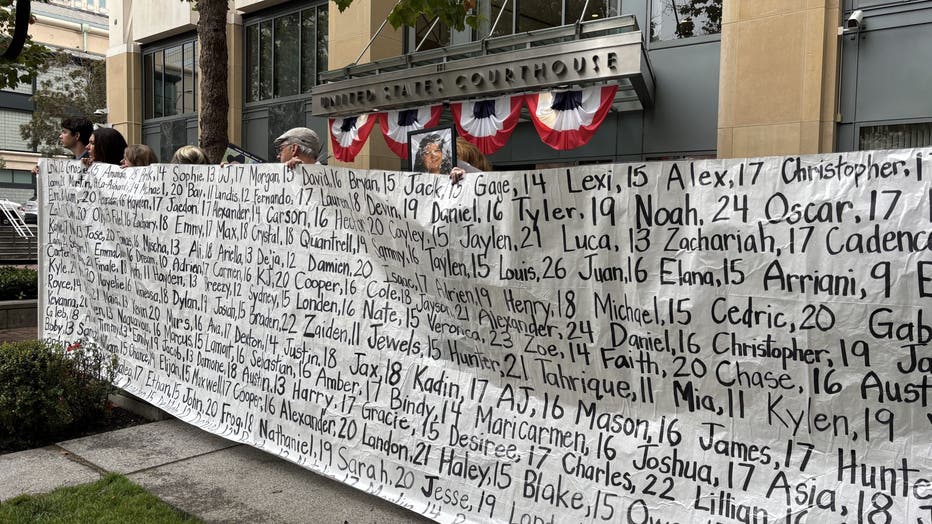
Critics of Meta rally outside the Oakland federal courthouse on the first day of the social media addiction trial against the Silicon Valley company. Aug. 18, 2026
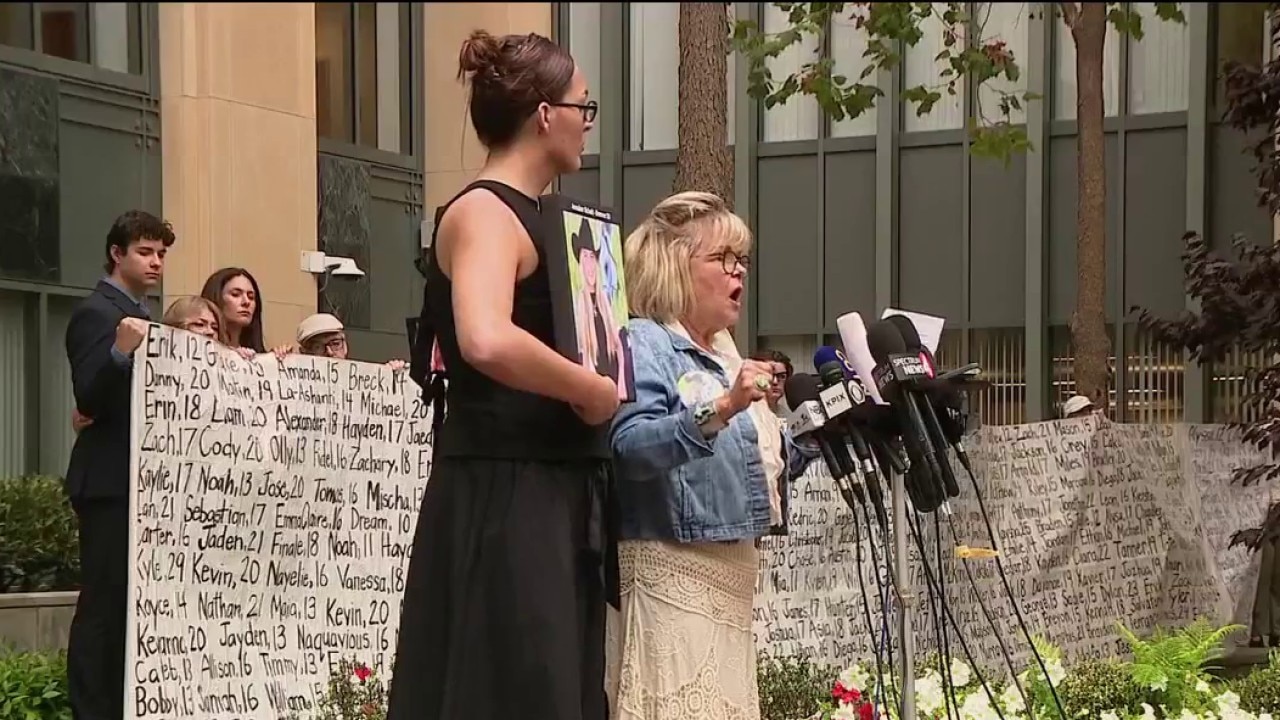
Outside the U.S. Northern District of California courthouse in Oakland on Tuesday, parents, youth organizers, and online safety advocates held a rally to call for justice and accountability.
Mothers lined up behind a sign with children's names on it, signifying the young people who took their own lives and fell victim to social media ploys, scams and other addictive traits.
Mary Rodee shared the story of her 15-year-old Riley Basford: He died by suicide after an hours-long encounter with an adult criminal posing as a beautiful young woman.
"They call it spontaneous suicide," Rode said. "I call it what it was – the predictable outcome of a system that protects corporations instead of children. This happened on Facebook Messenger. Meta and others have built empires on exploitation, and they hide behind outdated laws, while families like mine live with heart-wrenching consequences."
Inside Judge Yvonne Gonzalez Rogers' courtroom, both sides gave opening statements in the civil trial that is being led by California Attorney General Rob Bonta alongside attorneys general from Colorado, Kentucky and New Jersey. Another 25 states have sued Meta in federal court and are expected to have trials. Bonta says Meta is trying to play the victim by claiming the states are seeking as much as $1.4 trillion in civil penalties, disgorgement, and restitution—an amount equal to almost the entire market value of the company. Bonta says they made no such claim in their court filings, and would leave any monetary penalties up to the discretion of the judge.
AGs opening statement:
California Deputy AG Megan O'Neill told the jury Meta's business model comes down to four words: Hook, Hold, Harvest, and Hide.
O'Neill says internal Meta documents and former employees will prove that Meta intentionally aimed to hook young children (even those under 13), hold them on the platform as long as possible, harvest data from them for profit without parents' consent, and hide from the public Meta's own internal research about social media platforms' harm to children.
Meta's opening statement:
Meta attorney Paul Schmidt urged the jury to keep an open mind. He said it's undisputed some teens struggle to manage time and said Facebook does not allow accounts for kids under 13.
Schmidt also said that Meta conducted safety research to improve the products, and as a result, Meta has rolled out a series of safety tools, teen accounts, and parent guides to protect children. Just after noon, the first witness took the stand.
Mental health risks
What they're saying:
The lawsuit accuses Meta of deliberately designing features on Facebook and Instagram that get children and teens addicted to the platforms, despite the associated mental health risks.
"Any parent, teacher, or guardian knows the detrimental impact of these products," Bonta said. "This is the tobacco moment for Meta, and this is time for them to be held accountable."
Meta headquarters at 1 Hacker Way in Menlo Park, Calif.
New Mexico Attorney General Raul Torrez echoed those concerns regarding corporate responsibility. "They must pay the price for the choice that they made to put profits over children's safety," Torrez said.
First witness: Father and former Facebook director of engineering for safety
Arturo Bejar was the first witness. He worked for 6 years as Facebook Director of Engineering for the Protect and Care Team, and later as a safety consultant for Instagram.
Bejar testified that the culture at Facebook did not prioritize safety, and he tried to warn CEO Mark Zuckerberg and other leaders that their assertions that Facebook and Instagram were not causing harm, was in contradiction to Meta's own internal research surveys that found kids did report harm.
Bejar testified the culture at Facebook prioritized speed over safety.
"There was a little book they handed out titled 'Move fast and break things,'...safety and security was an afterthought," Bejar said.
"Meta had this information in their internal files and did not disclose."
Bejar said he was shocked as a father when he learned his 14-year-old daughter went on Meta social media platforms and received solicitations for sex and photos of genitals sent by strangers.
Bejar testified that Meta had internal research reports, including one called Bad Experiences and Encounters Framework (BEEF) report. It found that 13–15-year-old users reported seeing a number of harmful things on the platforms including:
- 27% witnessing bullying
- 21% having negative comparison
- 19% seeing nudity
- 12% seeing violence
- 13% were targets of unwanted advances
Behar said he returned to Meta as a consultant in order to try to find solutions.
Mark Zuckerberg to testify
The other side:

sFILE ART - A child scrolls on a phone.
CEO Mark Zuckerberg is expected to testify during the trial.
Meta is arguing that the attorneys general lack evidence that it misled the public about its platforms' alleged addictiveness because social media addiction is not a psychiatric condition.
However, Meta was recently handed a major loss over these same issues in a state trial earlier this month in New Mexico.
Legal experts say Meta will need to present a strong defense beyond claiming ignorance regarding the mental health impacts of its platforms.
The outcome of the trial could force Meta to implement major design changes across its suite of platforms, including Facebook, Instagram, WhatsApp, Messenger, and Threads.
The Source: California AG Rob Bonta and New Mexico AG Raul Torrez, Meta, court records