

Look up tonight: The Orionids meteor shower peaks as debris from Halley's comet lights up the night sky
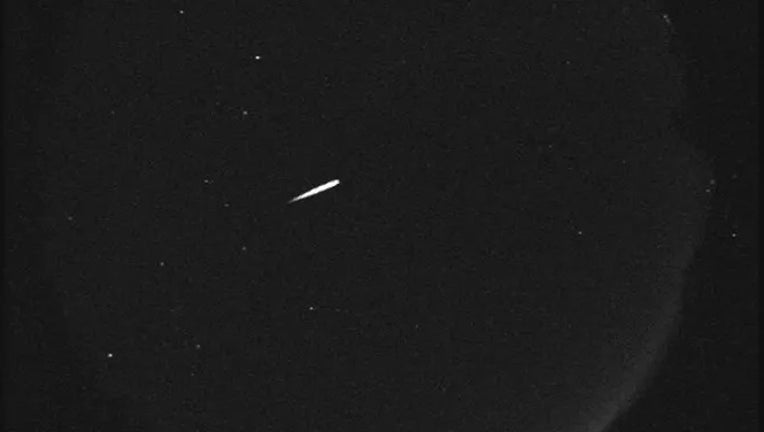
Orionid meteors appear every year when Earth travels through an area of space littered with debris from Halley’s Comet. (NASA/JPL)
Don’t forget to look up tonight as the Orionid meteor shower reaches its peak.
Here’s a look at where to look and when to enjoy this celestial light show.
When is the Orionoid meteor shower peak?
The Orionid meteor shower is active between Oct. 2 and Nov. 7 this year.
But the peak (which means the most active time of the meteor shower) will be on the evening of Oct. 21–22, according to the American Meteor Society.
Where and when to look
The moon will be in its waxing gibbous phase, so fairly bright, on the meteor shower’s peak night.
But that doesn’t mean you won’t see the shower.
The best time to look up in the sky is just before dawn, according to Earthsky.org.
Skygazers in both the Northern and Southern Hemispheres will be able to see the Orionids, weather permitting.
For the best view, NASA said those in the Northern Hemisphere should lie flat on their backs under a clear night sky with their feet facing southeast. People in the Southern Hemisphere should do the same, but have their feet face the northeast.
After spending less than 30 minutes in the dark, your eyes will adapt and the meteors will become visible, according to NASA.
By the numbers:
Weather permitting, sky watchers could see about 10 to 20 meteors per hour.
Orionids and Halley’s Comet
The backstory:
The Orionid meteor shower comes from Halley’s comet and the Orionids appear every year in October.
NASA says Halley's comet takes about 76 years to orbit the Sun once and the last time it was visible from Earth was in 1986. It will return once more in 2061, according to NASA.
The Source: Information for this article was taken from NASA’s website, Earthsky.org, and the American Meteor Society website. This story was reported from San Jose.