

Port of San Francisco installs temporary flood barriers ahead of storm season
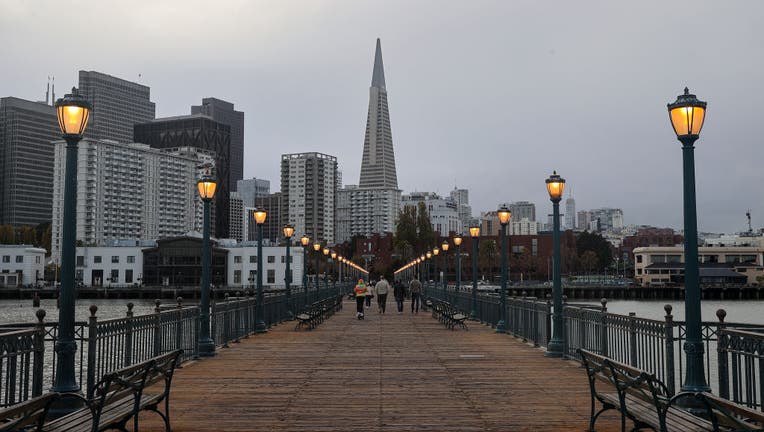
SAN FRANCISCO, UNITED STATES - NOVEMBER 6: People walk on Pier 7 as Transamerica Pyramid is seen during a cloudy weather in San Francisco, California, United States on November 6, 2022. (Photo by Tayfun Coskun/Anadolu Agency via Getty Images)
SAN FRANCISCO - The Port of San Francisco has begun installing temporary flood barriers at several waterfront locations to prepare for potential El Niño-driven flooding during the 2026-27 winter season, the Port said.
Ongoing preparations
Dig deeper:
Installation began Nov. 13 along the Embarcadero, with work scheduled during evening hours to minimize disruptions to pedestrians and waterfront activities, according to port officials.
Additional barriers will be installed at Pier 45, Pier 80 along Islais Creek and the south side of Pier 96.
Installation is expected to be completed around Nov. 21, with the barriers remaining in place through April 2027.
The temporary system will include fixed and movable barriers designed to retain up to 1.5 feet of bay water above the existing seawall and reduce the effects of waves during high-water events, the Port said.
Movable barriers will be deployed as needed to close access openings ahead of potential flooding and removed after the events pass.
How the system works
What to know:
The Port said the system is intended to reduce the amount of water moving inland while maintaining waterfront and building access under normal conditions.
Some wave overtopping and water seepage are expected, and the Port will monitor the system and make adjustments as needed.
Port tenants may experience temporary access changes or other disruptions during installation, deployment, inspection, maintenance, and removal of the barriers.
Site-specific notices will be provided as schedules and access details are confirmed.
What you can do:
The Port also encourages tenants to prepare for potential flooding by protecting building openings, securing outdoor equipment and materials, moving vehicles and valuables out of low-lying areas, and safeguarding sensitive equipment and supplies.
Vessel owners should also prepare for high winds, rising water levels, and potential power outages, according to the Port.
The Source: Information for this article came from the Port of San Francisco.