

Santa Rosa: The 1906 earthquake almost lost to history
Santa Rosa prepares for next big earthquake
The Great 1906 earthquake devastated the Bay Area, destroying much of San Francisco and killing more than 3,000 people. The city marked the quakes 120th anniversary this weekend, but whats not as widely recognized is the damage to surrounding comunities like Santa Rosa.
SANTA ROSA, Calif. - While the Great 1906 Earthquake was a centerpiece of news around the world when its massive damage and fire destroyed much of San Francisco and took 3,000 lives, another far smaller, far less famous town, suffered massive damage almost forgotten by history.
Nearly forgotten
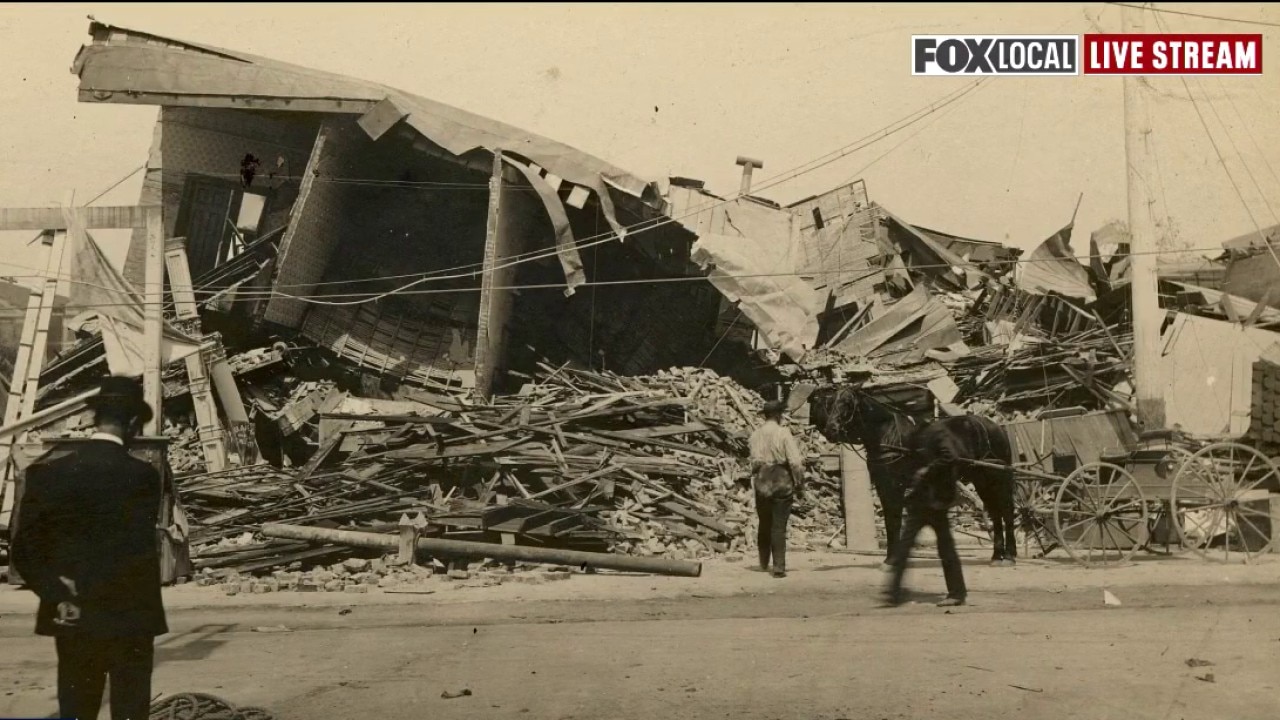
On this day 120 years ago, stunned people were digging for survivors two nights after the quake. Like a demon in the night, the Great 1906 Earthquake also came to Santa Rosa also bent on mass death and destruction.
Eric Stanley is the history curator and deputy director of the Museum of Sonoma County in Santa Rosa that supplied these pictures. "Santa Rosa, in particular, was devastated by the 1906 earthquake," he said.
Survivors were shaken awake as whole buildings collapsed around them or on them. "A good portion, a really significant portion, of downtown Santa Rosa was completely destroyed," said Stanley.
Many never woke up; crushed to death in their sleep. There were over a hundred people killed in the 1906 earthquake in Santa Rosa that only had 7,000 people in it at the time," said the curator.
Active fault line
Sixty-three years later, in 1969, a time of budding, but far better science-based building codes, a double shaker nonetheless did significant damage and killed one person. "Even understanding all those things, you kind of at the earlier stage of that in the sixties," said Stanley.
Today, four of Santa Rosa's School buildings lie near or on the Rodgers Creek Earthquake Fault, capable of up to a 7.3 magnitude rupture. One is already closed with another due to close at the end of the school year for budgetary reasons.
That leaves two elementary schools, Hidden Valley, alongside the fault and Proctor, on the fault. The school board says both are seismically sound and safe to continue operating. "The two that are remaining open are both the ones that have the potential and the ability to grow because the entire site is not impacted by the fault line," said Nick Caston, Santa Rosa City School Board president.
Staying prepared
In other words, things can and will eventually be moved around.
"What we're gonna end up having to do is redesign the campus over the next several decades to have our fields and our parking in the front, which are totally acceptable to be over a fault line and actually move our academic builds and our student-serving buildings to the back," said Caston.
Ultimately, the pictures and relics museums hold from natural disasters are given to those who come, a lesson and a warning. "Real people went through these experiences and we really do have to be aware of that and do our very best to prepare for those kinds of things," said Stanley.
The 1933 Field Act requires earthquake-safe construction of schools, with evolving seismic codes as we learn more.