

Squirrel attacks send two people to the hospital in a Bay Area neighborhood
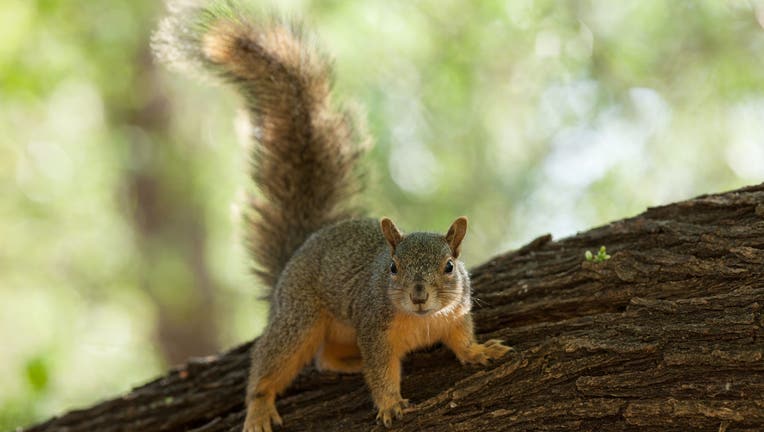
File photo of an Eastern Fox Squirrel. Wildlife experts believe one squirrel is behind at least two attacks this month in a North Bay neighborhood. (Photo by: Jon G. Fuller/VW PICS/Universal Images Group via Getty Images))
SAN RAFAEL, Calif. - An extremely aggressive squirrel in the North Bay has sent at least two people to the hospital, prompting a warning from animal care officials.
What we know:
Marin Humane said two attacks were reported to its agency: one on Sept. 13 and another the following day. The two victims, both women, were bitten while walking in their neighborhood in the Lucas Valley area.
The agency said in both instances the women went to a hospital emergency department for observation and treatment. Their injuries did not require hospitalization.
Same culprit
Animal care experts believe it was the same squirrel behind both attacks.
"They happened in almost the same place," explained Lisa Bloch, director of marketing and communications for Marin Humane, adding that the description of the biting squirrel was the same in both attacks. "The squirrel has a particular coloring. He's kind of a caramel color or a golden color and that's a little bit more unique," Bloch said.
What's behind the attacks?
She said it’s unusual for squirrels to be that aggressive, and wildlife experts believe the attacks were likely a result of someone feeding the animal.
"We see it sometimes, especially in Marin," Bloch explained. "People love animals, which is wonderful, but they mistakenly think that a way to help animals is to feed them. And in fact it does the opposite."
She said the animal will begin to depend on getting food from people, which can get dangerous.
"The squirrel will go up to a human assuming they're going to get fed and then, because the human might react, understandably, in a defensive way or angry way, the squirrel can get frustrated, and that can lead to the squirrel lashing out."
SEE ALSO: Why are coyotes swimming to Angel Island?
Bloch said her agency is working with the California Department of Fish and Wildlife and other wildlife experts to determine how to respond.
If the squirrel continues its aggressive behavior, they’ll likely work to capture the rodent.
"Sadly, since he/she has become habituated to people, it would be unlikely the squirrel would be returned to the wild or kept as an ambassador animal due to the unsafe nature," Bloch said. So it would likely have to be euthanized.
Staying safe
Experts said if any wildlife gets too close or seems to be acting aggressively, even squirrels, people should try and scare them away.
"It's always a good idea to yell and stomp your feet and, you know, leave," Bloch advised.
She also noted that squirrels in the area are not vectors for rabies, so if someone does get bitten, it should not prompt rabies concerns.
"It doesn't mean that they can't, you know, inflict pain," Bloch added. "They have sharp claws, and they have teeth and so it is something to take seriously," Bloch explained, noting that besides rabies, there are other diseases that the squirrels can carry.
So folks should remain vigilant when dealing with wildlife encounters and seek medical attention if needed.
What you can do:
And for their part, there are things people can do or not do to co-exist with wildlife and keep animals safe.
Bloch said wildlife needs to have a natural fear of humans, which is what keeps them alive.
"There’s the saying that fed wildlife is dead wildlife," she said, "meaning if you love animals, and you care about animals, it's really best to never ever feed them."

Tahoe bear breaks into an ice cream shop
The 4-year-old bear named Cinnamon took off with three gallons of ice cream.