

Supreme Court ruling allows San Jose to penalize homeless people
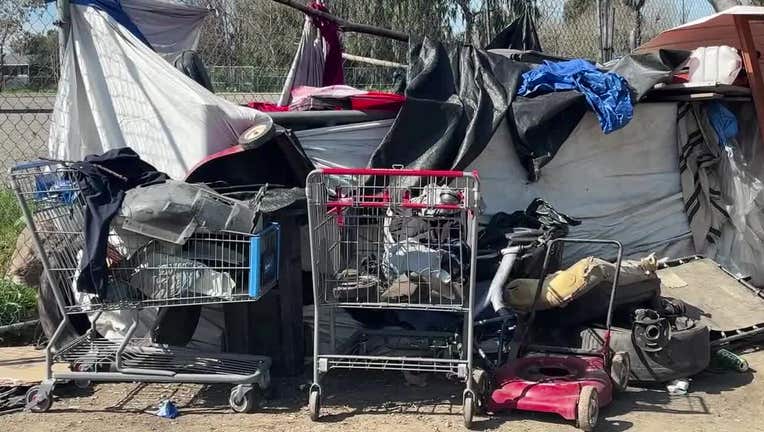
The site of San Jose's former "Jungle" homeless encampment.
SAN JOSE, Calif. - San Jose hasn’t hesitated to implement a wave of policies and programs aimed at tamping down homelessness since a U.S. Supreme Court ruling opened the floodgates to ban homeless people in public spaces.
Crackdown on homeless
What we know:
Since the Johnson v. Grants Pass ruling two years ago, San Jose has wasted no time extending its ban on the hours homeless people can sleep or sit on downtown sidewalks. The city has swept numerous encampments and turned them into "no return zones." It’s also temporarily banned RVs from dozens of streets, prohibited "vanlording" or renting RVs to homeless residents and towed thousands of vehicles with expired registration, many of which were used as homes.
Perhaps the most controversial of Mayor Matt Mahan’s policies is arresting homeless people for trespassing if they refuse multiple offers of shelter.
"San Jose has made it difficult to impossible to be outside without facing some risk of enforcement, property loss and displacement if you are not involved in the continuum of care system, which most people want to be," Tristia Bauman, an attorney with the Law Foundation of Silicon Valley, told San José Spotlight. "But still there are more (homeless) people than (shelter beds) available."
Grants Pass overturned a previous ruling that said penalizing people for sleeping on public property when no shelter beds were available was considered cruel and unusual punishment, violating the Eighth Amendment.
Big picture view:
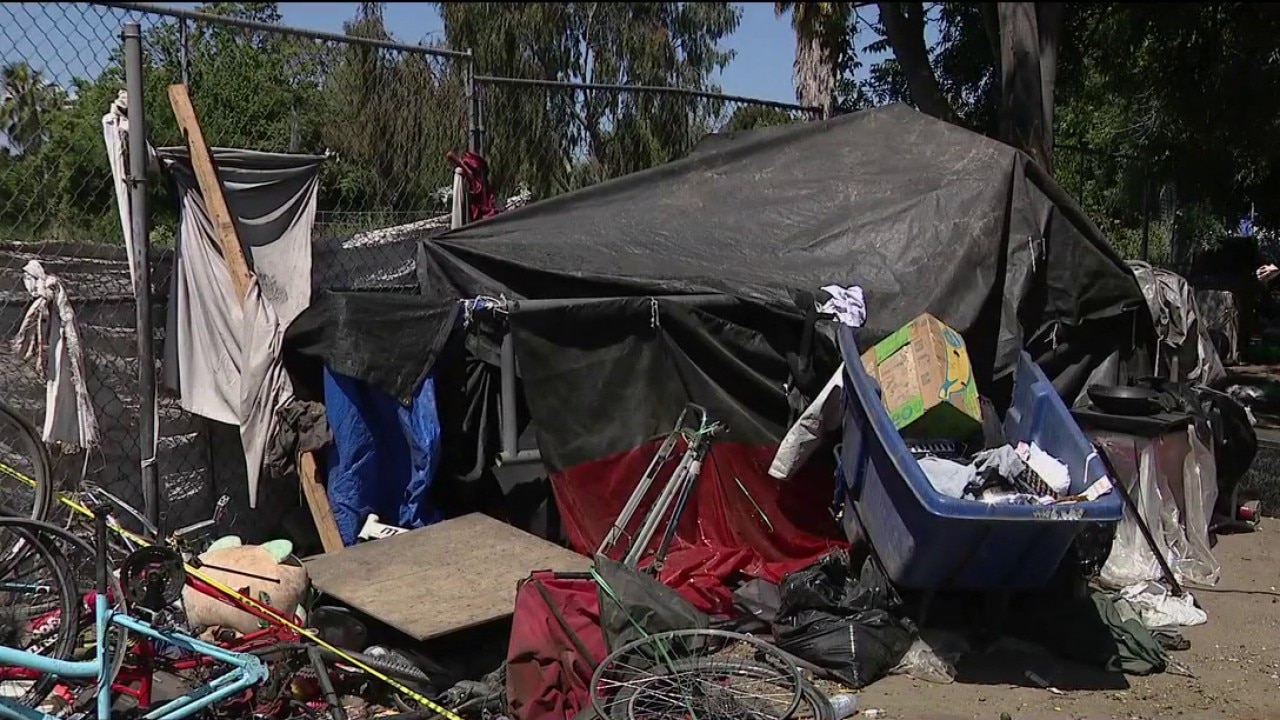
San Jose housing advocates protest encampment sweep at 'The Jungle'
Advocates for the unhoused took concerns over the Jungle encampment sweep directly to city hall; the city says 56% of unhoused residents who signed up for housing have already been accommodated.
Since the ruling, more than 350 cities and 14 states have passed policies that penalize homelessness, according to the National Homelessness Law Center.
"Before, if … criminal trespass citations (were enforced), we would have contemplated bringing a lawsuit with the Eighth Amendment’s cruel and unusual punishments theory as one of the claims," Bauman said. "That had a lot of success in the courts, but the Supreme Court has taken away that tool."
The downside
San Jose’s widespread sweeps of streets, creeks and parks has dismantled large homeless encampments across the city. The city has simultaneously increased no encampment zones in certain areas after sweeps. The downside, according to homeless advocate Todd Langton, is that it destroyed homeless people’s sense of community. He’s noticed it’s taken a toll on their mental health, with people feeling more stressed and less open to services.
His group, Agape Silicon Valley, has had to change how it distributes supplies, food and tents since it can no longer find homeless people who have been swept. Instead of going into the creeks, where volunteers would serve more than 200 homeless people, they are now setting up tables at Roosevelt Park with the hope that people will come to them. The amount of people they serve has dropped by more than half.
"It’s been very difficult for the advocates to serve. If we can’t find them, we can’t help them," Langton told San José Spotlight. "For example, we have a lady that we just found out she’s being offered housing, and we can’t find her (to get her into housing)."
The clearing of waterways has allowed residents such as Gary Hector, board vice president of the Almaden Valley Community Association, to feel safer walking on trails near his house.
"Now I enjoy the walk. I don’t worry about the homeless," he told San José Spotlight. "My concern has been that there should not be homeless (people) in the creek beds. … This is our watershed, this has to be protected."
Encounters with homeless people have also dropped on The Alameda, according to Doug Cookerly, board president of the Alameda Business Association and owner of Hop & Vine. Before the city’s push to get people off the streets, encounters were happening daily on the popular strip of restaurants. Now, he said, a situation arises about every other month.
"We are very sensitive to their situations, but there’s a point where it becomes extremely disruptive to your business and your neighborhood," Cookerly told San José Spotlight.
A spokesperson for the mayor’s office said San Jose is the only city in the county addressing homeless encampments while investing in regional homelessness prevention and building hundreds of shelter beds. Since last year, the city has added more than 1,000 beds across a dozen new or expanded sites.
"We’re replacing a failed status quo with results — and giving cities across California a framework to end the era of encampments by pairing compassion and accountability," spokesperson Seamus Gann told San José Spotlight.
But Bauman said the most harmful effects the Supreme Court ruling has had locally is the aggressive ticketing, towing and destroying of lived-in RVs, since it causes people to lose something that is functionally similar to a home.
"Enforcement is effective at one thing, and that is temporarily pushing people out of public view," she said. "That is a very myopic, expensive and harmful approach to the managing a community."
The Source: This story was first published on San Jose Spotlight. Tristia Bauman, an attorney with the Law Foundation of Silicon Valley, homeless advocate Todd Langton, Mayor Mahan's office, Gary Hector, board vice president of the Almaden Valley Community Association, Doug Cookerly, board president of the Alameda Business Association