

'Toy Story 5' screen time plot mirrors real struggle for parents, California psychologist says
'Toy Story 5' screen time plot mirrors real struggle for parents, California psychologist says
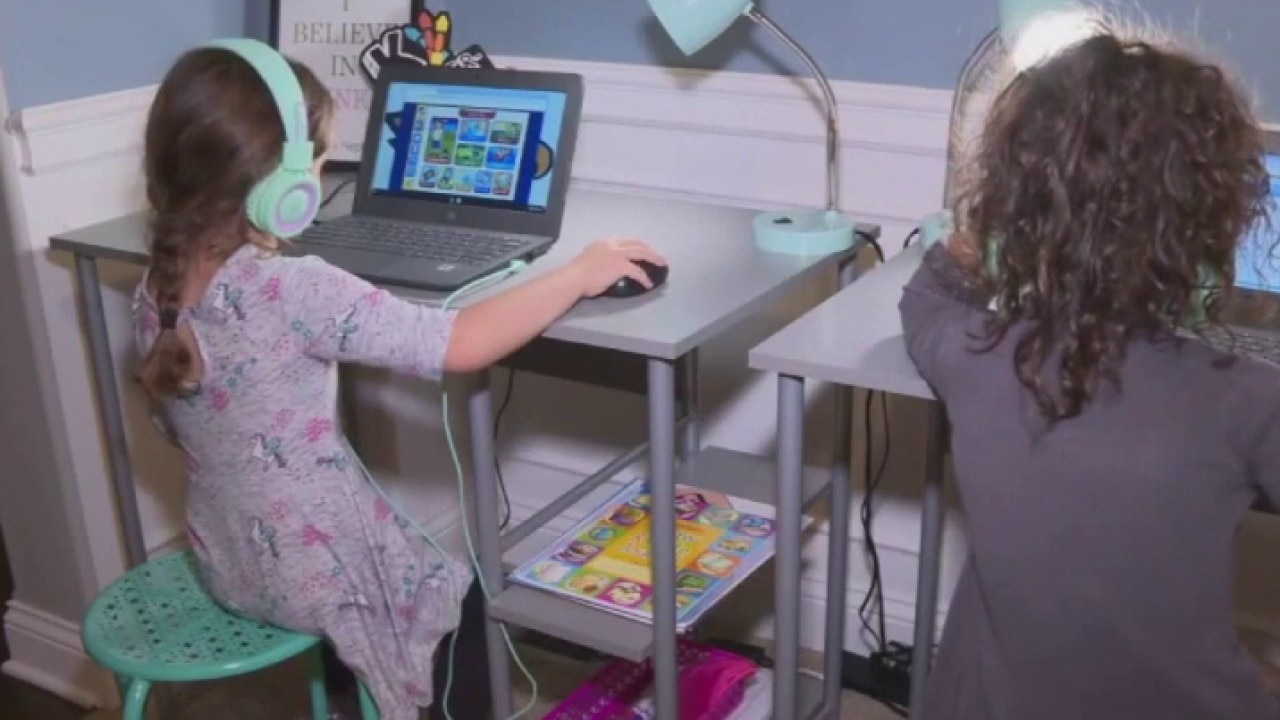
Dr. Don Grant, a media psychologist with Newport Healthcare, says the new "Toy Story 5" film's plot about a child favoring a tablet-like device over traditional toys reflects a real-world challenge many families face.
OAKLAND, Calif. - The tension between screen time and traditional play took center stage in "Toy Story 5," where the film's young protagonist neglects her toys in favor of an iPad-like device — a storyline that Dr. Don Grant says closely tracks what real families are navigating this summer.
Grant, a media psychologist with Newport Healthcare and the organization's national adviser of healthy device management, said the plot point struck him as a natural reflection of how children's relationship with toys has changed.
"I actually thought it was great. I thought that it was a really natural organic progression because toys versus tech and now toys are tech," Grant said.
Screen time limits, age guidelines
What they're saying:
Rather than focusing on strict time limits, Grant said parents should start by understanding how their children are actually using their devices.
"I think that one of the messages is that we have to understand and accept the fact that these tech toys are here to stay," Grant said. "They're not going anywhere, but it's about coexisting and not prioritizing them."
Grant said he often fields questions from parents about appropriate time limits and age guidelines, but argues those aren't the most useful starting points.
"I believe that parents know their kids. They know what their kids' ages are, what they're able to do, and what kind of they're involved with," Grant said.
He recommends a "Kitchen Table Assessment," adapted from the journalistic five W's and an H, to help parents evaluate their children's device use.
"When you're assessing your kids' online engagement and devices: What are they doing on their device? Where are they doing it? When are they doing it? Why are they doing it? Who are they doing it with, and how?" Grant said. "And if you look at those, and you think, 'oh, I'm not quite sure about that answer,' then investigate it."
California Assembly bill banning social media accounts for kids under 16 moves forward
A California bill aimed at restricting social media access for minors is moving forward in Sacramento after passing the State Assembly without a single dissenting vote.
Set device expectations
What you can do:
Grant said the conversation about expectations should happen before rules are set, and should be tailored to a child's age. For younger children, he suggested keeping non-screen activities on hand, such as outdoor toys, puzzles or craft supplies. For older kids, he said, it's more about communicating expectations clearly.
"Let them know your expectations, that you're not expecting them to be doom-scrolling, gaming and just watching AI slop all day," Grant said. "But it's really about what they're doing on it."
Grant acknowledged that texting and messaging have become the primary way many teens and tweens communicate, much as phone calls once were for earlier generations.
"A lot kids now, we have to accept it, whether we like it or not, that they communicate via texting and messaging," Grant said.
Asked about common mistakes parents make when setting boundaries, Grant pointed to inconsistency between the rules parents set and the habits they model.
"I've had kids say, you know, I may be bad, but my parents are worse. We have different rules," Grant said.
He recommends establishing tech-free zones, particularly at the dinner table, and said that rule should apply to parents as well as children. Grant referenced a study his research team published several weeks ago examining the link between a parent's device use and a child's sense of security and attachment.
"My theory was evidence and it is everywhere now," Grant said. "You have to model behavior. Your kids are watching and they have feelings about it."
The Source: Source: KTVU interview with Dr. Don Grant, media psychologist and national advisor of healthy device management, Newport Healthcare.