

Bay Area currently the hot spot for the flu in California
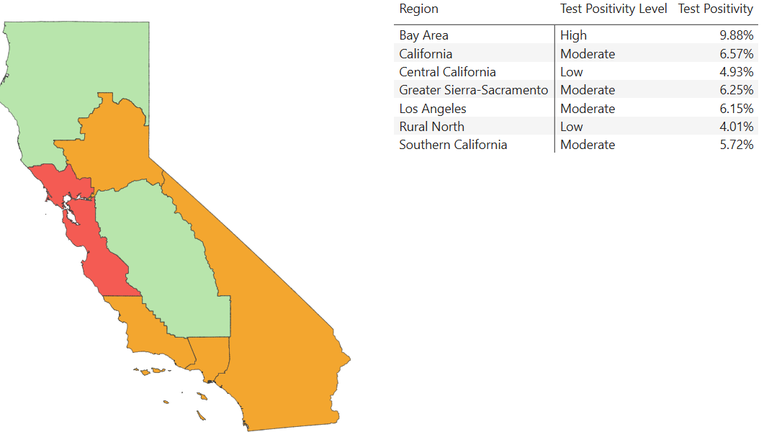
California Department of Public Health Respiratory Virus Dashboard shows the Bay Area has the highest level of flu activity in the state. (California Department of Public Health)
SAN FRANCISCO - New state data shows that flu activity is ramping up early this season, with the Bay Area a hotbed for flu illnesses.
What we know:
The region has the highest test positivity rating in the entire state, according to the California Department of Public Health’s Respiratory Virus Dashboard.
The dashboard’s color-coded respiratory virus snapshot shows the Bay Area in red, indicating positive flu cases are a "high" level. That's the second-highest possible level only after the rating of "very high."
Statewide, test positivity for influenza is rated as "moderate."
"Emergency room visits and hospitalizations are increasing," the department noted on its website, which showed 1,788 hospitalizations due to flu as of Sept. 26.
The CDPH said that compared to this time last year, more people in California are currently being hospitalized for flu.
SEE ALSO: Bay Area biotech's groundbreaking blood test to detect 50+ cancers gets FDA panel approval
Nationally, seasonal flu activity remained low, though cases were increasing, according to the Centers for Disease Control and Prevention.
SF reports its first flu death
Local perspective:
Last week, the San Francisco Department of Public Health announced its first flu death of the respiratory virus season.
"This sad news reminds us that respiratory viruses such as flu and COVID should be taken very seriously, especially for people who are at higher risk of getting sick," San Francisco Health Officer Dr. Susan Philip said in a news release announcing the death.
What we don't know:
There's no word on what age the person was or if they had any underlying conditions that put them at greater risk.
The victim was described only as an adult.
Statewide, the latest figures show there have been 34 deaths related to flu this season.
San Francisco health data also showed that while flu activity was high in the area, hospitalization admissions remained low.
Santa Clara County
The County of Santa Clara Public Health Department said its data showed increases in hospital admissions due to the flu as the viral illness was spreading earlier this season.
The county said last year flu hospitalizations began at the end of November and peaked in January, while this year, the hospitalizations began at the end of August.
"Reported hospitalizations are more than 11 times higher this year than during the same week last year. As of today, influenza virus levels are high in all four wastewater sewersheds in Santa Clara County," a Santa Clara County health official told KTVU in an email correspondence.
The official added that to date, there have been no flu-related deaths in Santa Clara County.
Influenza A vs Influenza B
Dig deeper:
The CDPH dashboard also showed the vast majority of samples indicating influenza A currently as the dominant type over flu B, both in the Bay Area and statewide.
Flu A viruses are the only ones known to cause flu pandemics, as they tend to mutate rapidly and frequently into new subtypes. Type A can also affect animals, while B only affects people.
Historically, A has also been shown to account for more flu cases every year, resulting in more severe illness than type B flu, according to the Cleveland Clinic.
Vaccine recommendations
Public health officials urge residents to get their flu vaccine, saying it's the most effective way to protect themselves from severe illness and death.
"With fall festivities approaching, we want people to stay healthy and do all the fun and joyful things they want to do. Vaccines help make this happen," Dr. Philip said.
The flu vaccine is recommended for people 6 months and older.
Updated COVID-19 vaccine
In addition to flu, state officials also recommended receiving the updated 2026–27 COVID-19 vaccine.
The CDPH noted that while COVID continues to circulate in the state, activity is slowing down and symptoms appear to be less severe than previous seasons.
The test positivity level for COVID-19 is rated as "moderate" in the Bay Area, mirroring the statewide rating.
There are regions that remain in the red, "high" level. Those areas have been identified as the rural north and central California regions.
The COVID vaccine is recommended for infants and toddlers 6 months to 23 months old and adults 65 years and older.
Also included in the recommendations are those with certain risk factors or those who have never been vaccinated against COVID, women who are planning to get pregnant, are pregnant, or in postpartum, and healthcare workers and others who are in close contact with people with risk factors.
Health officials say it's essentially recommended for anyone seeking to reduce the risk of severe illness from COVID.
Vaccine coverage
COVID vaccine coverage in the Bay Area for all ages is estimated to be less than 5%. For those 65 and older, it's higher, at an estimated 15% to 25%.
For the flu vaccine, the vaccine coverage is roughly 10% to 20% for all ages, and 20% to 40% for those 65 and older, according to the state dashboard.
Health officials said getting the flu and COVID-19 vaccines at the same time is considered safe.
They also reminded people to plan ahead as it takes up to two weeks for the body to build immunity against COVID and the flu post vaccination.
"People may still get sick with the flu or COVID-19 after being vaccinated," the CDPH noted, adding, "however, most vaccinated people only get mild symptoms if they do get sick."
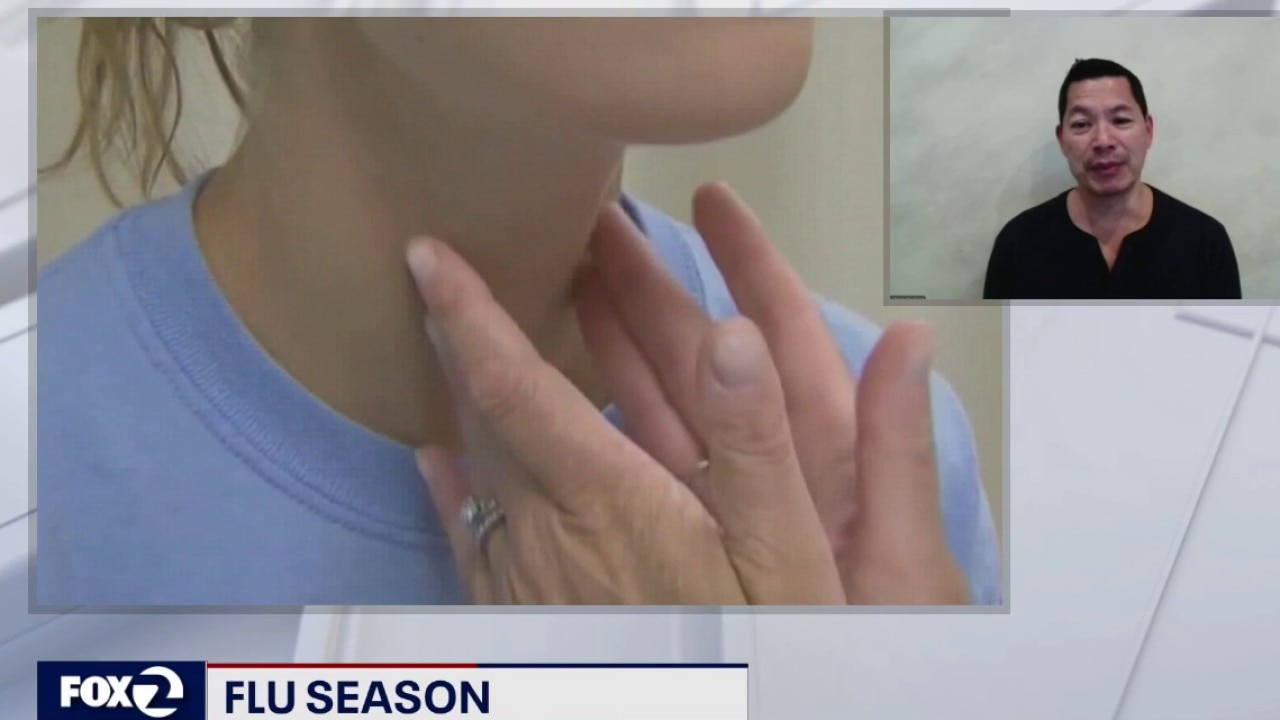
UCSF infectious diseases expert on the early arrival of the flu season
Dr. Peter Chin-Hong, UCSF infectious diseases specialist, discussed what families need to know about the 2026-2027 flu season.