

A dozen wildfire-mitigation goats and sheep mysteriously died on the job in the North Bay, but why?

A dozen wildfire-mitigation goats and sheep mysteriously died on the job in the North Bay, but why?
Herds of goats are often used to graze on dry brush to help prevent wildfires in the Bay Area. But a shepherd in the North Bay has been left reeling after more than 10% of her herd mysteriously died while on the job.
STINSON BEACH, Calif. - Herds of goats are often used to graze on dry brush to help prevent wildfires in the Bay Area. But a shepherd in the North Bay has been left reeling after more than 10% of her herd mysteriously died while on the job.
Bay Area woman raises goats and sheep to help prevent wildfires
For 10 years, Billie Thibodeau, owner of Scape Goat Grazing, has been raising goats and sheep.
"Every single member of my herd has a name," said Thibodeau.
Homeowners and landlords hire the animals to eat dry brush to reduce the risk of wildfires.
"We're helping communities stay fire safe and in a natural way," said Thibodeau.
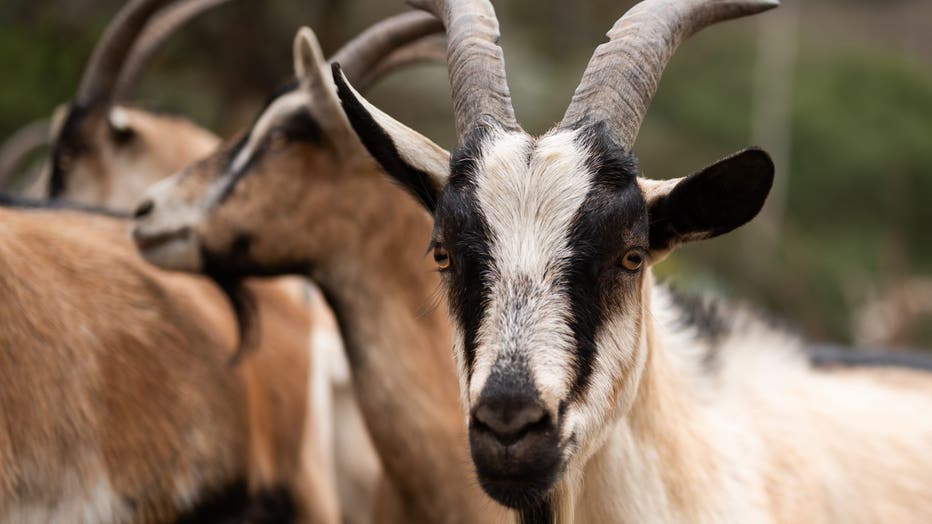
Thibodeau's sheep and goats graze on brush to help reduce wildfire risks. (by Jaden Schaul)
A mysterious illness
Thibodeau says her animals have always been in good health – until about two weeks ago, when they were grazing on a property in Stinson Beach.
"One of my sheep was struggling, a very healthy sheep," said Thibodeau. "And that sheep died very soon, and that was alarming."
A total of 12 animals died over the next several days.
"It's truly heartbreaking," said Thibodeau. "I love my herd and they're my family and it's just really hard."
The likely culprit?
Thibodeau knew the animals must have eaten something poisonous, but she didn't know what. Her veterinarian, Dr. Myriam Kaplan-Pasternak was stumped, too, so she did some research.
"We confirmed that the plant was a snakeroot plant," said Kaplan-Pasternak.
Kaplan-Pasternak says even if the animals had eaten it before, the recent wet weather and cool summer could have made this snakeroot more prevalent – and potentially more toxic.
"It causes muscle death. So the muscles, especially the heart muscle, end up being weakened," said Kaplan-Pasternak.
Community steps up to help animals recover
Kaplan-Pasternak told Thibodeau to quarantine the animals and feed them only hay. Thankfully, they started getting better. Now, Thibodeau is sending them to the Nicasio Native Grass Ranch to recover. Only problem?
"My hay bill is about $100 to $120 a day, plus transport costs," said Thibodeau. "And then we're not working."

Thibodeau's veterinarian ordered her sheep to go on a hay-only diet in order to treat the sick animals, but the bills are piling up. (by Jaden Schaul)
But her clients – and total strangers – have stepped up in a big way, donating around $13,000 in an online fundraiser.
"To have my community come through and support me," said Thibodeau, "I'm so grateful because we do need it. We need those dollars to help us get through this."
The animals are expected to be in quarantine for about a month. She's hoping the goats and sheep can get back to grazing soon – after ensuring each site is snakeroot-free.
"The positive is that 90% of my herd is alive and," said We'll recover. We sure will. And we'll keep going," said Thibodeau.
What's next:
Thibodeau has sent one of the deceased animals, as well as a sample of the plant, to U.C. Davis for further testing.
What you can do:
If you'd like to help Thibodeau and her animals, click here.
The Source: Interviews by KTVU reporter John Krinjak