

Congressional representatives speak out against limited availability of affordable World Cup tickets
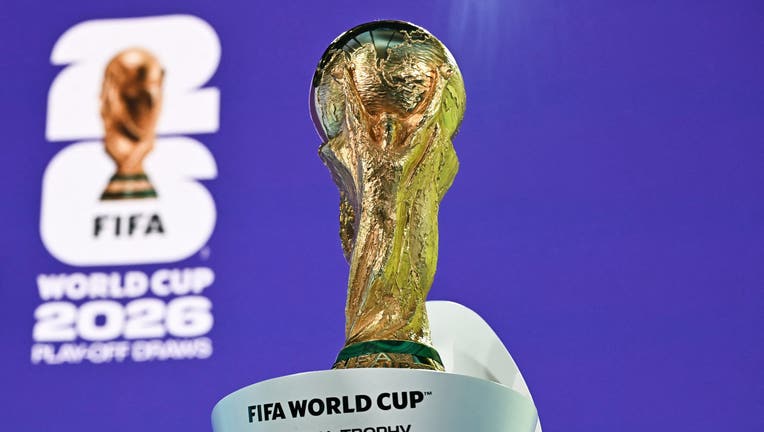
This photograph shows the 2026 FIFA World Cup trophy following the 2026 FIFA World Cup European Play-Off draw at the FIFA's Home of Football in Zurich on November 20, 2025. (Photo by Fabrice COFFRINI / AFP) (Photo by FABRICE COFFRINI/AFP via Getty Im
OAKLAND, Calif. - The Bay Area will play host to six FIFA World Cup matches in June, but elected officials are raising concerns about whether exorbitant ticket prices will keep local soccer fans from even being able to attend the games.
Congressman Josh Harder, a Democrat who represents the Stockton area, is one of 68 Democratic representatives who on March 10 sent a letter to FIFA president Gianni Infantino criticizing the availability of accessibly-priced tickets.
"It’s outrageous that tens of thousands of fans in our community are being priced out of a once-in-a-lifetime event that our tax dollars are paying for," Harder said in a press release. "If we’re going to be footing the bill, our families deserve prices they can afford. I’m calling for full transparency in the FIFA ticketing process and a return to the affordable pricing model originally promised during the bid selection process."
The backstory:
FIFA in 2018 announced the 2026 World Cup would be held for the first time in three separate countries — Canada, the United States and Mexico — and estimated tickets to group-stage matches could range from $21 to $323, and tickets to the final game could run between $128 and $1550.
FIFA opted to employ a dynamic pricing model for tickets to the 2026 World Cup, which led to ticket prices that started in the hundreds when they were first announced.
Now, the cheapest seats at the final game cost over $4,000.
Public outcry forced FIFA to change their prices, and the organization quickly introduced a new tier of $60 tickets, but critics say it’s not enough.
"...FIFA made a limited number (of tickets) available to national football federations for independent distribution at approximately $60 each. However, these tickets represent only 1-2 percent of the total tickets available for the 2026 FWC, and only a few hundred will be available per game," the letter to Infantino states. "Beyond this small portion of affordable tickets, the overwhelming majority of fans traveling from across the globe will only have access to substantially inflated ticket prices through a limited lottery and resale platforms.
"Current pricing indicates that the least expensive group-stage tickets average over $200, while the lowest-priced tickets for the final match exceed $4,000," the letter also said.
Dig deeper:
The high cost of the tickets has further compounded concerns about the cost of the games.
While FIFA is investing a record-breaking $727 million in the World Cup, the lion’s share of that money will be awarded as prizes.
The winning team will be awarded $50 million, while the teams eliminated in the first round will be awarded $9 million. FIFA will also be paying each team $1.5 million to cover preparation costs.
Host cities are responsible for stadium infrastructure, security, transportation and medical support. Congress has appropriated $625 million to reimburse local law enforcement expenses, but individual city governments have had to garner additional funding of up to $150 million to cover other costs, according to the congresspersons’ letter.
"Host Committees are collectively $250 million short of needed funding due to FIFA’s commercial contracts that restrict their cities’ ability to accept additional local sponsorship," the letter states. "These funding constraints have created significant obstacles for host cities to host public fan events. As a result, for the first time in World Cup history, certain cities are taking unprecedented measures, such as charging admission for fan festivals or reducing them due to difficulty attracting visitors."
Local perspective:
Santa Clara is one of only two U.S. cities not to put taxpayer funds toward hosting matches, the other being Los Angeles, as reported by the San Jose Spotlight.
The city’s Measure J, a piece of legislation from 2010 that approved the construction of Levi’s Stadium, where the games will be held, means the city can’t use its general fund to facilitate the World Cup.
That doesn’t mean there are no local funds going toward the games, however. The Bay Area Host Committee, a nonprofit organization that works to bring world-class sporting events to the region, has committed to putting $25 million toward modifying the Levi’s Stadium field to meet FIFA regulations.
The Source: Sports Illustrated, The San Jose Spotlight, The New York Times, Bay Area Host Committee, FIFA