

May Day demonstrations across Bay Area and beyond
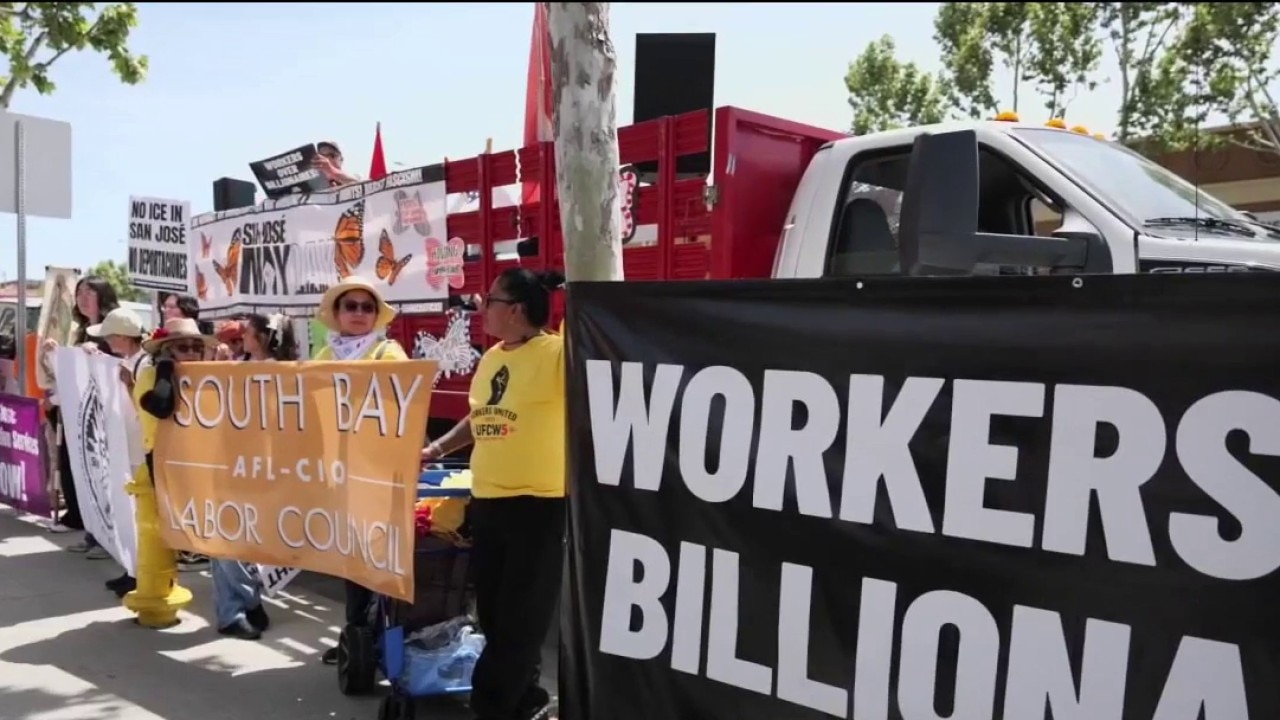
Student activists in San Jose lead May Day walkout
Student activists walked out of class on Friday to voice their support for immigrants' rights and workers' rights, and to criticize the Trump administration's policies toward workers and unions. The event was marked the 20th anniversary of the San Jose mega-march that launched the tradition
OAKLAND, Calif. - May 1 marks the annual observance of May Day, a date traditionally used by unions and community organizations as a day of action, strikes, and protests.
This year, demonstrations were held across the country, ranging from school walkouts to large-scale street protests.
According to the May Day Strong website, which tracks nationally coordinated events, dozens of actions took place across the San Francisco Bay Area and nationwide.
Student walkouts in San Jose
Local perspective:
In San Jose, students at 10 high schools walked out in support of peace, as well as immigrant and worker rights.
"Under the administration, I just feel like there’s so much fear, prejudice and oppression in our communities," said Johnath, a member of the student activist group WCO For the People. "It’s really frustrating."
Some students from Overfelt High School marched miles to join a larger May Day rally in the city.
"I need to fight back and be the change," said Jalysa, a student at Overfelt. "Because if we’re not going to do it, the future and the youth, then no one else is going to do it."
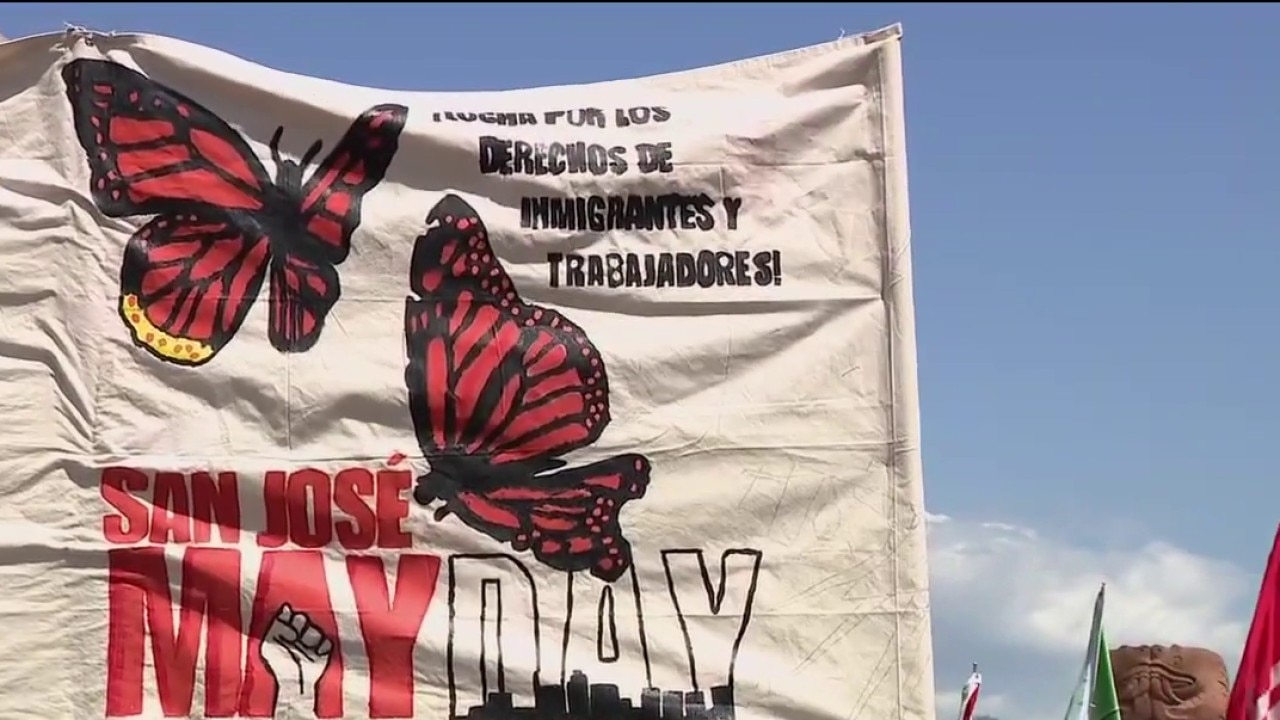
Organizers said they anticipated a large turnout this year, marking the 20th anniversary of a San Jose mega-march that helped establish the local tradition. Immigration policy was a central issue then and remained so Friday.
"This is a response to the Trump administration’s attacks on unions and immigrants," said Uriel Magdaleno.
Featured
SFO and Oakland airport battle has settled
The two-year legal battle between the airports in San Francisco and Oakland has settled.
Airport protest disrupts traffic
Dig deeper:
In San Francisco, workers at San Francisco International Airport held a May Day protest that slowed operations at the international terminal for more than an hour as they called for higher wages.
Noyra Gonzalez, who assists passengers in wheelchairs for United Airlines, said workers have not seen meaningful wage increases in years.
"It’s frustrating, especially when you know that United had record profits last year of $59.1 billion on our backs, and our wages haven’t increased in years," Gonzalez said. "In two years, I only got about 50 cents more."
Workers marched and blocked the departures roadway, prompting officials to reroute traffic to the arrivals level. San Francisco supervisors Rafael Mandelman and Connie Chan were among those participating in the protest.
Police said those blocking the roadway were cited.
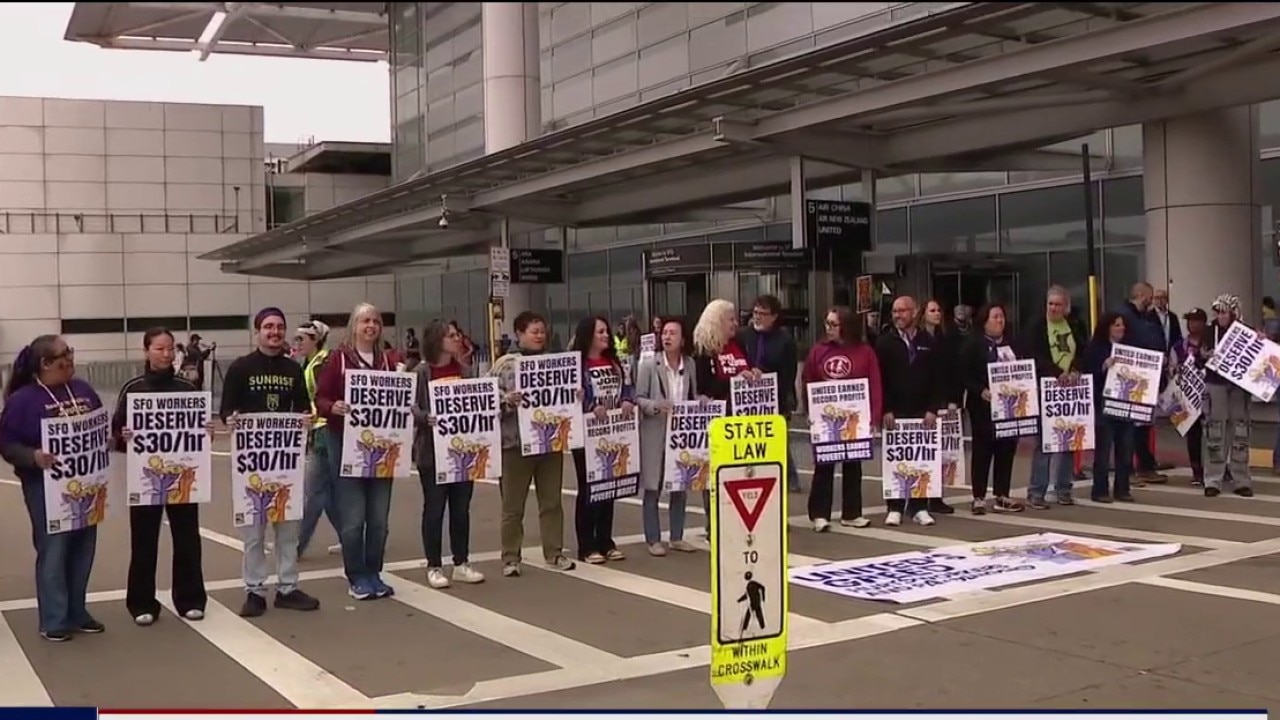
Workers acknowledged the disruption but said it was necessary to draw attention to their concerns.
"Unfortunately, when business as usual goes on, corporate giants don’t listen," said Sanjay Garla of SEIU. "This action today is about stopping business as usual so that we can change the course of our country."
Some travelers said the impact was minimal.
"Just some traffic coming in," said a traveler who identified themself as Ko.
Others expressed support for the demonstration.
"I think that it’s really incredible that people came out to protest and to be here," said traveler Lindsay Meehan. "It’s minor compared to what impacts are happening in other places."
May Day demonstrations across Bay Area and beyond
May 1 marks the annual observance of May Day, a date traditionally used by unions and community organizations as a day of action, strikes, and protests.
Rallies target corporations, policies
At a rally at Embarcadero Plaza, demonstrators called out major corporations with a significant presence in San Francisco, including Amazon and Anthropic.
In New York City, protesters gathered near Trump Tower to oppose current federal policies. Organizer Elisa Zied said the demonstrations were intended to amplify concerns on a range of issues.
"We’re speaking about getting ICE off the streets, we’re speaking about war, we do not want war," Zied said.
Many events were organized under the "No Kings" banner, a movement broadly opposing policies of the Trump administration. Some groups focused on immigration enforcement, while others underscored traditional labor issues under slogans such as "Workers Over Billionaires," calling for higher pay and improved working conditions for teachers.
History of May Day
The backstory:
May Day, also known as International Workers’ Day, dates back to the late 1800s. The movement is widely credited with helping establish the standard eight-hour workday.