

More Californians are able to afford a home, as housing affordability hits 4-year-high, new figures show
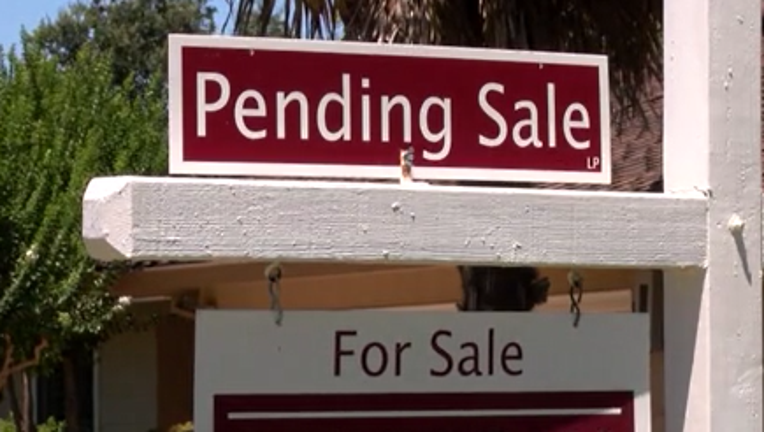
Figures from the California Association of Realtors show housing affordability continued to climb, hitting a four-year high.
OAKLAND, Calif. - New figures show that an increasing number of people have been able to afford a home in California, thanks to factors including declining interest rates and falling home prices.
The analysis from the California Association of Realtors (C.A.R.) found housing affordability in the Golden State, widely known as having some of the lowest home affordability in the country, hit a four-year high.
By the numbers:
In the first quarter of 2026, 22% percent of the state's homebuyers could afford to purchase a median-priced, existing single-family home in California. That's up from 19% the same period a year ago, and it's up one percent from the previous quarter.
According to C.A.R.’s Traditional Housing Affordability Index, homeowners in California needed a minimum annual income of $204,800 to make the monthly payments of $5,120. That figure included principal, interest, and taxes on a 30-year fixed-rate mortgage at a 6.24% interest rate.
Statewide, amid a market that saw slower demand, the price for a detached, existing single-family home in California fell for the third consecutive period to $843,390 in the first quarter of this year. It was down 3% compared to the previous quarter.
Compared to the rest of the country
While affordability increased, homeownership in California still remained a lot more difficult than the rest of the country.
C.A.R.’s index showed that for the ninth consecutive quarter, the minimum required annual income to purchase a median-priced home in the U.S. was less than half that of California's.
Nationwide, the median home price stood at $404,300 in the first quarter 2026.
Bay Area figures
Local perspective:
Not surprisingly, the Bay Area was exorbitantly higher with the median coming in at $1.3 million.
But when it came to affordability, the region as a whole saw a jump, up 3% to 24% in the first quarter of this year compared to a year ago.
Most affordable, least affordable
Among the nine counties, Solano was the most affordable at 34%, and the county had one of the biggest jumps from Q1 of 2025, when it was 29%. The median home price there was $570,000. The minimum annual income requirement was $138,400, resulting in a monthly payment of $3,460.
Napa County also had the same year-over-year increase, going from 19% to 24% in the first quarter of this year. But the median home price was significantly higher at $900,000. So a minimum annual income of $218,400 was needed there for a monthly of $5,460.
After Solano, Contra Costa County, with a median home price of $840,000 had the highest affordability at 30%. A minimum annual income requirement of $204,000 would lead to a monthly payment of $5,100.
Quarter-to-quarter drop
While all Bay Area counties saw their affordability rise from a year ago, some went down from the previous quarter.
San Francisco had the biggest quarter-to-quarter decline of 2% to 20%. The median home price there was $1,975,500. That meant a minimum annual qualifying income of $479,600 was required, bringing the monthly to $11,990.
Alameda, Marin, and Santa Clara counties all also saw a drop from the previous quarter. San Mateo County stayed the same.
San Mateo and Santa Clara counties had the highest median home prices, both surpassing the $2 million mark.
Highest minimum qualifying income
The top three highest minimum qualifying income were all in Bay Area counties, according to the index.
At 20% affordability, San Mateo had the highest at $534,400, the only California county with an annual income requirement above $500,000.
Santa Clara County, with a minimum qualifying income of $492,800, followed, and San Francisco, at $479,600 rounded out the top three highest.
Condos and town homes
Figures also showed that when it came to condominiums or town homes, affordability hit 32% in California.
With a median price of $648,000 statewide, a minimum annual income of $157,200 was needed to make monthly payments of $3,930 on a condo or town home.
SEE ALSO: Leaving California makes homeownership 48% more likely, study finds
Dig deeper:
Real estate experts said that in addition to lower interest rates, slower price growth contributed to the upward trend in housing affordability in the state.
The demand for housing slowed amid ongoing market instability, helping to bring down home prices.
"On an annual basis, California recorded its first price decline since mid-2023, as the statewide median price dipped 0.5 percent from the first quarter of 2025," C.A.R. said as part of its findings.
Have income levels kept pace?
C.A.R. pointed to higher household income levels as another driving force for increased affordability.
But the California Legislature's non-partisan Legislative Analyst's Office (LAO), had a different take, noting that incomes have failed to keep pace with housing costs in the state.
"While home prices have stabilized, housing has become less affordable for most Californians in recent years," the agency said in a report released last month.
LAO used different metrics, but its findings showed that in 2026, only 23% of California household incomes would likely qualify for a mid-tier priced home. That figure was about 31% in 2019. Mid-tier homes were defined as those that reflect home values in the 35th to 65th percentile range.
For bottom-tier priced home mortgages, about 46% of California households would likely qualify based on their income, down from about 57% in 2019, according to the Legislative Analyst's Office. Bottom-tier homes were those with values in the 5th to 35th percentile range.
War in Iraq and mortgage rates
Industry experts noted that the war in Iraq has led to volatility in mortgage rates. Rates were lower earlier in 2026, before the conflict, which has pushed up oil prices and led to renewed concerns over inflation.
"The average 30‑year fixed rate rose from just under 6 percent before the conflict to over 6.6 percent by late March as markets priced in higher energy costs and a more cautious Federal Reserve outlook," C.A.R. explained. "Mortgage rates have remained elevated and volatile, reacting more to geopolitical tensions and their impact on inflation than to typical market forces."
State's most and least affordable
Across all of California's 58 counties, the most affordable were: Lassen, at 61%, Plumas, at 45%, and Glenn County, at 44%.
The least affordable county was Mono in the Eastern Sierra region, at 6%, which was followed by Santa Barbara at 12%. Monterey County, at 15%, was the third least affordable.
C.A.R.'s figures showed each of those least affordable counties required a minimum income of at least $219,200.
What's next:
As California has now moved into the home buying season and amid the ongoing volatility overseas, C.A.R said prices are expected to surge upwards.
"With mortgage rates moving sideways or even rising in the weeks ahead," the realtor association said, "housing affordability could drop slightly in the next two quarters if the Iran conflict remains unresolved."
Affordability ranking for Bay Area counties:
1. Solano 34% (Median: $570,000; Min. qualifying income: $138,400)
2. Contra Costa 30% (Median: $840,000; Min. qualifying income: $204,000)
3. Marin 26% (Median: $1,649,000; Min. qualifying income: $400,400)
4. Napa 24% (Median: $900,000; Min. qualifying income: $218,400)
5. Alameda 23% (Median: $1,300,000; Min. qualifying income: $315,600)
6. Santa Clara 22% (Median: $2,030,000; Min. qualifying income: $492,800)
7. Sonoma 22% (Median: $826,000; Min. qualifying income: $200,400)
8. San Francisco 20% (Median: $1,975,500; Min. qualifying income: $479,600)
8. San Mateo 20% (Median: $2,200,000; Min. qualifying income: $534,400)
Source: California Association of Realtors
Home prices falling across California, data shows
According to data from Redfin, home prices are sliding in some of the biggest metros in the country, including here, in California. Daryl Fairweather, the chief economist at Redfin, joined us on 'The Nine' to discuss what's leading the decline.