

Tiny Stanford-invented chip helps blind patients read again
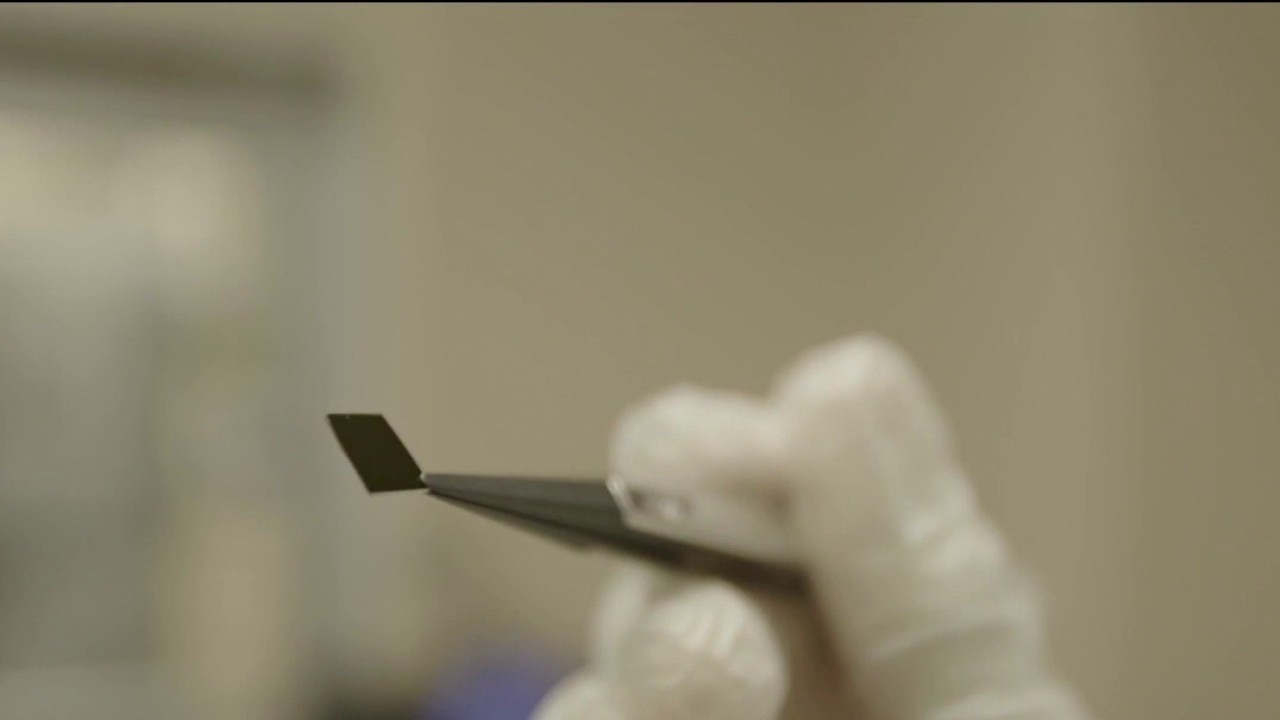
Stanford-invented chip helps blind people read again
A chip created by a Stanford-based physicist is allowing blind and visually impaired people to see and read again. The chip, called PRIMA, is currently being considered for sale in Europe following clinical trials.
STANFORD, Calif. - A tiny, wireless microchip invented by a Stanford physicist is giving blind people a chance to see and read again.
The eye implant, developed by Stanford scientist Daniel Palanker, is under consideration for sale approval in Europe following clinical trials.
Stanford scientist uses ‘solar panel’ technology to give sight to the blind
How It Works:
The minuscule chip is the first device of its kind. It functions as a wireless implant powered by infrared glasses and remote-controlled, utilizing a technology similar to solar panels.
"It converts light into current, but you need to provide enough light," Palanker said. "For that, we need glasses which use infrared light, which is sufficiently bright to stimulate cells but is invisible."
The backstory:
The breakthrough technology has been more than 20 years in the making. Palanker began working on this in 2004 at Stanford, after learning about wired implants. He said his passion for the subject led him to create a wireless version.
The technology is aimed at restoring sight to elderly patients with macular degeneration, an age-related condition which impacts 20 million Americans. 1 million of those individuals ultimately suffer from total vision loss in what's called geographic atrophy.
As Stanford continues its research, it houses hundreds of tools and pieces of equipment to construct the chip in a clean room.
For the handful of Stanford researchers who make the chips, the project represents a profound opportunity to make a difference. Ludwig Galambos, one of those researchers, said what started as a job in his specialty has turned into a task that carries a deeply personal meaning for him.
"I become a bit emotional because, for me, my brother has macular degeneration, and my contribution to the world, it's... about what can you leave behind," Galambos said.
The small tiles are surgically implanted under the retina to replace missing photoreceptors, restoring some vision in patients with late-stage macular degeneration who have gone completely blind. These patients typically see black in their line of focus. With the implant, they are able to read in black and white.
Commercialized by Alameda-based biotech
Big picture view:
Across the Bay in Alameda, Science Corp is manufacturing the chips called "PRIMA" and actively working to secure FDA approval. According to Science medical director for vision Dr. Frank Brodie, the company expects to be granted the CE mark—the European equivalent of FDA approval—this summer, following 47 successful surgeries worldwide.
"I have to give this diagnosis all the time—that you have this disease that you're going to slowly but surely go blind from—and now, for the first time, we can really make a difference," said Brodie, who is also an assistant professor at UCSF.
The clinical results have been highly promising, with 80% of patients regaining the ability to read, Brodie reported.
Currently, the procedure only works for patients who do not have other health conditions or structural issues in the eye. Brodie said there are risks associated with the surgery itself, but not so many risks linked to using the implant long-term, based on research from clinical trials, which took place from 2018 to 2024.
"Anytime you go in for retina surgery, there are risks," Brodie said. "Things like bleeding, infection, that I can say to all my patients anytime I do surgery on them. And those were the kind of things we'd see in the clinical trial."
What's next:
Science Corp is working on federal approval for PRIMA and getting the procedure covered by health insurance.
Separately, Stanford researchers are continuing their efforts to improve the resolution of the chip, so patients will be able to see more natural images, including facial recognition.
Stanford scientists say restoring color to vision will be more challenging.
The Source: Daniel Palanker and Ludwig Galambos at Stanford, Science Corporation