

Breakdown of who is paying for FIFA World Cup police security in Bay Area
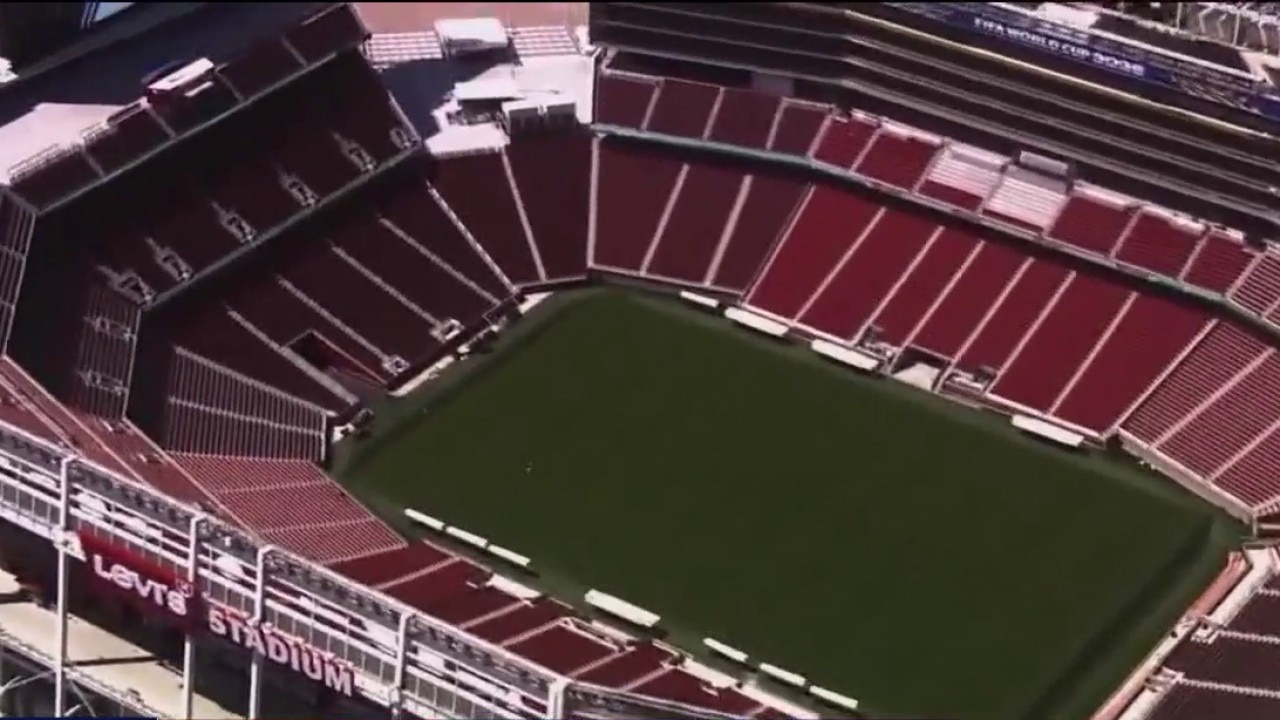
World Cup security costs in the Bay Area
Police officers from Oakland to San Jose have been working overtime shifts to provide extra security for the traveling Australian and Paraguay teams practicing in the Bay Area and playing soccer at Levi’s Stadium in Santa Clara. But who is paying the local officers, and where is the money coming from?
OAKLAND, Calif. - Police officers from Oakland to San Jose have been working overtime shifts, even before the World Cup started, stationed in hotel parking lots to provide extra security for the traveling Australian and Paraguay teams practicing in the Bay Area and playing soccer at Levi’s Stadium in Santa Clara.
But who is paying the local officers, and where is the money coming from?
Who is paying for FIFA police security?
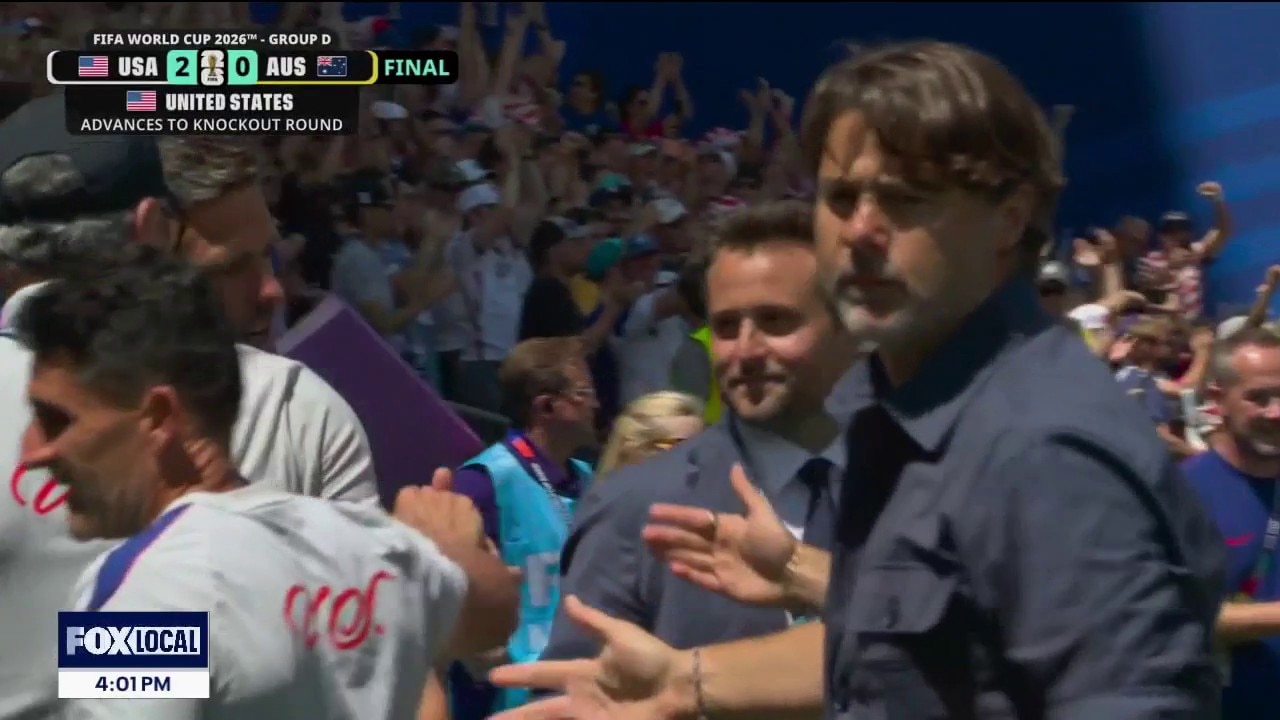
World Cup: San Pedro Square packed with 20,000 fans for USA vs Australia
A massive crowd turned out at San Jose's San Pedro Square to watch U.S. take on Australia in the World Cup. Once again the street was turned into a sea of red, white and blue.
The simple answer is that the police officers are being paid by the Bay Area Host Committee, a private organization founded in 2022 whose mission is to "unite the Bay Area through sport."
The more nuanced answer is that the lion’s share of that money comes from federal and state governments, city documents show, specifically the Department of Homeland Security, and one of its key agencies, FEMA, and the California Governor’s Office of Emergency Services.
"The way security works here is that the security in most of these cities is being paid for through federal grants that the US federal government, plus often, state governments, contribute money to local police departments in order to put on these games," said Victor Matheson, a sports economist at the College of the Holy Cross in Massachusetts. "And this is actually quite common."
Matheson added: "Are taxpayers paying for this? Local taxpayers aren't, but taxpayers across the country are."
Sports economist Dennis Coates, a professor at the University of Maryland, Baltimore County, added that he wishes FIFA would be more transparent with where the money is coming from.
"I just want them to be honest with us, because I think as a society, as an individual, we make the best decisions when we know what it is we're deciding," he said.
State, federal tax dollars
By the numbers:
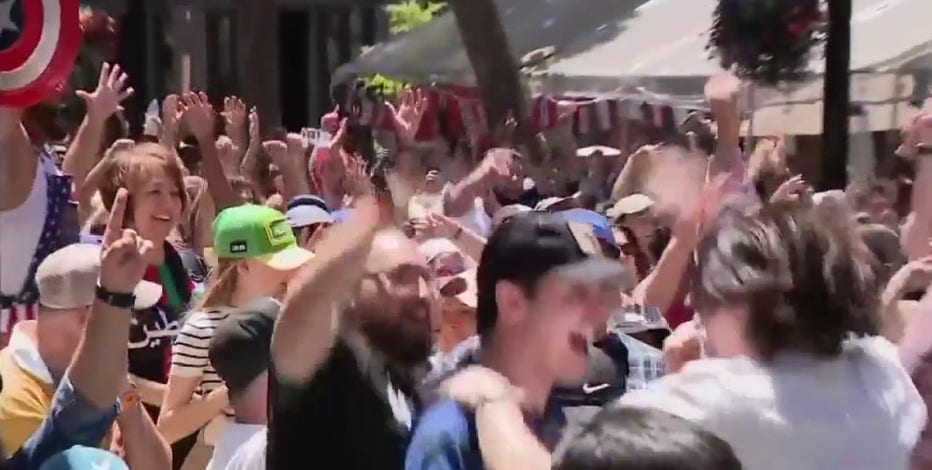
World Cup watch parties fuel Bay Area business surge as Team USA ticket prices skyrocket
World Cup watch parties across the Bay Area are driving major crowds and sales for local businesses, while rising Team USA ticket prices push more fans toward community viewing events.
FIFA and Bay Area Host Committee representatives did not return KTVU’s inquiries about how much they were spending on police security during the World Cup, which runs from June 11 to July 19 in Canada, Mexico and the United States.
And to be clear, there is evidence that these big sporting games bring money into the region. The Bay Area Host Committee touted that Super Bowl LX held at Levi’s Stadium generated $720 million for the Bay Area region. And specifically for the World Cup so far, the San Jose Downtown Association says some businesses have told their group that the influx of visitors in the downtown area has increased up to 250 percent compared to a normal day.
And the public money used on these big events is meant to keep the public safe.
In a statement regarding FEMA awarding FIFA a historic $625 million in grants, Andrew Giuliani, executive director of the White House Task Force on the FIFA World Cup 2026, said: "This grant program provides valuable funding to host cities, helping them strengthen security operations and protect their communities. It demonstrates President Trump’s commitment to supporting our partners and ensuring a safe and successful tournament for all."
The FIFA World Cup Grant Program was established under the "One Big Beautiful Bill Act" and signed into law by President Trump in July 2025.
Of that total amount, California received $109,125,390, with allocations of $57,934,146 for the Los Angeles host committee and $51,191,244 for the Bay Area host committee, according to the state.
On a local level, Bay Area city council agendas and Public Records Requests provide a closer look at where the money is coming from.
San Jose to Oakland
Local perspective:
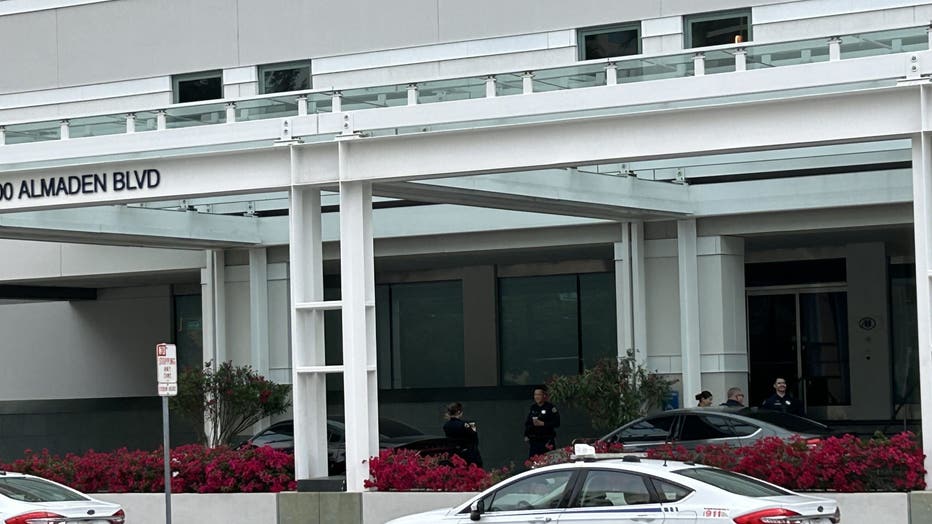
San Jose police officers stand in front of the Civic Center Hilton, providing security during the FIFA World Cup. June 16, 2026
Of the cities KTVU surveyed, San Jose laid out the specifics of the World Cup spending in the greatest detail.
- On May 28, the San Jose City Council voted to accept a $3.5 million World Cup Safety and Security grant from the Bay Area Host Committee for the police department. The contract provides police services for the six matches that will be played at Levi’s Stadium in Santa Clara, and the security needed at three hotels where the teams will be staying at, including the Signia Luxury Hotels in San Jose on Market Street – the home of the old Fairmont San Jose.
Breaking down the grant, SJPD will receive $2,920,582 of overtime funding for security inside two team hotels and perimeter security around all three hotels. San Jose also accepted a separate $250,000 grant from the California Governor’s Office of Emergency Services, the agenda shows.
- KTVU also asked Oakland, where police have been stationed at the Claremont Hotel; San Jose State University, where Team Paraguay has been practicing; and Santa Clara, the home of Levi’s Stadium where the matches will be played, to get a similar breakdown of grants and costs.
Oakland police said the Bay Area Host Committee was paying for the extra security, but they haven’t responded with a specific contract or dollar amount. A city council agenda item, however, shows that the Oakland City Council voted on what officer pay would be to escort the Australian soccer team to Levi’s Stadium, including patrol officers to be paid $124 an hour and captains to be paid at $202 an hour.
- San Jose State University simply said their police officers are being paid by the Bay Area Host Committee with no other specifics.
- City of Santa Clara spokeswoman Janine de la Vega said the city of Santa Clara expects to be reimbursed an estimated $11.4 million for the FIFA World Cup 2026. These costs will be reimbursed by the Bay Area Host Committee. There was no further breakdown provided on where this money comes from.
- KTVU filed a Public Records Request with the California Office of Emergency Services, which revealed that the state Legislature appropriated $7 million in 2022 for a World Cup Safety and Security grant program, with $4.2 million going to the Los Angeles County Sheriff’s Department and $2.8 million to the County of Santa Clara.
- An additional $10 million in state funds was appropriated in the 2025 state budget, with $5 million each for LASD and the County of Santa Clara, according to Cal OES.
- The CHP did not return a Public Records Request on the matter, but a Santa Clara city council agenda item shows that the city will reimburse the agency $1.6 million for traffic management services at Levi’s Stadium.
The World Cup is just one of many major sporting events where police work overtime to provide security – and where federal and state grants are used to pay for it. The Super Bowl and the Olympics also require this extra layer of law enforcement and funding.
"The way security works here is the security in most of these cities is being paid for through federal grants that the US federal government, plus often state governments, are contributing money to local police departments in order to put on these games," said sports economist Victor Matheson, a professor at the College of Holy Names in Worcester, Mass. "And this is actually quite common."
Matheson, the sports economist, added that there is the argument that, as being part of a larger society, taxpayers are often willing to pitch in for big community events so that everyone stays safe.
But there’s also another argument.
Matheson questioned why taxpayers should foot any of the bill.
"Remember, FIFA's making between $10 and $13 billion on this event," Matheson said. "It certainly doesn't seem unreasonable that FIFA should be paying the security costs to make sure that their event is safe for the participants. But again, that's not the way it works. The federal government is covering a huge portion of the security costs for this event."
The Source: City council agendas and Public Records Requests from San Jose, Oakland, Santa Clara, SJSU, Cal OES, CHP, statements from FEMA, sports economists Victor Mattheson and Dennis Coates.