

New bill would increase protections for whales in the Bay
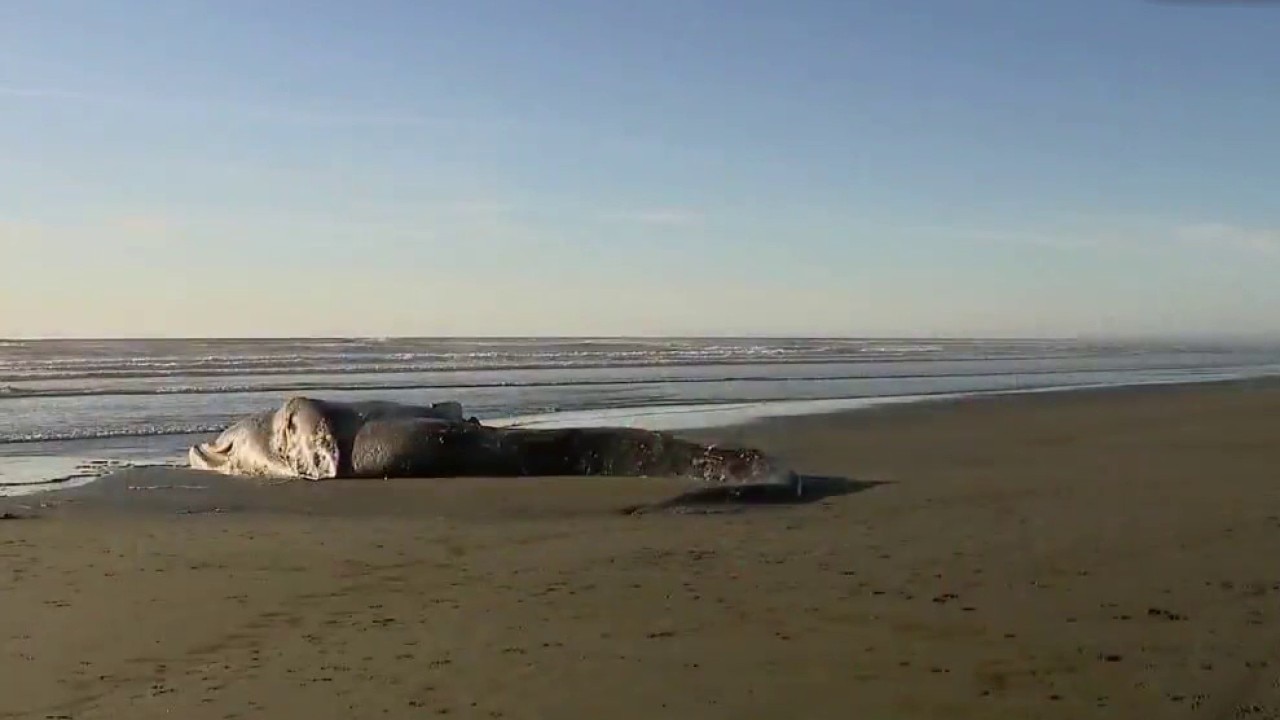
Increase in gray whales dying in San Francisco Bay: report
Researchers say that nearly 20% of gray whales that swim into the San Francisco Bay end up dead.
SAN FRANCISCO - A coalition of U.S. representatives on Wednesday introduced a bill to prevent whale deaths in the San Francisco Bay.
Congressman Sam Liccardo (CA-16) authored the "Save Willy Act," which, if passed, would create a "Whale Desk" in the U.S. Coast Guard’s San Francisco Station, to which the public can report sightings and alert vessel operators when whales enter the area, to prevent deadly collisions. The legislation would also direct the Coats Guard to evaluate technologies for tracking whales and alerting ships to their presence.
"Researchers track these whales daily, but we can scale their impact by crowdsourcing data from the many more numerous commercial and recreational boats, and building a centralized alert system," Liccardo said in a press release. "A whale desk will protect these magnificent creatures and help mariners avoid costly, harrowing collisions. Together, let’s Save Willy."
The bill was cosponsored by Representatives Jimmy Panetta (CA-19), John Garamendi (CA-8), Zoe Lofgren (CA-18), Ro Khanna (CA-17), Kevin Mullin (CA-15), Robert Garcia (CA-42), Pablo José Hernández (PR at large), Mike Levin (CA-49), and Ted Lieu (CA-36).
Big picture view:
The San Francisco Bay Area in 2025 recorded 24 whale deaths — 21 of which were grey whales — which was the highest level in 25 years. So far, in 2026 seven grey whales have already died in the Bay, and two more have died in the waters around the wider Bay Area.
"Oceana strongly supports this bill to protect whales in the San Francisco Bay Area from vessel strikes. The Bay Area is not only a vital economic hub, it’s also important for migrating and foraging whales," Geoff Shester, Oceana California Campaign Director and Senior Scientist said in a press release. "By improving coordination with the maritime industry and investing in real-time monitoring of whale presence and movement, this bill takes a smart, collaborative approach to reducing collisions with boats. With whale fatalities on the rise, this legislation recognizes that we can — and must — protect whales as they navigate one of the busiest waterways on the West Coast."
Scientists estimate the current Eastern Pacific Grey Whale population at roughly 13,000, the lowest level since the 1970s. Changes in Arctic feeding grounds have reduced the species’ food supply, and as a result, whales have begun more frequently entering the bay in search of food.
Dig deeper:
The San Francisco Bay Area is one of the United States’ busiest shipping corridors, and whales in the area face a high risk of being killed after being struck by a ship.
Liccardo, in a 2025 letter that was co-signed by the entire delegation of Bay Area representatives, expressed concern about the unprecedented number of whale deaths and demanded answers from the National Oceanic and Atmospheric Administration (NOAA) on whether funding and staffing cuts had impacted the agency’s ability to safeguard the ocean and protect marine life.
The organization’s response stated that ongoing ecosystem changes in Arctic feeding grounds, driven in part by climate change, were impacting gray whale behaviors and driving them to enter the Bay in search of food.
"With at least eight whale deaths already recorded this year in the San Francisco Bay Area, we welcome the attention this bill brings to protecting whales in coastal waters. We’re grateful for the chance to highlight the important, ongoing role of the U.S. Coast Guard’s Vessel Traffic Service in helping keep both marine life and vessel traffic safe where boats and whale habitats overlap," Kathi George, the Director of Cetacean Conservation Biology at the Marine Mammal Center said in a press release.