

San Francisco chooses new name for Cesar Chavez Street, honoring female farmworkers
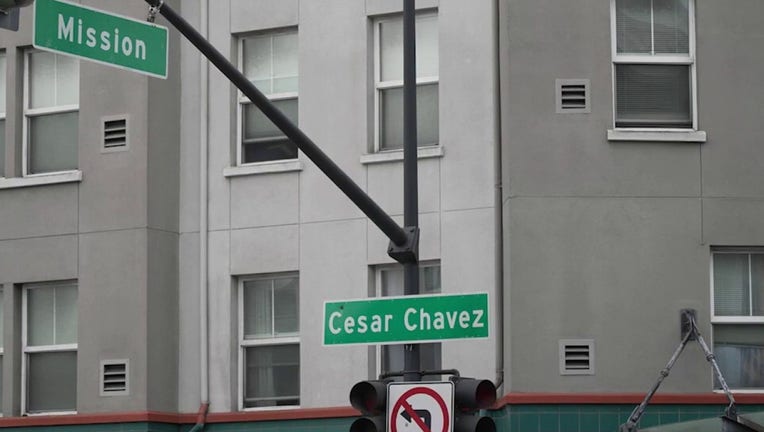
Cesar Chavez Street in San Francisco on Oct. 21, 2026.
SAN FRANCISCO - After months of debate, San Francisco is moving forward with plans to rename Cesar Chavez Street. City leaders say the proposed name honors the farm labor movement in the city, specifically paying tribute to the women associated with the movement.
The aim of the change is to ensure the street's new name maintains the Latino roots of the Mission District while honoring female farmworkers. The chosen name, "Las Campesinas," translates from Spanish to "the female farmworkers."
San Francisco leaders select Las Campesinas
What we know:
Cesar Chavez Street is one of the busier streets in San Francisco, running through the Mission District. The city previously changed the street's name from Army Street in 1995. City leaders said it was time to rename the street once again following allegations that Chavez sexually assaulted women decades ago.
San Francisco Assessor Joaquín Torres, who sat on the working group to rename the street, said the final decision came down to either "Si Se Puede" or "Las Campesinas."
"Today we're very happy that we're forwarding Las Campesinas as the new name for Cesar Chavez Street," Torres said. "In honor of the nameless and faceless women who endure harrowing conditions."

San Jose organizations pivot as Cesar Chavez' legacy is scrubbed
He was the father of the farmworker movement. But now, following sex assault allegations, Cesar Chavez' name is being scrubbed from everything, including his own holiday. While most organizations have canceled or postponed events scheduled for tomorrow, one non-profit is using the day as a chance to bring the community together.
Supervisor vote
Local perspective:
Supervisor Jackie Field formally introduced legislation to change the street name at Tuesday's Board of Supervisors meeting. While some San Franciscans advocated for other names, others expressed concern that "Las Campesinas" would be difficult to pronounce or confusing for non-Spanish speakers.
Torres expressed confidence that the city can adapt to the transition.
"San Francisco is a city that knows how, we've done street name changes before we can do it again," Torres said. "I like so many residents and merchants expect the mayor and city departments to make this as seamless a process as possible."
At the intersection of Mission and Cesar Chavez streets, residents shared mixed views on the proposed name, though all agreed a change was necessary.
"The street must be renamed because Cesar Chavez did some troubling things," San Francisco resident Guillermo Gomez Peña said, though he added that he found the proposed name "corny" and suggested inviting poets to contribute more interesting options.
Other residents expressed strong support for the change.
"Yeah, I kind of love that," San Francisco resident Jodie Lail said. "There are so many cities and streets that are named after men. So, I think it's great to have a street named after the hard working women."
San Francisco resident Triece Kushner agreed, emphasizing the significance for women of color.
"Women are often overlooked especially women of color," Kushner said. "I think it's very important to be able to not only recognize the power in women of color, but recognize that they are why we are here today."

Allegations against Cesar Chavez spark reckoning over power and silence
The farmworker community is grappling with allegations that multiple women were sexually assaulted by Cesar Chavez during the rise of the United Farm Workers union. UFW cofounder Dolores Huerta is now speaking to the complex power dynamics at play, describing what it means to work alongside a revered leader while suffering in silence. The case is drawing comparisons to Harvey Weinstein, where survivors came forward years later despite once being publicly associated with him. On The Nine, Cait Alexander, founder of End Violence Everywhere, joined us to unpack why these patterns persist, and why more survivors are speaking out now.
San Francisco legislative process remains underway
What's next:
Changing the street name to Las Campesinas is not yet a done deal. The proposed name change must go through the Land Use Committee, providing opportunities for public comment, and undergo review by the Department of Public Works. Ultimately, the Board of Supervisors must approve the change and the mayor must sign off on it.
If approved, street signs with both the old and new names will remain up for five years.
What we don't know:
There is currently no timeline for how long the overall process will take.
The Source: Information in this story came from previous reporting on allegations against Cesar Chavez and interviews with San Francisco Assessor Joaquín Torres and residents in the area of the soon-to-be renamed street.