

Community meeting turns tense over delayed Navy disclosure of plutonium test at Hunters Point Shipyard

Community meeting turns tense over delayed Navy disclosure of plutonium test at Hunters Point Shipyard
A packed and at times tense community meeting in San Francisco’s Hunters Point on Monday drew frustration from residents after learning the U.S. Navy waited 11 months to alert regulators about a test that detected airborne plutonium at the former shipyard.
SAN FRANCISCO, Calif. - A packed and at times tense community meeting in San Francisco’s Hunters Point on Monday drew frustration from residents after learning the U.S. Navy waited 11 months to alert regulators about a test that detected airborne plutonium at the former shipyard.
What we know:
The meeting, organized by the Hunters Point Shipyard Citizens Advisory Committee, focused on the Navy’s failure to promptly disclose the single positive test result, an outlier among roughly 200 tests conducted at the site, which is undergoing a major environmental cleanup and redevelopment.
Michael Pound, the environmental coordinator overseeing the cleanup, acknowledged the Navy mishandled the disclosure.
"I’ve spent a fair amount of time up here getting to know the community, getting to know your concerns, transparency and trust, and on this issue we did not do a good job," said Pound, issuing an apology to both the public and regulators. He said his team had been working to verify the data before releasing it.
Parts of the Hunters Point Naval Shipyard were contaminated during the Cold War as ships exposed to radiation during atomic testing came through the facility.
Small amount detected
Kathryn Higley, a nuclear scientist and professor at Oregon State University hired by the Navy to review the recent findings, told the crowd the detected amount was extremely small.
"The amount of radioactive material from Hunters Point has been very, very low if you look at what they’ve seen in all their work over the last several years," said Higley. "The quantity that they’re talking about today is extremely low."
City, state and federal regulators at the meeting echoed that assessment. San Francisco Health Officer Dr. Susan Philip said the findings did not meet the threshold for declaring a public health emergency.
"That was also my assessment and why there was no immediate public health emergency declared," said Philip, adding that her office will closely monitor the Navy’s communication going forward.
Residents not convinced
Still, many residents said they remain unconvinced.
"It’s not the air monitoring, it’s not the tools and the data collection, it’s the transparency," said resident Kamillah Ealom.
"I just want them to be accountable," said another resident, Rachelle Holmes. "It’s time to stop trying to pass the buck."
The San Francisco Board of Supervisors is expected to take up the issue of the Navy’s delayed communication in December.
Featured
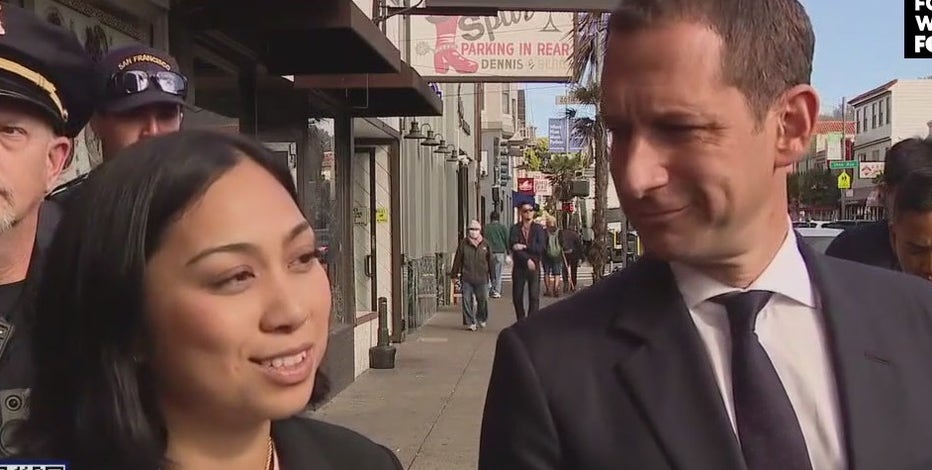
Mayor Lurie's handpicked Sunset Dist. supervisor announces she'll resign after 1 week in office
Just one week after being sworn in as San Francisco's District 4 supervisor, Mayor Daniel Lurie announced on Thursday that Beya Alcaraz intends to resign.