

Contra Costa Co. unveils new mobile legal clinic for immigrants
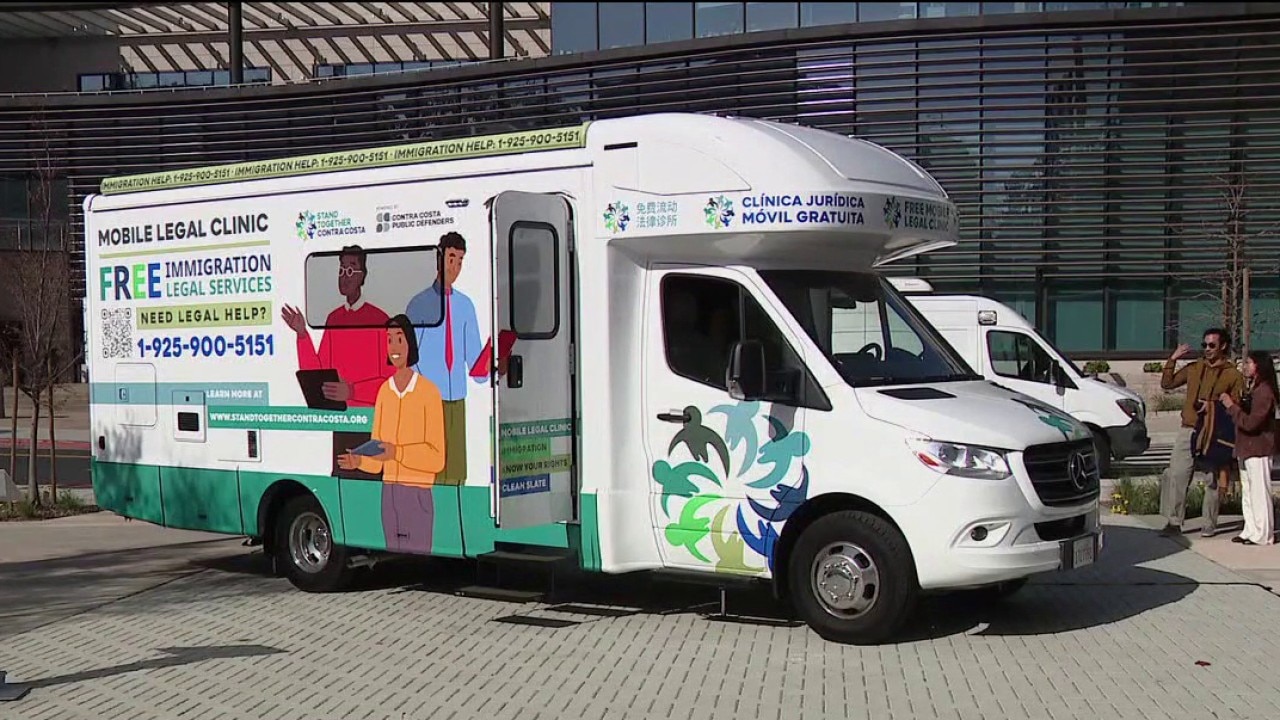
Mobile legal clinic for immigrants in Contra Costa County
Contra Costa County revealed a new innovative way to help immigrants struggling through the federal system, with a legal office on wheels.
CONTRA COSTA COUNTY, Calif. - Contra Costa County revealed an innovative way to offer legal services to immigrants with a full-service mobile legal clinic.
Clinic on wheels
What we know:
As the national ICE crackdown continues, Contra Costa County is responding to fears from the immigrant community with a legal office on wheels.
It all came from a vision by Stand Together Contra Costa Director Ali Saidi, who said he wants to make legal services more accessible to the vulnerable.
"I had this idea about two years ago actually next to a Home Depot in Richmond," he said. "I was thinking, ‘Man, the community is here, and I wish I could just come here and provide legal services to them.’"
Saidi said a legal office on wheels was one way to tackle the "unlawful acts by the federal government."
Critical moment
The county held a ribbon cutting on Thursday for the van, which cost nearly $200,000, according to the Public Defender's Office.
For Saidi, it stands as a symbol of democracy and Contra Costa County's commitment to serving the immigrant population.
"We're in a critical moment in history," he said.
The county was a hotbed for protests over the summer when immigrants attending scheduled hearings were detained at the Concord Federal Immigration Courthouse.
Federal immigration courts are shrinking, with the San Francisco court closing altogether by 2026.
The services will transfer to Concord, where public defenders are already serving thousands of immigrants each year, many who now fear going into a government building.
Chief Public Defender for the county Ellen McDonnell said the vast majority of immigrants don't know where to find representation.
Lack of representation
TRAC Reports, a Syracuse University-based system to track immigration cases in the U.S. reports about 70% of immigrants going through the removal process in the country have no representation, increasing the chances of deportation.
"They cannot afford attorneys. Many of them don’t speak English. There are language barriers, education barriers. Of course, the court process is dense and difficult," McDonnell said. "We know that this van will help us expand those numbers and expand our reach dramatically."
The designers of the van thought of everything, including barriers like childcare.
"We have space here for the kids to hang out," Saidi said on a tour of the van.
Saidi added that they’re being thoughtful about sharing where the van will be and when, for security reasons.
"We’re in an experimental phase right now," he said. "I don’t know of anyone else doing immigration legal services quite like this."
Saidi said the van will be put to use by next week, starting with community events.