

Judge rules suspect in 49ers' Ricky Pearsall shooting to be tried as a juvenile
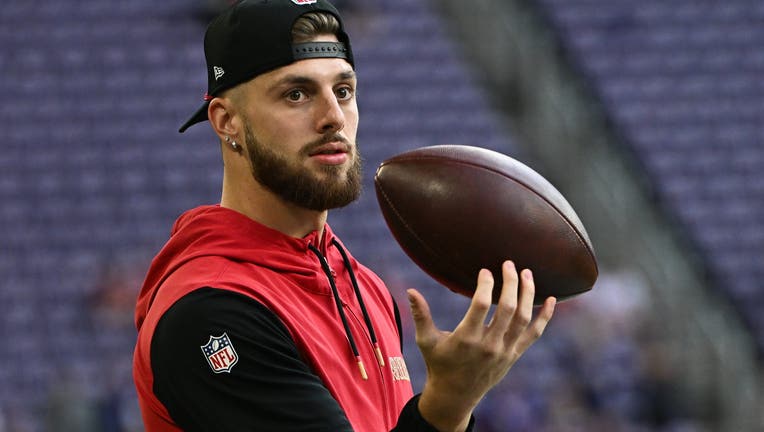
MINNEAPOLIS, MINNESOTA - SEPTEMBER 15: Ricky Pearsall #14 of the San Francisco 49ers looks on before the game against the Minnesota Vikings at U.S. Bank Stadium on September 15, 2024 in Minneapolis, Minnesota. (Photo by Stephen Maturen/Getty Images)
SAN FRANCISCO - The teenage suspect charged with the attempted murder of San Francisco 49ers' wide receiver Ricky Pearsall last year will be tried as a juvenile, a judge ruled Friday morning.
The decision was made by Judge Denise de Bellefeuille of Santa Barbara, after a week-long hearing in San Francisco.
"We are all greatly relieved with the court's ruling, which recognized that sending a young person to a court where adult state prison is possible should only be a matter of last resort, in those extremely rare cases where clear and convincing evidence shows the child is irretrievably lost and cannot be redeemed," Bob Dunlap, the attorney for the suspect said in a statement following the ruling. "State prison is not about redemption or rehabilitation. It is a system designed to warehouse people and perpetuate harm, rather than foster healing or justice, and it is used far too often in adult cases as it is."
San Francisco District Attorney Brooke Jenkins had pushed for the suspect, who was 17 at the time of the shooting but is now an adult, to be tried in criminal court, which would have carried much more severe sentencing.
Dunlap said he understood the concern about juvenile rehabilitation services, but said if there's a problem with that system, the solution lies in "improving the system, not sacrificing the child."
Jenkins, in a statement following the ruling, said that all the youths who have completed the Juvenile Probation Department's rehabilitation programs have reoffended and are either pending criminal felony charges in criminal court or have been convicted of at least one felony in adult criminal court before the age of 25.

Prosecutors push to try Pearsall shooting defendant as adult
Prosecutors are asking a judge to try the now 18 year old defendant as an adult
RELATED: San Francisco 49er released from hospital after shooting, attempted robbery in Union Square
Unless the suspect enters a plea deal, he will stand trial for attempted murder, assault and attempted second-degree robbery. A juvenile found guilty of those charges would likely result in up to seven more years in custody. If he were charged as an adult and found guilty, he could have faced 40 years to life in prison.
The suspect, whose name has not been released, will next appear in court on Sept. 24 for a pre-trial conference.
Robbery gone wrong
The backstory:
The crime occurred in August 2024 when Pearsall, then 23, was shot and wounded in an attempted robbery in Union Square.
The suspect, a resident of Tracy, was arrested and was also injured in the shooting. Police said at the time that Pearsall was not targeted for being a football player.
Attorney Bob Cardoza is not representing the defendant but explained that in what is known as a 707 hearing, judges consider five criteria: the level of criminal sophistication, the defendant's history, whether the defendant experienced previous trauma and whether they're able to be rehabilitated.

Ricky Pearsall reunites with hero SFPD sergeant, as 49ers fans celebrate victory
It was an emotional start to the game for the San Francisco Police sergeant credited for saving rookie Ricky Pearsall's life, after he was shot in an attempted robbery just nine days ago. The San Francisco 49ers delivered just what the fans wanted at this home opener.
"And finally the judge looks to the gravity of the crime, and certainly in this case, the shooting in an attempted robbery, the gravity of the case is at the top of the list," Cardoza said.
Prosecutor David Mitchell, in court on Tuesday called a police lieutenant to go over details of the shooting and the aftermath and testify about conversations with Pearsall following the shooting.
Dunlap is arguing that the suspect has done well in the Juvenile Justice System, completing his high school education and enrolling in college courses. The defense said the defendant would benefit from the juvenile justice system's emphasis on rehabilitation.