

BTS's sellout concerts at 54,000-seat Stanford Stadium shows power of 'pop diplomacy'
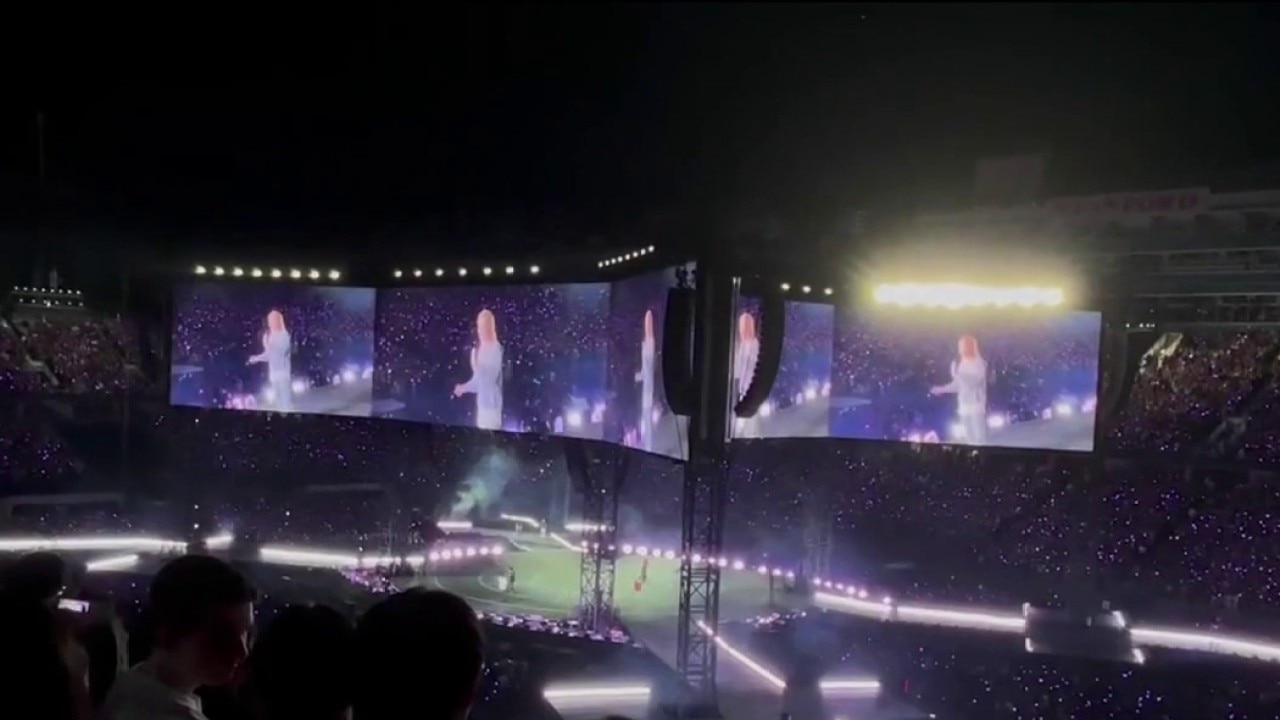
BTS final night at Stanford: soft "pop power" diplomacy
The popularity of the K-Pop phenomenon BTS had a third night of sold-out concerts at Stanford Stadium's 54,000-seat venue, also showing the "soft power" of pop diplomacy raising interest and awareness about Korean language and culture. (photo courtesy of Emily Schwab)
STANFORD, Calif. - The K-Pop sensation BTS performed to sold-out crowds at Stanford Stadium's 54,000-seat venue Tuesday night, the third and final concert at Stanford that had many fans singing along with the band in both English and Korean.
"There is always some type of lyric from one of their songs that is a message for me, whichever situation," Michelle Huynh, a fan from Hayward.
Rising cross-cultural interest
BTS and other K-pop groups are part of a Korean wave of K-dramas, food and K-beauty, that has generated new interest in Korean culture, history, and language.
Stanford Korean language professors say they are seeing a spike in enrollment, with more people wanting to learn about Korea, in part due to the popularity of K-pop groups.
Dafna Zur is an Associate Professor at Stanford University's Department of East Asian Languages and Culture, who also teaches at a Korean Village immersive language summer camp in Bemidji, Minnesota.
"We have seen a huge boost in enrollment from K-12 learners who don't have any Korean heritage but are interested in learning Korean because of K-pop," Zur said.
Emily Schwab, a Stanford University student who was attending two of the concerts this week, said BTS was the reason she became interested in the Korean language.
"It kind of stemmed from the desire to understand lyrics and then grew into 'I'm having fun learning Korean, so I want to continue,'" Schwab said.
Taylor Hamilton-Hankins, another Stanford student, said her interest in K-pop and K-dramas inspired her to learn more about the country.
"I didn't know anything about Korea prior to K-pop or K-dramas, like literally nothing. I feel they didn't really teach us much in school about Korea and I didn't know anybody Korean prior to that," Hamilton-Hankins said.
The "soft power" of K-pop diplomacy
The concept, called "soft power" influence, involves promoting connections across countries through music, the arts, media or sports.
The seven-member BTS boy band group has become a prime example of "pop power" diplomacy.
The group made history when they were named a Special Presidential Envoy to the United Nations representing South Korea in 2021. They have also partnered with UNESCO to raise funds for children.
Instead of traditional diplomats, pop stars can build bridges across many sectors.
This year's global tour is their first since the BTS members finished their mandatory military service in Korea. That was another instance, Zur says, that served as an educational moment for those unfamiliar with South Korea's history and the division with North Korea.
"They share a border with North Korea. Why is there a North and South Korea? How did division happen? So it can spark all these questions and then these questions can be pursued in different avenues," Zur said. "There's no question to me that soft power has an influence on people's global mindset."
BTS's Arirang world tour began in April and will continue through 2027.
Featured
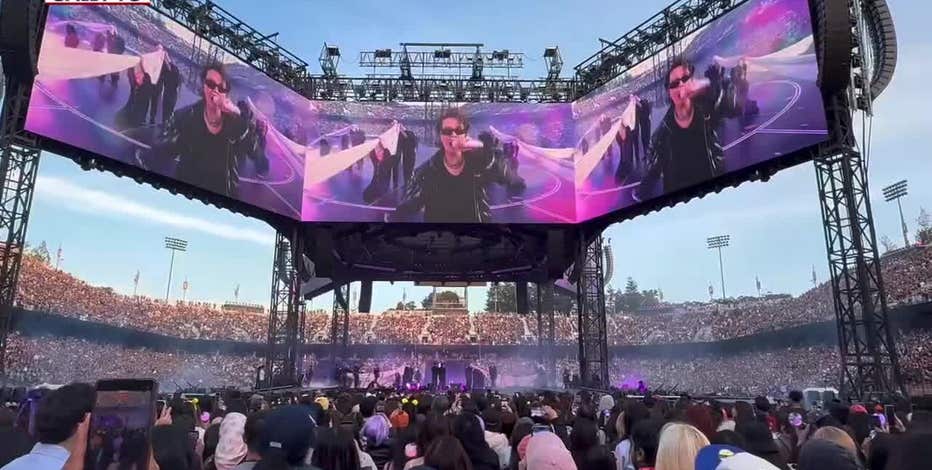
BTS kicks off sold-out Bay Area concerts at Stanford Stadium
More than 50,000 fans packed Stanford Stadium Saturday, as BTS launched the first of three sold-out Bay Area performances during the group’s latest world tour.